Who Golu Devta Is
Golu Devta, also called Goril or Gwall Devta, is the deity of justice in Kumaon. He is worshipped as a form of Gaur Bhairav, an aspect of Shiva, and is depicted riding a white horse, carrying a sword or a whip, with the bearing of a magistrate rather than a king.
His role is unusually specific in the Hindu devotional landscape. Devotees do not go to Golu Devta for wealth, health or moksha. They go with a grievance:
- A land or property dispute that has dragged on for years
- A false case, a delayed pension, a job wrongly denied
- A promise broken by someone who cannot be held to account
- A family matter where the devotee feels wronged and has no other forum
What makes the practice distinctive is that these grievances are submitted in writing, often on stamp paper, in the format of a court petition, and hung at the temple. Alongside them hang bells, offered when a case has been resolved. A Golu Devta temple therefore records both the complaints and the outcomes, side by side, in full public view.
The Katha: A Child Cast Into the River
The katha of Golu Devta, sung by jagariyas across Kumaon, is a story about justice denied and then restored.
A king of the region, remembered as Jhal Rai or Halrai of Champawat, was without an heir. After long worship he married Kalinka, and she bore a son. The other queens of the household, fearing the loss of their standing, replaced the newborn with a stone and set the child adrift in the river in a box.
The child was found and raised by a fisherman. Years later, the boy came to the palace riding a wooden horse and began watering it in the river. When people mocked him, saying a wooden horse cannot drink, he answered that if a woman can give birth to a stone, then a wooden horse can drink water. The remark reached the king, the truth came out, the queen was restored and the boy was recognised as the prince.
He grew into a ruler remembered for settling disputes fairly and swiftly, and after his lifetime he came to be worshipped as the deity who does exactly that. Local tradition treats his temples as a court, and devotees still open their petitions with an address to him as nyay ke devta, the lord of justice.
The Petition Tradition: Writing to a Deity
The written petition is the heart of Golu Devta worship, and the format is surprisingly formal.
- Devotees write on plain paper or, commonly, on stamp paper bought for the purpose
- The petition names the deity, states the devotee's name and village, sets out the grievance plainly, and asks for justice
- Many petitions promise an offering when the matter is resolved, most often a bell, a chhatra or a bhandara
- The paper is tied or hung inside the temple, where it stays until the temple committee clears older ones
- When the case is settled, the devotee returns to hang a brass bell and, in many families, to read out the resolution
The bells at Chitai near Almora, and at Ghorakhal near Bhimtal, number in the thousands and hang from every available beam, railing and tree branch. Their sound in the wind is the most recognisable feature of both temples.
One instruction is repeated by temple attendants and by elders. The petition should state facts and ask for justice, not ask for harm to the other party. Golu Devta is understood as a deity who examines both sides, which is exactly why devotees trust the verdict.
The Main Temples
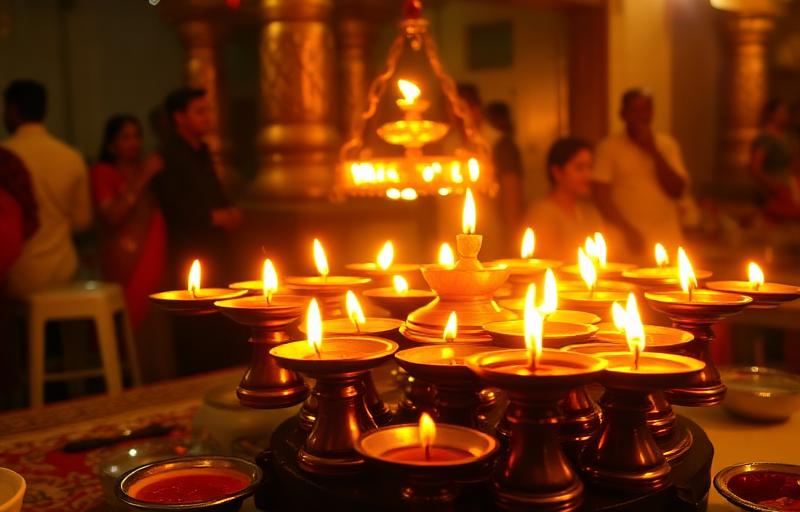
Golu Devta has shrines across Kumaon, and four are visited most often.
- Chitai, Almora - the best known temple, about eight kilometres from Almora on the Pithoragarh road, entirely covered in bells and petitions
- Ghorakhal, near Bhimtal - set beside the Sainik School, equally dense with bells, with a large gathering on festival days
- Champawat - associated with the katha of his birth and the royal family of the region
- Chamdeval and Gairar Golu - older shrines held in high regard locally, where the deity's traditional rites are carefully maintained
Worship follows the Kumaoni pattern. A jagar may be held for a family in difficulty, with the jagariya singing the deity's katha through the night and the family placing its problem before him. Aipan designs are drawn at the entrance during festivals, and offerings of ghee lamps, sweets, red cloth and bells are made through the year.
Sunday is a common day for darshan, and the temples are busiest around Navratri and local melas. Both Chitai and Ghorakhal remain simple temples in hill style, so devotees should expect open courtyards, cold stone floors and hill weather rather than large facilities.
Golu Devta Among Kumaon's Local Deities
Kumaon and Garhwal keep a living system of local deities alongside the Puranic pantheon, and each has a defined function.
- Golu Devta - justice, disputes and wrongs to be set right
- Nanda Devi - the region's presiding goddess, worshipped as the daughter of the hills
- Bholanath and Gangnath - deities invoked in jagar for family troubles and possession related distress
- Airy Devta and Saim Devta - guardians of forests, cattle and travellers
- Kshetrapal and Bhumiya - the guardians of the village boundary and land
These deities are approached through jagar, a night long ritual in which the jagariya's drum and song invite the deity, and a family member may act as the medium, called the dangariya. This is not treated as separate from Hindu worship. The same household will keep Shivratri, Navratri, Janmashtami and the Chardham yatra, and will hold a jagar for Golu Devta when a case will not move.
Seen together, the system is practical. The great deities handle the meaning of life, and the local devtas handle the specific problems of living in these hills.
How to Pray to Golu Devta
For devotees visiting for the first time, the practice is straightforward and does not require a priest.
- Write the petition yourself. State your name, your village or town, the facts of the matter and what you consider fair. Keep it plain and truthful.
- Ask for justice, not revenge. The tradition is firm that a petition asking for someone's ruin is not accepted in spirit.
- Make a promise you can keep. Most devotees promise a bell, a lamp or a bhandara on resolution. Do not promise what you cannot return to complete.
- Offer simply. A ghee lamp, sweets, a red cloth and a coconut are the usual offerings.
- Return when it is settled. Hanging the bell after resolution is considered as important as filing the petition. Kumaoni families treat an uncompleted promise to Golu Devta seriously.
For those who cannot travel, families often send the written petition with a relative visiting the temple, which is accepted practice. At home, a lamp lit on Sunday with a simple prayer to Gaur Bhairav is the usual substitute.
What draws people to this deity is not the ritual but the premise behind it: that a wrong recorded honestly, in your own hand, is already halfway to being addressed.
What People Ask Most
Who is Golu Devta?+
Golu Devta is the deity of justice in Kumaon, worshipped as a form of Gaur Bhairav, an aspect of Shiva. He is shown riding a white horse and is approached by devotees seeking a fair resolution to disputes and grievances.
Why do devotees write letters at Golu Devta temples?+
The tradition treats his temple as a court. Devotees write their grievance as a petition, often on stamp paper, stating the facts and asking for justice, and hang it in the temple until the matter is resolved.
Why are there so many bells at Chitai and Ghorakhal?+
Each bell marks a fulfilled petition. Devotees return to hang a brass bell after their matter is resolved, so the thousands of bells at the temples are a public record of cases that devotees believe were settled.
What is the katha of Golu Devta?+
Tradition says he was the son of a Champawat king and queen Kalinka, replaced at birth with a stone by rival queens and cast into the river. Raised by a fisherman, he later revealed the truth with the wooden horse episode and grew into a ruler known for fair judgment.
Where are the main Golu Devta temples?+
Chitai near Almora and Ghorakhal near Bhimtal are the most visited, along with the temples at Champawat, Chamdeval and Gairar Golu, all in the Kumaon region of Uttarakhand.
Can a petition be sent if a devotee cannot travel?+
Yes. Families commonly send a written petition with a relative or neighbour visiting the temple. At home, lighting a lamp on Sunday with a prayer to Gaur Bhairav is the usual practice until a visit is possible.
About the author
Pandit Ravindra Sharma · Vedic Rituals & Bhakti, 22+ years
Pandit Ravindra is the Vandnaa editorial team's resident specialist on aarti, chalisa, and daily devotion. He has performed home and temple pujas across Varanasi and Delhi for over two decades and contributes the bhakti-focused articles on this site.
Meet the Vandnaa editorial team →Explore on Vandnaa
Related Articles
Jageshwar Dham: The Deodar Grove of a Hundred Shiva Temples
7 min read
Kaal Bhairav Chalisa & Aarti - Lyrics, Meaning, Benefits & Vidhi
9 min read

Kuldevta / Kuldevi - How to Find Your Family Deity, Why It Matters & Worship Vidhi
10 min read

Dunagiri Temple: The Vaishnavi Devi of the Sanjeevani Hills
7 min read