The Temple at Gangolihat
Haat Kalika, the Mahakali temple at Gangolihat, Pithoragarh district, Uttarakhand, sits in a grove of deodar at about 1,700 metres.
What is there:
- A Mahakali shrine, the presiding deity
- A temple complex in the local style, extensively rebuilt and expanded
- A grove of very large deodar trees around it
- A bed made for the goddess nightly, which is the temple's most distinctive practice
- Extensive association with the Kumaon Regiment of the Indian Army
The regiment. This is what makes Haat Kalika unlike other Devi temples.
- Kalika is the tutelary deity, the ishta devi, of the Kumaon Regiment
- The regiment's war cry is Kalika Mata ki Jai
- The regiment maintains the temple, and much of the present complex and its upkeep is due to it
- Soldiers and officers visit before postings and on returning
- The connection is formal and long standing, not an informal local affiliation
Why a regiment has a goddess. Indian Army regiments recruited on a regional basis have long carried the religious identity of their recruiting area, and this is a documented and continuing feature.
- The Kumaon Regiment with Kalika
- The Garhwal Rifles with Badrinath, and the cry Badri Vishal Lal ki Jai
- The Sikh Regiment with Bole So Nihal, Sat Sri Akal
- The Gorkha Rifles with Jai Mahakali, Ayo Gorkhali
- The Rajput, Jat, Dogra, Maratha and other regiments each with their own
- The Madras Regiment with Veer Madrassi, Adi Kollu, Adi Adi
What that means in practice:
- Regimental temples and gurdwaras exist at regimental centres
- Religious teachers, the dharm guru or regimental pandit, granthi or maulvi, are part of the establishment
- Festivals of the regiment's tradition are observed as regimental occasions
- Regiments maintain temples in their recruiting areas, as here
And a note on the Indian Army's arrangement. Units drawn from a single community observe that community's practice, and mixed units observe all of them.
The Sarv Dharm Sthal, the all faiths place of worship found at many Indian military establishments, holds provision for Hindu, Muslim, Sikh and Christian worship in one building, with the respective religious teachers serving alongside.
That arrangement is unusual internationally and is worth knowing about. It is not a claim that the traditions are the same. It is a working arrangement in an institution where people who will die alongside each other need somewhere to pray, and it has functioned for a long time.
Kumaon Regiment history, briefly. Raised in its present form in the twentieth century from earlier units, it has an extensive battle record including the actions for which Major Somnath Sharma, the first recipient of the Param Vir Chakra, was decorated in Kashmir in 1947, and the defence at Rezang La in 1962 by 13 Kumaon, in which Major Shaitan Singh received the Param Vir Chakra posthumously.
Those are not incidental facts at this temple. Soldiers of the regiment come here, and the connection between the shrine and that record is present in the place.
The Bed
The temple's most distinctive practice concerns what happens after the last arati.
What is done:
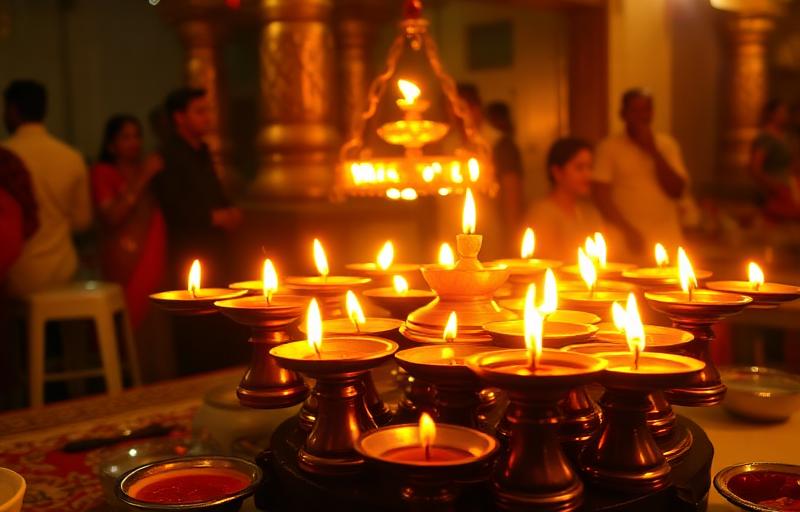
- A bed is made for the goddess each night in the temple
- Bedding is laid out properly, as for a person
- The temple is closed
- In the morning the bed shows signs of having been slept in
- The bedding is then cleared and the day's worship begins
What that assumes. The same logic set out in the Brajeshwari entry, taken further.
- The deity is a resident, not a symbol
- Residents sleep
- Somebody must therefore make the bed
- And in the morning the bed will look as beds do
Where else deities are put to bed. This is much commoner than people outside the tradition realise.
- Shayana arati or shayan seva, the last service of the day, is performed at a very large number of temples across India
- The deity is undressed, given a lighter garment, offered milk or a light meal, and the sanctum is closed
- At Tirumala, the Ekanta Seva puts the deity to rest with a lullaby
- At Puri, the deities are put to bed and the Pahuda is performed
- At Nathdwara and the Pushtimarg temples, the daily sequence of eight darshans, the ashtayam, tracks the deity's whole day from waking to sleeping
- At many temples the deity is woken in the morning with suprabhatam, the morning hymn
The Venkateswara Suprabhatam. Worth mentioning because it is among the most widely heard pieces of devotional literature in India.
It is a morning hymn addressed to the deity at Tirumala, waking him, and is played and sung across the Telugu country and beyond at dawn. Millions of households begin the day with a recording of somebody waking up a god.
Why this practice is theologically substantial. It states something specific about the relationship.
- The deity is present in the image, continuously
- The presence has needs, or is treated as though it does
- The devotee's role is service, seva, not merely petition
- The relationship is domestic rather than transactional
That is the entire basis of Agamic temple practice and it is why temples run on a timetable rather than opening when people want to visit.
Bhava and the modes of relationship. The tradition names the possible relationships with a deity.
- Shanta, peaceful contemplation
- Dasya, servant to master, which is Hanuman's mode
- Sakhya, friend to friend, which is Arjuna's
- Vatsalya, parent to child, which is Yashoda's
- Madhurya, lover to beloved, which is Radha's
Making a bed for the goddess and finding it slept in belongs to vatsalya and dasya together. It is the mode of a household looking after somebody, and it is the most ordinary and least dramatic form devotion takes.
On the morning evidence. Whether the bedding shows signs of use, and what accounts for it, is not a question this guide can settle and it is not the point.
What is the point is that somebody makes that bed every night, has done so for a very long time, and takes it seriously. That is the practice, and the practice is the temple.
The Shankaracharya Katha
The temple's origin story concerns the pacification of a fierce deity, and it is one of the more interesting versions of a common pattern.
As it is told:
- The goddess at this place was in a fierce form and was, in the account, a danger to the surrounding country
- Adi Shankaracharya came to Gangolihat
- He performed the necessary rites and pacified her, establishing her in a settled form
- Worship was regularised and the temple established
The pacification pattern. Versions of this story attach to a great many Devi shrines across India and it is worth understanding what it does.
- A local goddess is described as dangerous, receiving offerings that the Sanskritic tradition regards as irregular, and outside the temple system
- A brahmanical figure, frequently Shankaracharya, arrives
- He performs rites that bind or settle the deity
- The deity's worship is brought into the Agamic system
- The shrine becomes a temple
What that describes historically. Read as history rather than as event, the story describes a real and repeated process.
- Local and tribal deities were incorporated into the Sanskritic system over a very long period
- The process involved identifying the local deity with a Puranic figure
- Priesthood, ritual and calendar were regularised
- Practices the incorporating tradition disapproved of, frequently including animal sacrifice, were discouraged or removed
- The local deity retained her name, her place and much of her character
Two ways to read that. Both are true and a guide should say both.
- As absorption: a local tradition was taken over, its practices altered, and its independence lost, with the brahmanical establishment gaining a shrine and the community losing control of it
- As incorporation: a local deity gained a temple, resources, a wider constituency and permanent standing, and the community gained a place in a larger religious world
Which of those it was in any given case depended on the case, and the honest position is that it was frequently both at once.
The evidence at Haat Kalika. The temple today is a Mahakali temple in the Sanskritic idiom, with a regimental connection and a substantial modern establishment.
Underneath that, the region's older layer is still visible in the Devi shrines around Gangolihat, in the village goddesses, in the Golu Devta tradition and in the practices around them.
Both layers are present, and they are not in conflict.
Sacrifice, and the change. Animal sacrifice was historically practised at a number of Devi shrines in Uttarakhand and in the Himalaya generally.
- The practice has declined substantially
- It has been discouraged by reform movements, by temple managements and in some cases by state regulation
- Uttarakhand's High Court took a position on animal sacrifice at temples in the state in 2011, which was subsequently the subject of further proceedings
- Substitutes, including coconuts, pumpkins and symbolic offerings, are used at many shrines
That change is real, it is recent, and it is contested by some communities who regard it as an external imposition on their own practice.
A visitor should know that the question exists, should not seek out or encourage sacrifice, and should not treat the communities who practised it as barbaric, which is how the argument was frequently framed by the people making it from outside.
Who Mahakali Is
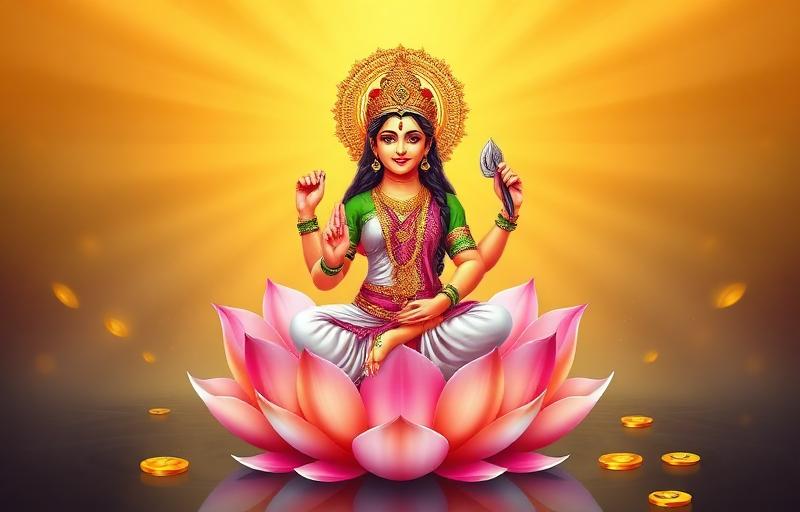
Kali is the most misunderstood major deity in the Hindu pantheon outside India, and it is worth setting out what the tradition actually says.
Her appearance:
- Black or dark blue, from which the name comes
- Dishevelled hair, unbound
- A garland of severed heads, usually fifty or fifty two
- A skirt of severed arms
- Four arms, holding a severed head, a sword, and making the gestures of fearlessness and boon giving
- Tongue extended
- Standing on Shiva, who lies beneath her
What each element means:
- Black is the colour that absorbs all others, so it stands for that into which everything resolves
- The heads are commonly read as the letters of the Sanskrit alphabet, so the garland is language, or as the ego destroyed repeatedly
- The arms are karma, action, worn as clothing
- The severed head she holds is the ego
- The sword cuts ignorance
- The two gestures say do not be afraid and ask for what you need
- The tongue has multiple readings, including the one below
Shiva beneath her. The image that most disturbs outsiders is the one with the most content.
The standard explanation:
- After the killing, Kali's rage was uncontrollable and she was destroying everything
- Nobody could stop her
- Shiva lay down in her path
- She stepped on him
- Recognising her husband beneath her foot, she stopped, and put out her tongue in the gesture of embarrassment that is culturally specific and immediately readable in India
What that is saying:
- The power that destroys is shakti, feminine, active
- The consciousness beneath it is Shiva, passive, still
- Without shakti, Shiva is inert. The verse says that without shakti, Shiva is a corpse, and the image is literal about it
- The rage stops not through force but through recognition
- The most terrifying figure in the pantheon is stopped by realising who she is standing on
Two of the gestures are protective. This is the point that gets lost.
Half of Kali's hands are doing something frightening and half are saying abhaya, do not be afraid, and varada, receive what you ask for.
A deity who holds a severed head in one hand and tells you not to be afraid with another is making a specific claim: that what you are looking at is on your side.
Why she is worshipped:
- For protection, particularly at moments of real danger
- For destruction of what needs destroying, including in oneself
- For truth, since she is the form that does not soften anything
- In tantric practice, as the ultimate reality
- By people in extremity, who find a gentler deity insufficient
Kali in Bengal. The most developed devotional tradition around her.
- Ramakrishna Paramahamsa at Dakshineswar, whose relationship with Kali as mother is the best documented devotional biography of the modern period
- Ramprasad Sen and the Shyama Sangeet tradition of Bengali devotional song addressed to her
- Kali Puja at Diwali, which in Bengal is the principal observance
- The tradition addresses her overwhelmingly as Ma, mother, which reframes everything
Ramprasad's mode. His songs argue with her, complain to her, accuse her of neglect and demand her attention, in the voice of a child to a mother who is not paying enough attention.
That is the register in which the fiercest deity in the pantheon is actually addressed by the tradition that knows her best, and it is a long way from the way she is generally presented outside India.
Soldiers and Shrines
The relationship between the Indian Army and the shrines of its recruiting areas is worth setting out because Haat Kalika is one of its clearest expressions.
How it works:
- Regiments recruited from a region carry that region's religious identity
- A tutelary deity is adopted, and the war cry invokes them
- Regimental temples exist at regimental centres, and units maintain shrines in their areas
- Religious festivals of the tradition are observed as regimental occasions
- Soldiers visit before postings, particularly to operational areas, and after returning
Other regimental shrines and associations:
- The Garhwal Rifles and Badrinath
- The Kumaon Regiment and Haat Kalika
- The Gorkha regiments and Kali
- The Dogra Regiment and its own shrines
- The Sikh Regiment, with the Guru Granth Sahib carried and a granthi with the unit
- Baba Harbhajan Singh shrine in Sikkim, a distinctly modern and unusual case
The Baba Harbhajan Singh shrine. Since it comes up whenever this subject does, it should be described accurately.
- A soldier of the Punjab Regiment who died in Sikkim in 1968
- A tradition developed among troops in the area that he continued to guard the border
- A shrine was established at Nathu La and is maintained
- He was, in the tradition, granted leave and a berth reserved on a train
- The army's official position on the more elaborate versions has varied
What is not in doubt is that soldiers serving in an extremely hostile environment at very high altitude built a shrine to a dead comrade and maintain it, and that visiting it matters to them.
Why soldiers and shrines go together. It is worth thinking about honestly.
- Combat and operational service involve danger you cannot control
- Religious practice offers a framework for facing that
- A shared observance builds cohesion in a unit whose members must trust each other absolutely
- The war cry is a practical device, coordinating an assault and steadying people, as well as a religious one
- Shrines give the families at home a place to go while somebody is away
That last point is easy to miss. A regimental shrine in the recruiting area serves the wives, parents and children of serving soldiers as much as it serves the soldiers.
At Haat Kalika, on any ordinary day, some of the people at the temple will be there because somebody in their family is at a post somewhere and cannot be contacted.
Rezang La. Since it is connected to this regiment, it should be stated.
In November 1962, C Company of 13 Kumaon, around 120 men under Major Shaitan Singh, held a position at Rezang La in Ladakh at over 5,000 metres against a very much larger attacking force.
Almost all of them were killed. Major Shaitan Singh received the Param Vir Chakra posthumously. The position was held until the company was destroyed.
Most of the men were from Ahirwal in Haryana rather than from Kumaon, which is itself worth knowing, since regimental recruitment areas and unit composition are more complex than the regiment's name suggests.
Why mention it here. Because soldiers of this regiment come to this temple, and because the relationship between a shrine and the people who use it is not abstract.
The goddess whose name is shouted going into an assault is the goddess whose bed is made at Gangolihat every night by somebody who has never left Pithoragarh district.
Both of those are the same practice, and the temple holds them together.
Visiting Haat Kalika
Getting there
- Haat Kalika, Gangolihat, Pithoragarh district, Uttarakhand, at about 1,700 metres
- The temple is at Gangolihat itself
- About 80 km from Almora and roughly 100 km from Pithoragarh town
- Kathgodam is the nearest railhead, about 180 km
- Pantnagar is the nearest airport
- Buses and shared vehicles run from Almora and Pithoragarh
Timings
- The temple opens early and runs through the day, closing after the evening arati when the bed is made
- Check current timings
When to go
- Navratri, in Chaitra and Ashwin, which is the principal season
- March to June and September to November for weather and road conditions
- Winter is cold with occasional snow and the deodars are worth seeing in it
- Evening arati, which is the time to be there
At the temple
- Traditional dress is appropriate; head covering is customary
- Photography may be restricted in the sanctum. Ask
- The deodar grove around the temple is part of the site and should be treated as such
- Offerings include red cloth, coconut and the usual Devi offerings
The deodar grove. Worth a note.
The trees around Haat Kalika are old and large, and the grove is protected because it belongs to the temple.
That is the sacred grove pattern, which is one of India's most effective and least recognised conservation mechanisms. A forest attached to a deity is a forest nobody cuts, and sacred groves across India hold old growth and biodiversity that surrounding land does not.
The Kerala kavu, the Rajasthani oran, the Meghalayan law kyntang and the Maharashtrian devrai are all versions of the same institution, and the deodars at Gangolihat are one more.
Practicalities
- Gangolihat has basic accommodation and food
- Facilities are limited. Carry what you need
- Cash
- Mobile coverage is patchy in the district
Combining the visit
- Patal Bhuvaneshwar, about 14 km, which should be done in the same trip
- Berinag and Chaukori, for the Panchachuli and Nanda Devi views
- Pithoragarh town
- Jageshwar and Almora, on the way back
- Munsiyari, further east
- Bageshwar and Baijnath, to the west
On travelling in eastern Kumaon generally:
- Roads are slow. Assume 25 to 30 km per hour
- Landslides in the monsoon are a real risk and this district is affected
- Shared jeeps are the local transport and are efficient
- Do not drive at night
- Accommodation outside the main towns is basic
- The area is very beautiful and very lightly visited
A closing thought. There is a temple in a deodar grove in a small town in the hills, where a bed is made every night for a goddess.
And there is an infantry regiment that has fought in Kashmir, in Ladakh, in the northeast and on the Siachen glacier, whose men go into an assault shouting her name.
The two are the same thing. The regiment pays for the roof, the local family makes the bed, and somewhere at this moment there is a soldier at a post at 5,000 metres who knows that in Gangolihat somebody is doing it tonight.
That is what a tutelary deity is for, and Haat Kalika is one of the few places in India where you can see the whole arrangement working at once.
Common Questions From Devotees
Where is the Haat Kalika temple?+
At Gangolihat in Pithoragarh district, Uttarakhand, at about 1,700 metres in a grove of deodar. It is about 80 km from Almora and roughly 100 km from Pithoragarh town, with Kathgodam the nearest railhead about 180 km away and Pantnagar the nearest airport. Buses and shared vehicles run from Almora and Pithoragarh.
What is the Kumaon Regiment connection?+
Kalika is the tutelary deity, the ishta devi, of the Kumaon Regiment, whose war cry is Kalika Mata ki Jai. The regiment maintains the temple and much of the present complex and its upkeep is due to it, and soldiers and officers visit before postings and on returning. The connection is formal and long standing.
What is the bed made for the goddess?+
Each night after the last arati a bed is made for the goddess in the temple, with bedding laid out properly as for a person, and the temple is closed. In the morning the bed shows signs of having been slept in, the bedding is cleared and the day's worship begins. It follows the logic that the deity is a resident rather than a symbol.
Do other Indian Army regiments have deities?+
Yes. The Garhwal Rifles have Badrinath with the cry Badri Vishal Lal ki Jai, the Gorkha Rifles have Jai Mahakali Ayo Gorkhali, the Sikh Regiment has Bole So Nihal Sat Sri Akal, and the Rajput, Jat, Dogra, Maratha and Madras regiments each have their own. Regimental temples exist at regimental centres and religious teachers are part of the establishment.
Why does Kali stand on Shiva?+
After the killing her rage was uncontrollable and nobody could stop her, so Shiva lay down in her path. She stepped on him, recognised her husband beneath her foot, stopped, and put out her tongue in embarrassment. The image says that shakti is the active power, that without it Shiva is inert, and that the rage stops through recognition rather than force.
What is the Shankaracharya katha here?+
The goddess at this place was in a fierce form and, in the account, a danger to the surrounding country. Adi Shankaracharya came to Gangolihat, performed the necessary rites and pacified her, establishing her in a settled form after which worship was regularised. Read as history, such stories describe the incorporation of local deities into the Sanskritic system, which was both an absorption and a gain in standing.
About the author
Anjali Mehta · Editor, M.A. Religious Studies
Anjali is the managing editor for Vandnaa and oversees the festival and vrat coverage. She holds an M.A. in Religious Studies and reviews every published article for accuracy, accessibility, and tradition-fidelity.
Meet the Vandnaa editorial team →