Two Traditions, One Beloved Deity
Hanuman is worshipped across Hindu households as the devoted follower of Rama, celebrated for his strength, courage and unwavering bhakti. The most widely known account of his birth describes him as the son of Anjana, an apsara born on earth, and Kesari, blessed by Vayu, the wind god, who is often described as his divine father.
Alongside this account, another cherished tradition, found in the Shiva Purana and upheld by many devotees, particularly in parts of North India, holds Hanuman to be the eleventh Rudra, an avatar of Shiva himself. Rather than competing with each other, both traditions are honoured side by side in different regions and communities.
The Story Behind This Belief
According to this tradition, Shiva is said to have taken the form of Hanuman to serve Rama, who is regarded as an avatar of Vishnu, in his mission to overcome evil and restore dharma. This belief beautifully reflects a wider truth in Hindu devotion, that Shiva and Vishnu, though worshipped through different paths, are seen by devotees as ultimately united in purpose.
Some tellings connect this to the eleven Rudras named in Vedic and Puranic tradition, of which Hanuman is counted as one manifestation. Other regional stories describe Shiva's blessing being present within Hanuman in a way that grants him extraordinary power, wisdom and the ability to serve Rama with complete devotion.
Why This Belief Matters to Devotees
For devotees who hold this belief, it deepens the sense that Hanuman's strength and devotion are not ordinary but carry the power of Shiva within them. It also explains, for many, why Hanuman is worshipped with the same intensity as major deities in his own right, with temples, chalisas and daily prayers dedicated solely to him.
- It is one reason some devotees chant Shiva mantras and Hanuman Chalisa together
- It connects Shaiva and Vaishnava devotion through a single beloved figure
- It reinforces Hanuman's role as a bridge between Rama's mission and Shiva's blessing
- It is held as a matter of faith and tradition, not something devotees are required to debate or prove
How This Belief Shapes Worship
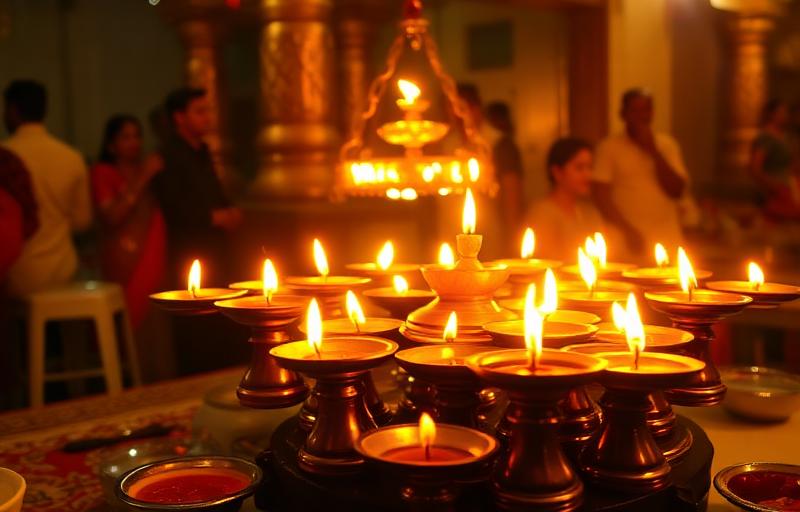
Devotees who honour this tradition often visit Hanuman temples on Mondays, a day traditionally associated with Shiva, in addition to the more common Tuesdays and Saturdays linked to Hanuman. Some also chant Om Namah Shivaya alongside Hanuman Chalisa, seeing both prayers as reaching the same devotion.
This blending is treated gently and without contradiction, since Hindu tradition has long allowed multiple devotional understandings of a single beloved figure to be held together, each deepening rather than replacing the other.
A Reminder That Devotion Holds Many Forms
Whether devotees primarily know Hanuman as the son of Anjana and Vayu, or also hold him dear as an avatar of Shiva, both paths lead to the same place, deep reverence for a figure whose life is a model of selfless service and devotion.
This openness to more than one understanding reflects something central to Hindu tradition itself, that faith can hold complexity with grace. As always, remembering Hanuman in any of his forms is an act of faith and love, not a transaction.
Frequently Asked Questions
Is Hanuman considered the son of Vayu or an avatar of Shiva?+
Both beliefs are honoured in Hindu tradition. Most accounts describe him as the son of Anjana and blessed by Vayu, while a cherished parallel tradition from the Shiva Purana holds him to be the eleventh Rudra, an avatar of Shiva.
Why is Hanuman called the eleventh Rudra?+
This refers to a Puranic tradition listing eleven forms of Rudra (Shiva), among which Hanuman is counted as one manifestation who took birth to serve Rama.
Do these two traditions contradict each other?+
Devotees generally do not see them as contradictory. Hindu tradition often holds multiple devotional understandings of the same deity together, each adding depth rather than replacing the other.
About the author
Pandit Ravindra Sharma · Vedic Rituals & Bhakti, 22+ years
Pandit Ravindra is the Vandnaa editorial team's resident specialist on aarti, chalisa, and daily devotion. He has performed home and temple pujas across Varanasi and Delhi for over two decades and contributes the bhakti-focused articles on this site.
Meet the Vandnaa editorial team →