
What Is the Hanuman Ashtottara Shatanamavali
Ashtottara Shatanamavali literally means "a list of 108 names", and it is a devotional practice found across Hindu tradition where a deity is remembered through 108 distinct names, each capturing a different quality or deed. Hanuman's Ashtottara is one of the most widely recited among devotees.
Unlike a single mantra repeated many times, this practice moves through 108 separate names, one after another, so that a devotee's mind travels across the many facets of Hanuman, his strength, humility, wisdom, courage and unwavering service to Rama, within a single sitting of prayer.
Where This Practice Comes From
Naming a deity through many titles is an old custom in Hindu worship, seen in the Vishnu Sahasranama, the Lalita Sahasranama and similar Ashtottaras for Ganesha, Shiva and Devi. Hanuman's list of 108 names draws on this same tradition of stotra literature, gathered over generations of devotion.
Many of the names describe him directly through episodes devotees already know, such as Ramadoota ("messenger of Rama"), Lankadahaka ("burner of Lanka") and Sanjeevanaharta ("bearer of the Sanjeevani"), while others describe his qualities, like Mahabala ("one of great strength") and Buddhiman ("the wise one"). Together, the names read almost like a garland woven from his life and character.
Why 108 Names, and What They Represent
The number 108 holds a special place in Hindu tradition, the same count used for beads on a japa mala, and is generally regarded as auspicious and complete. Reciting exactly 108 names is seen as a way of offering a full, rounded remembrance rather than a partial one.
- Each name is treated as a small meditation on one aspect of Hanuman
- Together they honor his strength, humility, scholarship and devotion as one whole
- The practice mirrors the mala, moving bead by bead, name by name
- Devotees believe reciting the full list with attention is more meaningful than the number itself
How Devotees Recite This Practice
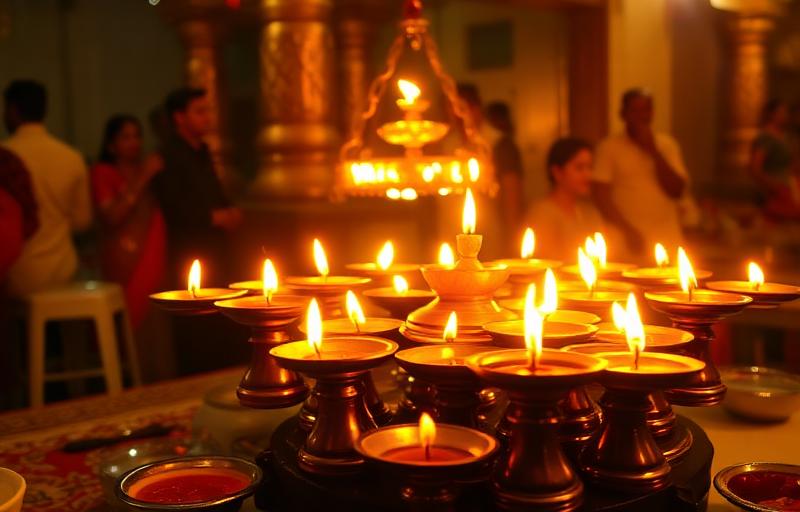
Many temples perform what is called an Ashtottara Archana, where a priest recites each of the 108 names aloud while offering a flower, a few grains of akshat or a pinch of vermillion with every name, one by one, before the deity. Devotees often participate by repeating each name softly or simply listening with folded hands.
At home, some devotees read the list quietly during their morning prayers, especially on Tuesdays and Saturdays or during Hanuman Jayanti, using a japa mala to keep count. There is no single fixed manner considered the only correct one, sincerity and attention are regarded as more important than exact ritual precision.
A Simple Takeaway
Chanting Hanuman's 108 names is, at its heart, a way of holding the many sides of a beloved figure in mind at once, rather than rushing through devotion. It turns remembrance into something patient and deliberate.
Like all Hanuman worship, this practice is an act of faith and love, meant to deepen a devotee's connection through attention, not to function as a guaranteed formula for outcomes.
Frequently Asked Questions
What does Ashtottara Shatanamavali mean?+
It literally means a list of 108 names, a devotional practice found across Hindu tradition where a deity is remembered through 108 distinct titles, each highlighting a different quality or deed.
Why is the number 108 considered significant?+
The number 108 is regarded as auspicious and complete in Hindu tradition, the same count used for beads on a japa mala, which is why reciting exactly 108 names is seen as offering a full, rounded remembrance.
When do devotees recite Hanuman's 108 names?+
Devotees commonly recite this list on Tuesdays and Saturdays, during Hanuman Jayanti, or as part of temple Ashtottara Archana rituals, though it can be read with devotion at any time.
About the author
Pandit Ravindra Sharma · Vedic Rituals & Bhakti, 22+ years
Pandit Ravindra is the Vandnaa editorial team's resident specialist on aarti, chalisa, and daily devotion. He has performed home and temple pujas across Varanasi and Delhi for over two decades and contributes the bhakti-focused articles on this site.
Meet the Vandnaa editorial team →