One Hanuman, Many Forms
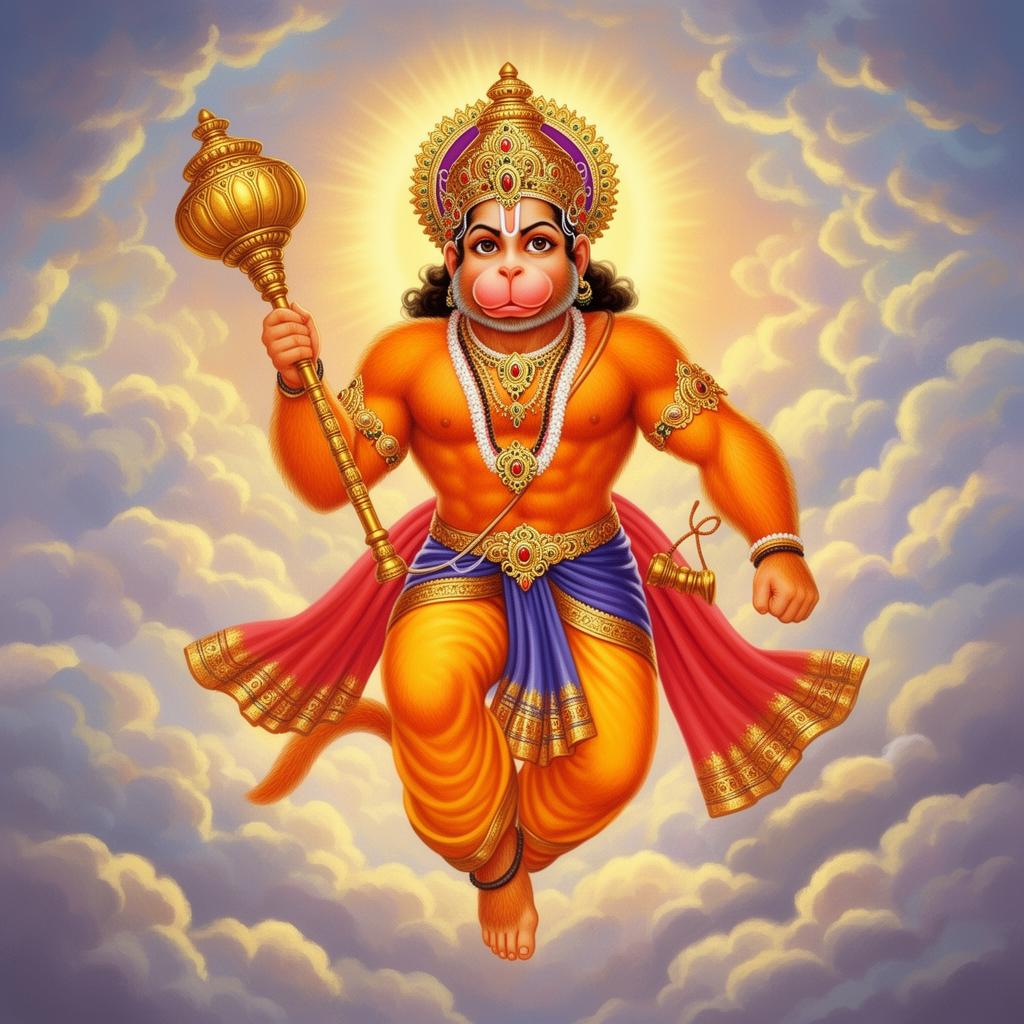
Walk into ten different Hanuman temples across India and you might see ten visibly different images: a five-faced figure bristling with weapons, a chubby child reaching for the sun, a muscular warrior mid-stride with a mace on his shoulder, a gentle figure with Rama and Sita seated in his torn-open chest. These are not competing depictions or regional inconsistencies. They are distinct, named iconographic forms, each emphasizing a different facet of who Hanuman is understood to be, and each traditionally invoked for a different kind of need.
This variety reflects something specific about how Hanuman is approached in devotional practice. Unlike deities whose core iconography stays relatively fixed across most contexts, Hanuman's form actively changes to match the devotee's purpose. A worried parent lighting a diya for a sick child gravitates toward a different image than someone seeking protection from a serious external threat, and both are, in the tradition's understanding, approaching the same being through a different door.
Understanding these forms is not an academic exercise. Knowing why a temple down the road has a five-faced idol while your grandmother keeps a simple orange-clad Sankat Mochan image on her shelf actually clarifies devotional practice, helping a devotee choose which form to focus on, which mantra or stotra pairs with it, and what kind of prayer is traditionally offered before each one. This guide walks through the major forms one at a time: Panchamukhi, Bal Hanuman, Veer Hanuman, and a few other notable variations worth knowing.
Panchamukhi Hanuman: Five Faces, Full-Circle Protection
Panchamukhi Hanuman is depicted with five faces arranged to face different directions, each face itself being a distinct divine form: Hanuman's own face toward the east, Narasimha (the lion-man avatar) toward the south, Garuda (the eagle, Vishnu's vahana) toward the west, Varaha (the boar avatar) toward the north, and Hayagriva (the horse-faced form associated with knowledge) facing upward. Some depictions also show ten arms, each holding a different weapon or symbolic object.
The origin of this form traces to a specific episode from the Ramayana's Patala Khand traditions: Hanuman needed to extinguish five lamps lit in five different directions simultaneously to defeat the sorcerer-king Ahiravana, who had abducted Rama and Lakshmana to the netherworld for a black-magic ritual. No single form could reach all five lamps at once, so Hanuman assumed this five-faced form to blow them out together in one motion, breaking the ritual and rescuing Rama and Lakshmana.
Because of this origin story, Panchamukhi Hanuman is specifically invoked for protection from all directions at once - a comprehensive shield against unseen threats, black magic, negative energy, and dangers that a devotee cannot clearly identify or locate. This is why the form appears more often in contexts of tantrik protection and serious spiritual unease than in ordinary daily worship. Devotees dealing with a persistent run of misfortune that feels almost engineered against them, or seeking protection for a home or business from ill will, often turn specifically to this form rather than a simpler image. The Panchamukhi Hanuman Kavacham, a dedicated protective hymn, is traditionally recited before this image, distinct from the regular Hanuman Chalisa.
Bal Hanuman: The Child Who Reached for the Sun
Bal Hanuman, the child form, shows Hanuman as a young boy, often depicted mid-leap toward the sun, mistaking it for a ripe fruit in the sky. According to the story, the infant Hanuman, already possessing immense strength from birth, leapt toward the sun out of innocent hunger and nearly swallowed it, prompting Indra to strike him with his thunderbolt (vajra) to bring him back down, an injury that gave him the name Hanuman, meaning "one with a disfigured jaw."
This form captures something devotionally distinct from the powerful adult Hanuman: unfiltered innocence paired with unrecognized, almost accidental power. It resonates particularly with parents praying for children, since the story is fundamentally about a child's boundless, untrained energy needing guidance rather than punishment, Indra's strike followed immediately by the gods granting the child a host of blessings and boons in compensation.
Bal Hanuman is traditionally invoked for children's wellbeing, health and education, and many families with young children keep a small Bal Hanuman image specifically for this purpose, separate from the more commonly worshipped adult forms. The playful, mischievous energy the young Hanuman displayed throughout his childhood, including pranks on meditating sages that led to a curse temporarily making him forget his own powers, is also read as a gentle teaching about the relationship between a child's raw energy and the wisdom that eventually channels it toward purpose. Some Navaratri and childbirth-related observances specifically include prayers to this form, distinct from the Tuesday and Saturday worship more commonly directed at Veer or Sankat Mochan Hanuman.
Veer Hanuman: The Warrior Form
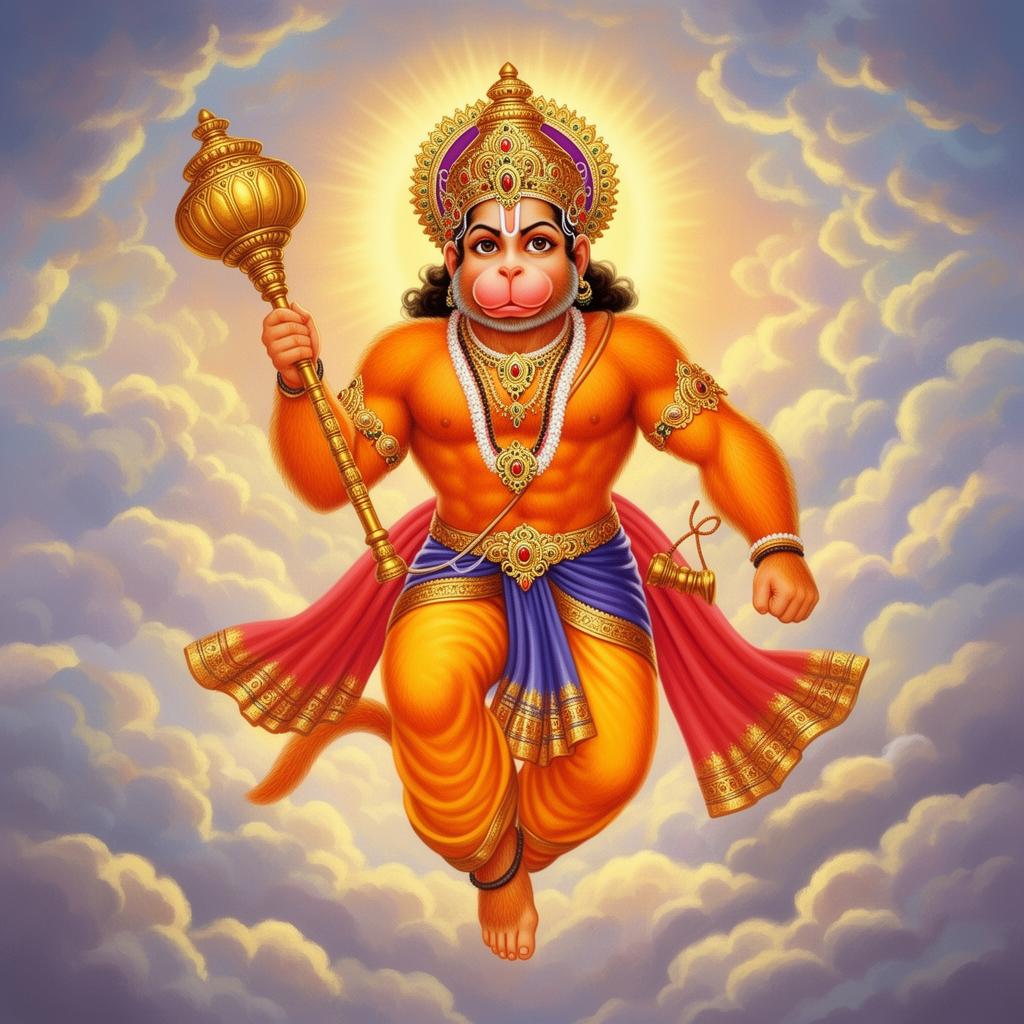
Veer Hanuman, sometimes called Vira Hanuman, depicts the warrior at the height of his strength and action, most often shown mid-stride or in flight, mace (gada) raised in one hand, chest broad, expression fierce and determined. This is the Hanuman of the Ramayana's most dramatic moments: leaping across the ocean to Lanka, setting the demon city ablaze with his burning tail, or carrying the entire Sanjeevani mountain back to save Lakshmana's life because he could not identify the specific herb needed in time.
The gada, his signature weapon, is not incidental to this form's meaning. It represents disciplined strength used in service of dharma rather than for personal gain, an important distinction in how this form is understood. Veer Hanuman is invoked specifically for courage, physical protection, and the strength to overcome a powerful, seemingly overwhelming obstacle - a serious illness, a dangerous journey, a confrontation that genuinely intimidates the person facing it, or any situation where a devotee feels they need raw resolve rather than gentle comfort.
This is the form most commonly found guarding temple entrances and gateways across India, often shown independently at a significant scale, precisely because guardianship and fierce protection are the form's core association. Wrestlers, athletes and members of the armed forces have traditionally shown particular devotion to Veer Hanuman, given the form's direct connection to physical strength disciplined by purpose. Tuesdays and Saturdays, already associated with Hanuman worship broadly, are considered especially significant for prayers specifically directed at this warrior aspect, often paired with recitation of the Bajrang Baan, a stotra built around invoking exactly this fierce, protective energy.
Sankat Mochan and Other Forms Worth Knowing
Beyond the three major forms above, a few others appear often enough in temples and home worship to be worth knowing:
- Sankat Mochan Hanuman - by far the most commonly worshipped form in everyday home and neighbourhood temple settings, depicted simply, standing or seated, often in the orange-red hue associated with him, without elaborate multiple heads or arms. "Sankat Mochan" means "remover of difficulties," and this is the general, all-purpose form devotees turn to for ordinary daily struggles; the Hanuman Chalisa is most commonly recited before precisely this image.
- Ram Bhakt Hanuman - shows Hanuman tearing open his own chest to reveal Rama and Sita seated within his heart, illustrating the story of him proving his devotion when questioned about wearing a garland around his neck by explaining that even his heart carries their image. This form is invoked less for a specific need and more as a meditation on total, unwavering devotion (bhakti) itself.
- Dasbhuja or Ashta Hanuman - multi-armed forms (eight or ten arms) shown carrying an array of weapons simultaneously, generally understood as an extension of the warrior symbolism into an even more heightened display of readiness and power, often found in temples built around a specifically fierce tradition of worship.
- Hanuman with the mountain - shown mid-flight carrying the Sanjeevani mountain, a form specifically associated with healing, medicine and recovery from serious illness, drawing directly on the Lakshmana-rescue episode.
Most households do not choose between these forms so much as accumulate a few of them over time, a Sankat Mochan image for daily worship, perhaps a small Panchamukhi picture kept for added protection, and a sense of which one to lean on shifting naturally with whatever is happening in the family's life at a given moment.
Which Form to Worship When
There is no rule requiring a devotee to select only one form for life. Most people who develop a serious Hanuman practice naturally end up drawing on different forms at different times, the same way a family might light a diya for Ganesha before a journey and for Lakshmi on a Friday evening without treating this as contradictory.
As a practical starting point: Sankat Mochan is the right default for ordinary daily worship and everyday troubles, exactly the form most home shrines already keep. Veer Hanuman is worth turning to specifically when a situation calls for courage or physical resolve, a difficult confrontation, a demanding physical challenge, a moment requiring raw strength of will. Panchamukhi Hanuman is reserved for a heavier sense of unseen threat or protection needed from multiple, unclear directions, rather than everyday use. Bal Hanuman fits prayers specifically about a child's health, growth or education. Ram Bhakt Hanuman suits quiet moments of reflection on devotion itself, rather than a request for a specific outcome.
What ties all of these forms together, and is worth remembering above any specific rule about which to use when, is that they are facets of a single being rather than separate deities competing for attention. Tradition treats a devotee's instinct, which image draws you in on a given day, which story feels most relevant to what you are carrying, as a reasonably reliable guide in itself. The multiplicity of forms exists to make Hanuman easier to reach from wherever a devotee happens to be standing, not to complicate the relationship.
🙏 The Vandnaa app's temple and mantra library includes stotras for each of these forms, making it simple to find the right prayer for whichever aspect of Hanuman you need today.
What People Ask Most
What is Panchamukhi Hanuman and why does he have five faces?+
Panchamukhi Hanuman is a five-faced form showing Hanuman alongside Narasimha, Garuda, Varaha and Hayagriva, one facing each direction. It originates from the story of defeating Ahiravana, who could only be stopped by extinguishing five lamps in five directions at once. This form is invoked for all-around protection.
Which Hanuman form is best for regular home puja?+
Sankat Mochan Hanuman, the simple, single-faced form without multiple arms, is the most common and appropriate choice for everyday home worship. It is the form most home shrines already use, and the Hanuman Chalisa is traditionally recited before it.
Is Bal Hanuman worshipped differently from the adult forms?+
The core worship method, offerings and mantras remain broadly similar, but Bal Hanuman is specifically invoked for children's health, growth and education rather than protection or courage, and is often kept as a separate small image in homes with young children.
What does the mace (gada) represent in Veer Hanuman's form?+
The gada represents disciplined strength used in service of dharma rather than for personal gain. It is Hanuman's signature weapon in his warrior form and symbolizes the courage and resolve devotees seek when facing a difficult or intimidating obstacle.
Can a devotee worship more than one form of Hanuman?+
Yes, this is common and traditional. Most devotees keep a primary form, usually Sankat Mochan, for daily worship, and turn to other forms like Panchamukhi or Veer Hanuman during specific situations that call for them, without any conflict between the practices.
Where does the Panchamukhi Hanuman form originate in mythology?+
It comes from the Patala Khand tradition of the Ramayana, where Hanuman had to assume this five-faced form to simultaneously extinguish five lamps in five directions, the only way to defeat the sorcerer-king Ahiravana and rescue Rama and Lakshmana.
About the author
Anjali Mehta · Editor, M.A. Religious Studies
Anjali is the managing editor for Vandnaa and oversees the festival and vrat coverage. She holds an M.A. in Religious Studies and reviews every published article for accuracy, accessibility, and tradition-fidelity.
Meet the Vandnaa editorial team →