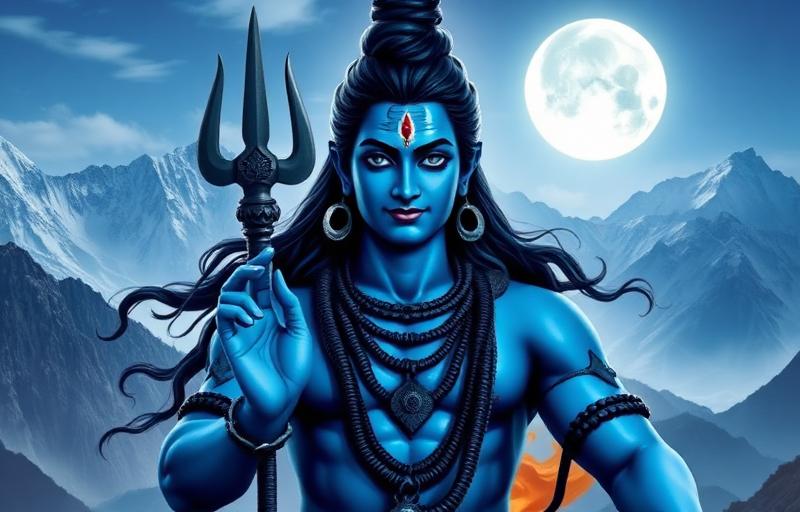
Hari and Har in One Form
Harihar Nath is worshipped at Sonepur in Saran district of Bihar, at the point where the Gandak meets the Ganga, across the river from Patna and Hajipur.
Hari is Vishnu. Har is Shiva. The Harihar form, in which the two are held together, appears across Indian tradition, sometimes as a single image split down the middle, with Vishnu's attributes on one side and Shiva's on the other.
The form carries a specific theological point, and Hindu tradition makes it deliberately:
- Vaishnava and Shaiva traditions each hold their deity as supreme, and the debate between them is old
- The Harihar form states that the distinction does not go all the way down
- Temples like this one are where that position is worshipped rather than argued
At Sonepur the deity is worshipped as a linga, and tradition holds that both Hari and Har are present in it. Devotees offer accordingly, and the temple receives both Shaiva and Vaishnava offerings.
Harihar shrines are not common, which is part of why this one draws devotees from across Bihar and eastern Uttar Pradesh. Sonepur itself is known nationally for something else entirely, its enormous cattle fair, and many visitors do not realise the fair exists because of the temple.
The Katha of Gajendra Moksha
The katha attached to this sangam is one of the best loved in the Bhagavata Purana, and Sonepur is among the places tradition associates with it.
Gajendra, the king of elephants, entered a lake to drink and bathe. A crocodile seized his leg and would not let go. The elephant fought, and the struggle went on for an extraordinarily long time, described in the text as lasting a thousand years.
Gajendra's strength failed. At the end of it, with nothing left, he lifted a lotus in his trunk and called out to Vishnu, no longer fighting, only calling.
Vishnu came at once, released him and freed the crocodile from its own curse.
What devotees take from this katha:
- Help came when the fighting stopped, not before. The point of the story is the moment of surrender.
- Gajendra was not a sage or a devotee of long standing. He was an animal in trouble who called sincerely.
- Both parties were released. The crocodile was not simply destroyed but freed from what it had become.
The local tradition places this episode at the meeting of the Ganga and the Gandak, which is why the temple stands here and why the fair that grew around it was, from the beginning, a fair where elephants were traded and displayed. That connection is the reason Sonepur's mela has the character it does.
The Sonepur Mela
The Sonepur mela, also called the Harihar Kshetra mela, begins around Kartik Purnima and runs for weeks. It has long been described as one of the largest cattle fairs in Asia.
What happens:
- Devotees take snan at the sangam of the Ganga and the Gandak on Kartik Purnima, which is the religious core of the event
- Darshan at the Harihar Nath temple follows the snan
- A vast fair spreads across the mela ground, historically trading cattle, horses, elephants, birds and every kind of livestock
- Traders, performers, stalls and visitors arrive from across Bihar, Uttar Pradesh, Jharkhand and further
The fair's scale and character have changed considerably. Wildlife protection law has ended the trade in several species that were once part of it, and the elephant trade in particular is no longer permitted. What remains is a cattle and horse fair, a large commercial mela and a religious gathering at the sangam.
For devotees, the religious part is the reason to go. Kartik Purnima snan at a sangam is significant across Hindu practice, and this one comes with a temple where Hari and Har are worshipped together, which few sangams can offer.
Going during the mela means crowds, difficult transport and full accommodation. Going outside it means a quiet riverside temple that most people in India have never heard of.
The Temple and Its Traditions

The temple's own traditions place it in very old memory and in more recent history at the same time.
- Tradition holds that the shrine was established in a much earlier age, and local accounts connect its founding to the Ramayana period, with Ram said to have worshipped here on his way to Janakpur
- The structure as it stands is attributed to later patronage, with the medieval rebuilding commonly credited to Raja Man Singh, and further additions and repairs after that
- The deity is worshipped as a linga, with the Harihar identification maintained in the temple's own practice
- The sangam below the temple is the site of the snan that defines the annual calendar
Offered here are the standard items of both traditions, which is unusual and worth noticing at the shrine itself. Bel patra and water for Har, tulsi and flowers for Hari, and devotees who follow one tradition offering in the manner of the other without any difficulty.
Mahashivratri and Sawan Mondays bring Shaiva crowds. Kartik Purnima brings the great annual gathering. In between, the temple is calm, and the riverside setting is the main impression a visitor takes away.
Sonepur is easily reached from Patna, Hajipur and Chhapra, and it sits close enough to Patna that it can be done as a half day trip outside the mela season.
Harihar Shrines Elsewhere in India
The Harihar idea appears across India, and Sonepur is one node in a larger pattern worth knowing about.
- Harihar images in sculpture, split vertically with Vishnu's shankh and chakra on one side and Shiva's trishul and jata on the other, are found in temples and museum collections across the country
- Shankaranarayana shrines in Karnataka and Kerala worship the same combined form under that name
- Sabarimala's Ayyappan is described in tradition as the son of Hari and Hara, which is the same theological move expressed as a birth rather than a merged image
- Rajim in Chhattisgarh, where Rajiv Lochan the Vishnu and Kuleshwar the Shiva are worshipped in one visit at a sangam, does the same thing across two temples
- Sonepur, where a single linga is worshipped as both
What all these express is a position that Hindu tradition has held for a very long time. The sectarian distinction between Vaishnava and Shaiva is real at the level of practice, lineage and preference, and it is not treated as ultimate.
For a devotee, the practical version of this is simple and is visible at Sonepur any morning. Someone offers bel patra, someone else offers tulsi, at the same deity, and no one at the temple considers this a problem to be resolved.
Planning a Visit
Sonepur is convenient to reach, which is not true of many Bihar pilgrimage sites.
- Location - Sonepur, Saran district, Bihar, at the Ganga and Gandak sangam, opposite Hajipur and close to Patna
- Access - Sonepur has its own railway junction, and road access from Patna and Hajipur is straightforward
- Best time - October to March. Kartik Purnima and the mela weeks are the fullest experience and also the most crowded.
- What to carry - bel patra, flowers, tulsi and a small vessel if you plan to offer sangam water, and a change of clothes if you will bathe
- During the mela - expect large crowds, heavy traffic and full accommodation. Patna is the practical base.
- Etiquette - remove footwear, avoid photography in the sanctum, and follow the queue arrangements on Kartik Purnima
What can be combined:
- Patna, with the Mahavir Mandir at the railway station and the Patan Devi shrines
- Vaishali and Hajipur, close by
- Gaya for pind daan, a longer trip south
- Sitamarhi and the Mithila circuit, to the north
A note for those who go during the mela. The religious event and the commercial fair happen together but are not the same thing. If your interest is the temple and the snan, arrive early on Kartik Purnima, complete the darshan and let the fair be a separate visit.
What People Ask Most
Who is Harihar Nath?+
Harihar Nath is the deity worshipped at Sonepur in Bihar, at the Ganga and Gandak sangam, in the Harihar form in which Hari, Vishnu, and Har, Shiva, are held together in one deity. The murti is worshipped as a linga.
What is the Gajendra Moksha katha?+
Gajendra, the king of elephants, was seized by a crocodile in a lake and fought for an extraordinarily long time. When his strength failed he lifted a lotus and called on Vishnu, who came at once, released him and freed the crocodile from its curse. Local tradition places the episode at the Sonepur sangam.
When is the Sonepur mela held?+
It begins around Kartik Purnima and runs for weeks. Devotees take snan at the Ganga and Gandak sangam and complete darshan at the Harihar Nath temple, while a vast cattle and commercial fair runs alongside.
Is the elephant trade still part of the Sonepur mela?+
No. Wildlife protection law has ended the trade in several species that were once part of the fair, and the elephant trade in particular is no longer permitted. What remains is a cattle and horse fair alongside the religious gathering.
What is offered at the Harihar Nath temple?+
Items from both traditions, which is unusual and visible at the shrine. Bel patra and water for Har, tulsi and flowers for Hari, with devotees of either tradition offering in the other's manner without difficulty.
How do you reach Sonepur?+
Sonepur is in Saran district, Bihar, opposite Hajipur and close to Patna. It has its own railway junction and straightforward road access, and outside the mela season it can be visited as a half day trip from Patna.
About the author
Pandit Ravindra Sharma · Vedic Rituals & Bhakti, 22+ years
Pandit Ravindra is the Vandnaa editorial team's resident specialist on aarti, chalisa, and daily devotion. He has performed home and temple pujas across Varanasi and Delhi for over two decades and contributes the bhakti-focused articles on this site.
Meet the Vandnaa editorial team →Explore on Vandnaa
Related Articles

Chhathi Maiya: The Goddess Behind Chhath, Her Katha and Why She Needs No Temple
9 min read
Pind Daan in Gaya - Vidhi, Significance and Why Gaya is Supreme
9 min read
Rajiv Lochan of Rajim: The Vishnu Who Stands Where Three Rivers Meet
8 min read

Dev Diwali / Kartik Purnima - Significance, Snan and Vidhi
9 min read