Why the Pantheon Looks Vast (But Isn't Chaotic)
Newcomers to Hindu tradition, and sometimes younger Hindus raised with only fragments of the full picture, often ask a version of the same question: how do all these gods actually relate to each other? The honest answer is that they relate through a structure that is genuinely learnable, even though it is rarely taught all at once in one place.
Hindu philosophy generally holds that there is a single, ultimate reality, referred to as Brahman, formless and beyond full description. What looks like a vast collection of separate gods is, in most schools of Hindu thought, better understood as many forms and functions through which this one reality is approached, worshipped and understood. This is why a devotee can have a personal Ishta Devata, a chosen form of the divine they feel closest to, without that choice denying the validity of another devotee's different chosen form.
That said, the pantheon is not simply "one god wearing different masks" in a flat, interchangeable sense either. Hindu texts describe real relationships, real families, and real distinctions in role and personality between figures like Ganesha, Hanuman, Durga and Krishna. These relationships matter to devotees and are worth learning accurately, the same way understanding a large extended family helps you understand any one relative better. The sections that follow map out the core relationships: the Trimurti at the center, Shiva's household, Vishnu's avatars, and the goddess traditions that run alongside and through all of it, giving structure to what can otherwise feel like an overwhelming number of names.
The Trimurti: Brahma, Vishnu and Shiva
At the center of the pantheon's structure sits the Trimurti, the three-part representation of creation, preservation and dissolution as cosmic functions. Brahma represents creation, Vishnu represents preservation and sustenance, and Shiva represents dissolution and transformation, the necessary clearing that makes new creation possible again. It is worth being clear that this is a division of function, not a ranking of power or importance, all three are considered supreme within the traditions that center them.
Each member of the Trimurti has a consort who is herself a major deity, not a secondary figure. Brahma's consort is Saraswati, goddess of knowledge, wisdom, music and the arts, often depicted with a veena and considered essential to creation in the sense that nothing meaningful is created without knowledge guiding it. Vishnu's consort is Lakshmi, goddess of wealth, abundance and prosperity, reflecting that what is preserved and sustained must also be nourished materially and spiritually. Shiva's consort is Parvati, also known as Shakti, representing the active, dynamic energy without which even dissolution and transformation could not occur.
This pairing is not incidental. Many Hindu traditions hold that Shakti, divine feminine energy, is what animates and empowers each of the three male forms to carry out their cosmic function, meaning the Trimurti is more accurately understood as three complementary pairs working together rather than three solitary male gods acting alone. Vaishnavism, Shaivism and Shaktism, three of Hinduism's major devotional traditions, each place a different member of this larger structure, Vishnu, Shiva, or the Goddess herself, at the very center of their worship, while still generally acknowledging the others' significance.
Shiva and Parvati's Family
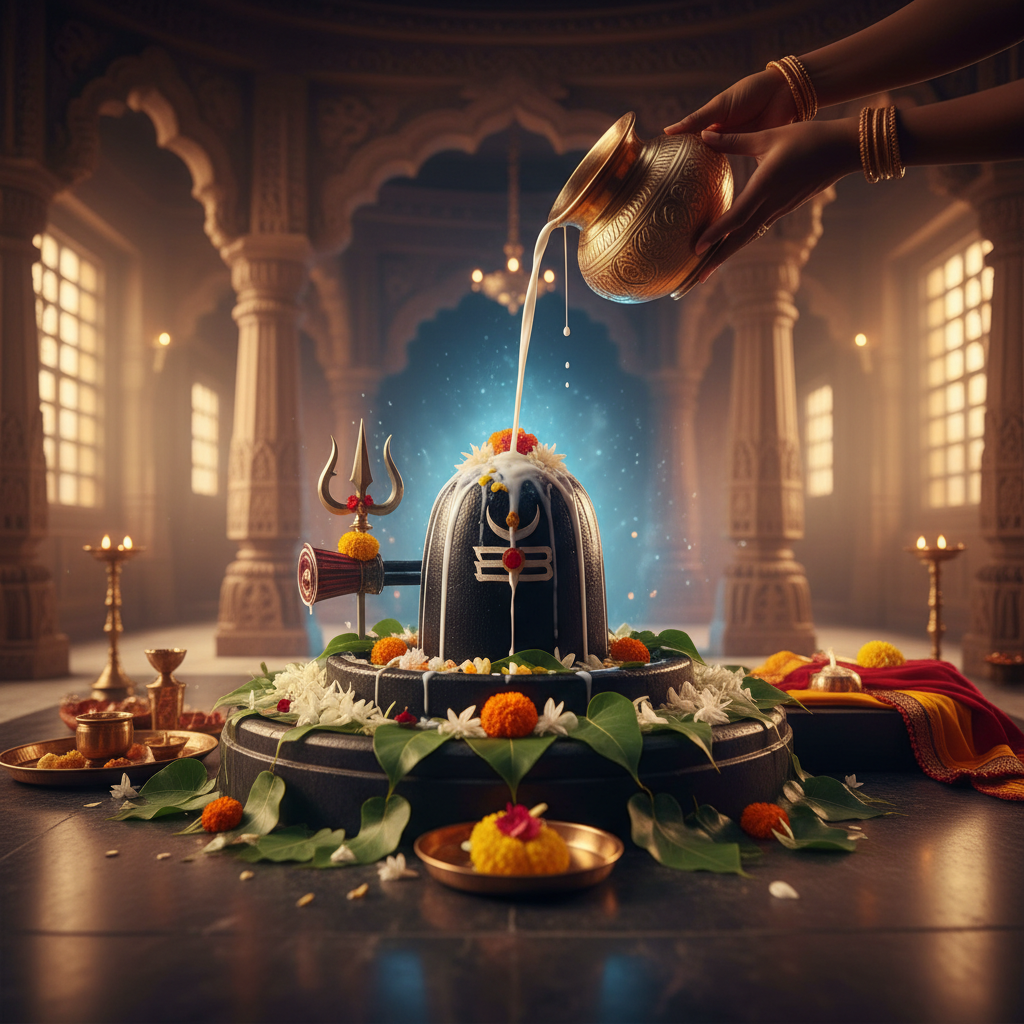
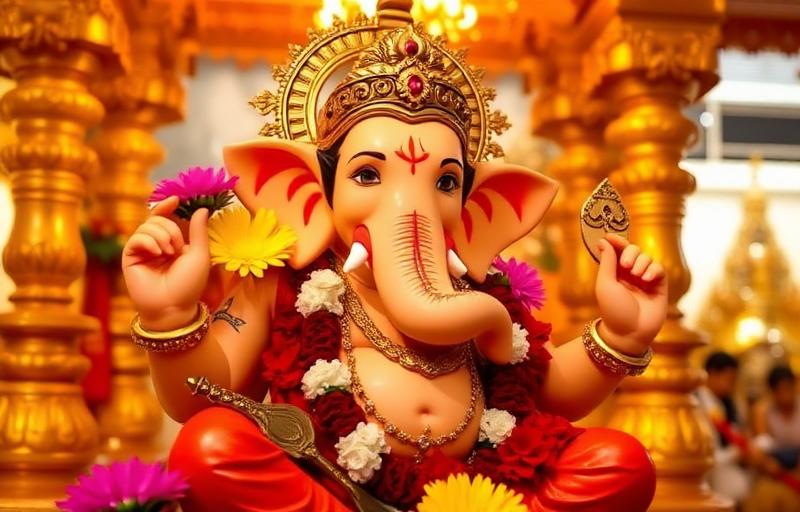
Shiva and Parvati's household is one of the most beloved family units in Hindu tradition, and its two sons are among the most widely worshipped deities in the entire pantheon. Ganesha, the elephant-headed god, is worshipped first in nearly every puja across India, regardless of which deity the ritual is primarily for, earning him the title Vighnaharta, remover of obstacles. Puranic tradition tells that Parvati created Ganesha herself, and after a misunderstanding led to conflict with Shiva, he was restored to life with the head of an elephant, making his form itself a story about restoration and a parent's love.
The second son, Kartikeya, also known as Skanda, Murugan or Subrahmanya depending on the region, is worshipped as the commander of the devas' army and a god of courage, strategy and war. His worship is especially prominent in Tamil Nadu and across South India, where he is often considered the primary family deity in many households, showing how the same family holds different relative importance depending on regional tradition rather than one fixed hierarchy applying everywhere.
Both sons are frequently shown alongside their parents in family portraits common in Hindu homes, sometimes with Nandi, Shiva's bull and devoted attendant, completing the scene. This image of a complete, loving household, not a distant, unapproachable set of cosmic forces, is part of why Shiva and Parvati's family resonates so strongly with devotees seeking blessings for their own family life, marriage and children, treating the divine family as a model as much as an object of worship.
Vishnu's Avatars: One God, Many Descents
Where Shiva's family is defined by household relationships, Vishnu's is defined differently, through avatars, direct descents of the god himself into the world rather than separate offspring. The Bhagavad Gita explains the reasoning behind this directly, in Krishna's own words: "whenever dharma declines and adharma rises, I manifest myself", a promise to intervene personally whenever the world's moral balance falls seriously out of order, rather than delegating that task to a child or subordinate deity.
The traditional list of ten avatars, the Dashavatara, moves from Matsya, the fish, through Kurma the tortoise, Varaha the boar, Narasimha the man-lion, and Vamana the dwarf, before reaching more human forms: Parashurama, Rama, Krishna, and, in most tellings, Buddha, with Kalki yet to come at the end of the current age. This sequence is sometimes read, loosely and not as literal science, as tracing a rough progression from simpler to more complex life, though its primary purpose in tradition is always theological rather than descriptive of evolution.
Among these, Rama and Krishna are worshipped as the most complete, or purna, avatars, each the central figure of an entire epic, the Ramayana and the Mahabharata respectively, and each the focus of massive independent devotional traditions, temple networks and festival calendars of their own. Because avatars are the same being appearing in different forms rather than separate relatives, asking "how is Krishna related to Vishnu" has a simpler answer than most other pantheon questions: they are, in the tradition's own understanding, one and the same, appearing at different points in time for different purposes.
The Goddess Side: Durga, Lakshmi, Saraswati and Kali
Running alongside, and in Shakta tradition underlying, both the Trimurti and Vishnu's avatars is the goddess tradition, rooted in the concept of Adi Shakti, the primordial divine feminine energy from which all specific goddesses are understood to emerge. Rather than being simply "wives" attached to male gods, goddesses in this tradition are understood as the active power that makes any divine function possible at all, a point Shakta philosophy makes explicitly and other traditions generally acknowledge in some form.
Durga holds a distinctive place in this structure as a unified warrior form, described in the Devi Mahatmyam as having been created when the combined energies of multiple gods, unable individually to defeat the buffalo demon Mahishasura, converged into a single, powerful feminine form capable of doing what no single god could achieve alone. This origin story is precisely why Durga is often described as containing aspects of many other goddesses and gods within her rather than standing entirely separate from them.
Kali, fierce and closely associated with time and the destruction of evil, is worshipped both as an independent supreme goddess in her own right, particularly in Bengal, and as a fierce aspect connected to Parvati and Shiva in other regional traditions, another example of how the same relationships can be framed differently depending on where and how a deity is primarily worshipped. Navratri, the nine-night festival observed across India, worships nine specific forms of the goddess, the Navadurga, across its nine nights, offering one of the clearest structured ways devotees engage with this wider goddess tradition each year, alongside Lakshmi and Saraswati's own dedicated festival days elsewhere in the calendar.
How It All Connects
Pulling these threads together, a simple way to hold the whole structure in mind is this: the Trimurti (Brahma, Vishnu, Shiva) represents cosmic function, each paired with a goddess consort (Saraswati, Lakshmi, Parvati) who represents the active energy behind that function. Shiva and Parvati's household extends into Ganesha and Kartikeya. Vishnu extends through his avatars, most importantly Rama and Krishna, each with their own family and devotional universe, Rama with Sita, Lakshmana and Hanuman, Krishna with Radha, Balarama and the wider world of Vrindavan and Dwarka. The goddess tradition runs through and beneath all of it via Adi Shakti, manifesting distinctly as Durga, Kali and others depending on context and region.
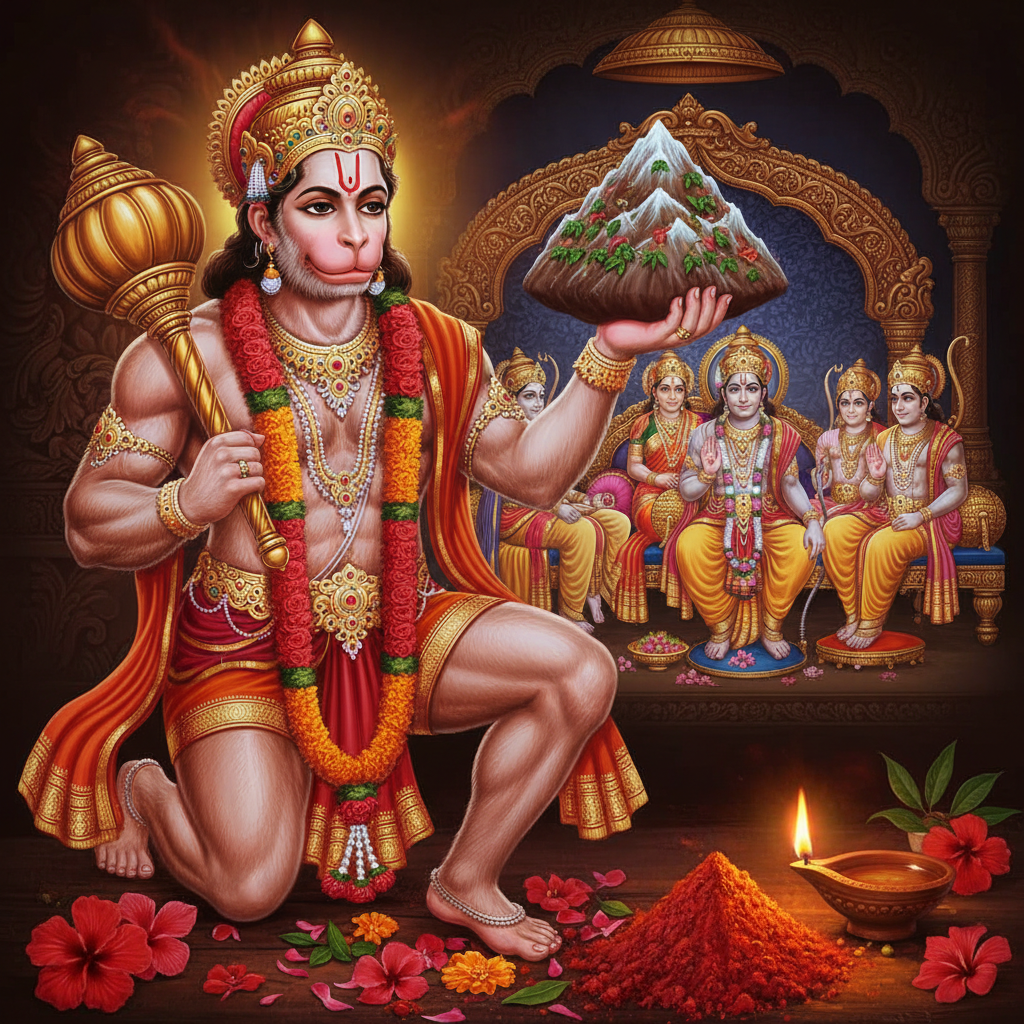
Other major figures fit into this map through devotion or divine parentage rather than the Trimurti's direct bloodline. Hanuman, for instance, is understood in most traditions as the son of the wind god Vayu and Anjana, and as Rama's most devoted follower, while several Shaiva traditions additionally hold that Hanuman is himself an avatar or amsha of Shiva, specifically the eleventh Rudra, adding one more thread connecting Shiva's tradition to Vishnu's avatar Rama through devoted service.
One last, important point: this map is a genuinely useful framework, not a rigid rulebook enforced identically everywhere. Regional traditions, individual family lineages and specific temple histories all add their own local emphasis, additional relationships and sometimes different interpretations of a shared story. Learning the core structure above gives any reader a reliable foundation for making sense of a specific regional or family variation when they encounter one, rather than needing to memorize every version separately from scratch.
✨ Vandnaa's deity guides let you explore each of these gods and goddesses individually, with their stories, mantras and puja vidhi in one place.
Quick Answers
Is Ganesha Shiva's son by birth or by creation?+
Puranic tradition holds that Parvati created Ganesha herself, independent of Shiva, and he was later given his elephant head and restored to life by Shiva after a misunderstanding, making him a son through both creation and Shiva's own restorative act.
How is Hanuman related to Shiva?+
Hanuman is traditionally the son of the wind god Vayu and Anjana. Separately, several Shaiva traditions hold that Hanuman is an avatar of Shiva himself, specifically the eleventh Rudra, giving him a devotional connection to both Shiva and Rama.
Are all Hindu gods really just forms of one God?+
Many schools of Hindu philosophy hold that one ultimate reality, Brahman, underlies all specific deities, while still recognizing real distinctions, relationships and personalities among them. Different traditions place different emphasis on this unity versus the individuality of each deity.
Why does Vishnu have 10 avatars instead of just appearing as himself?+
Tradition holds that each avatar takes a form suited to the specific problem of that era, as explained in the Bhagavad Gita's promise to manifest whenever dharma declines. A boar form suited rescuing the earth from the depths, while a human form suited teaching dharma through Rama's example.
Is Kali the same as Durga, or a different goddess?+
This varies by tradition. Some regard Kali as a fierce aspect within the same Adi Shakti that manifests as Durga, while others, particularly in Bengal, worship Kali as an independent supreme goddess in her own right rather than as one aspect among several.
Why do different regions of India worship different family members more prominently?+
Regional history, local temple traditions and centuries of specific devotional movements shape which deity a community centers, such as Kartikeya's prominence in Tamil Nadu or Kali's in Bengal, without denying the wider family structure connecting them to the rest of the pantheon.
About the author
Anjali Mehta · Editor, M.A. Religious Studies
Anjali is the managing editor for Vandnaa and oversees the festival and vrat coverage. She holds an M.A. in Religious Studies and reviews every published article for accuracy, accessibility, and tradition-fidelity.
Meet the Vandnaa editorial team →