How Hindu Faith Came to South Africa
Hindu heritage in South Africa traces back to 1860, when the ship Truro brought the first Indian indentured labourers to the port of Durban to work the sugar estates of Natal. Over the following decades, tens of thousands more arrived from across India, and Durban grew into what is often described as one of the largest concentrations of people of Indian origin anywhere outside India itself.
As elsewhere in the diaspora, devotees carried their faith with them, building the earliest shrines from simple materials long before the grand temples that stand today became possible.
Temples That Rose Across Natal
Among the most significant is the Sri Siva Subramaniya Temple in Mount Edgecombe near Durban, regarded as one of the oldest Hindu temples in the southern hemisphere and dedicated to Lord Murugan, known here as Subramaniya. Its towering, brightly coloured gopuram in South Indian style has made it a landmark for the wider community.
Beyond Mount Edgecombe, temples large and small are found across Durban and further afield in Johannesburg and Pretoria, many built and tended by families descended from the earliest indentured labourers, alongside newer mandirs raised as the community has grown and prospered.
Significance for Devotees
For South Africa's Hindu community, temples have long served as anchors of identity through periods of great hardship and change across generations. Devotees believe that Lord Subramaniya's grace, sought at Mount Edgecombe much as at temples to Murugan in Tamil Nadu, has watched over the community since its earliest, most difficult years.
As per tradition, many devotees observe Kavadi, carrying decorated structures as an act of penance and devotion, particularly during temple festivals honouring Lord Murugan, a practice that continues to draw deep participation from the community.
Festivals That Keep the Faith Alive
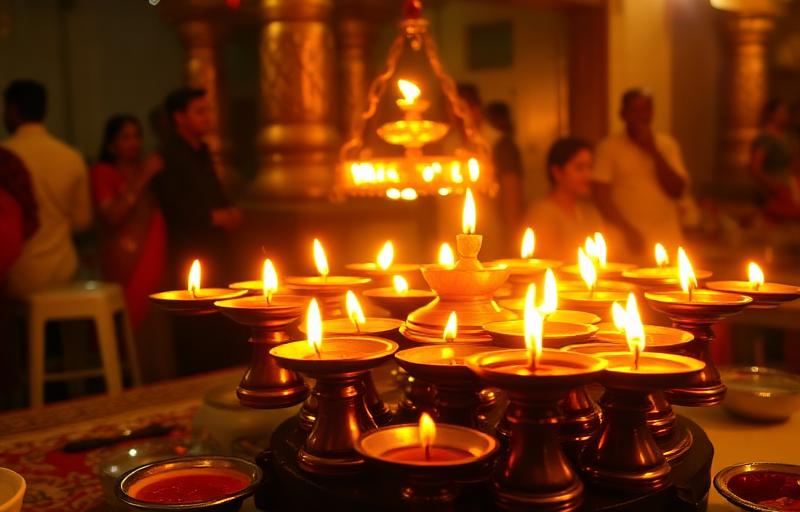
Thaipusam Kavadi, Diwali and temple-specific utsavams draw large gatherings across Durban's mandirs each year, with the Sri Siva Subramaniya Temple's festivals in particular known for their scale and devotion. Diwali lighting and sweets are shared widely through Durban's Indian neighbourhoods, a warm and visible part of the city's cultural calendar.
These celebrations, sustained purely through community effort over more than a century and a half, remain a source of pride for a diaspora that has held firmly to its devotional roots.
Visiting the Temples of Durban
Visitors to Durban can reach the Sri Siva Subramaniya Temple in Mount Edgecombe within a short drive of the city centre, and many other mandirs across the metro area welcome respectful guests during regular puja hours. Festival periods, especially around Diwali and temple utsavams, offer visitors the fullest sense of the community's devotional life.
As with any mandir, modest dress and quiet respect within the sanctum are expected of all visitors.
A Simple Mantra and the Takeaway
Before Lord Subramaniya's sanctum, devotees often chant "Om Saravanabhavaya Namah", a salutation to Murugan, or simply "Vetrivel Veeravel", the joyous call heard at Murugan temples across the Tamil devotional world. Many also recite verses in gratitude for the community's endurance across generations of hardship and change.
Durban's temples stand today as living proof that faith, once carried across an ocean in difficult circumstances, can flourish into a devotion as vibrant as any found in India. Worship here, as everywhere, is an act of faith and love, not a transaction.
Common Questions From Devotees
When did Indian indentured labourers first arrive in South Africa?+
The first arrivals landed at Durban in 1860 aboard the ship Truro, beginning decades of Indian migration to work Natal's sugar estates.
What is the Sri Siva Subramaniya Temple?+
It is one of the oldest Hindu temples in the southern hemisphere, located in Mount Edgecombe near Durban and dedicated to Lord Murugan, known locally as Subramaniya.
What is Kavadi, observed at Durban's temples?+
Kavadi is a devotional practice in which devotees carry decorated structures as an act of penance and devotion to Lord Murugan, especially during his temple festivals.
About the author
Pandit Ravindra Sharma · Vedic Rituals & Bhakti, 22+ years
Pandit Ravindra is the Vandnaa editorial team's resident specialist on aarti, chalisa, and daily devotion. He has performed home and temple pujas across Varanasi and Delhi for over two decades and contributes the bhakti-focused articles on this site.
Meet the Vandnaa editorial team →