What Is a Panchang and Why Five Angas?
The word panchang comes from Sanskrit pancha (five) and anga (limbs) - the calendar of five limbs. Those five are tithi (the lunar day), vara (the weekday), nakshatra (the star group the Moon occupies), yoga (a combined sun-moon measure) and karana (half a tithi). Together they describe one day of the Hindu calendar completely. For centuries the panchang has been the devotee's companion: it tells you when Ekadashi falls, when to break a fast, when a sankranti arrives, when the month changes and which festival is near. You do not need to be a scholar to use one. Just as you can read a wristwatch without studying horology, you can read a panchang for your daily devotion once each limb is explained simply. This guide stays firmly in that devotional, practical territory - planning vrats, pujas and festivals - and leaves predictive astrology entirely aside.
Tithi and Vara - The Lunar Day and the Weekday
Tithi is the first and most-used limb: the lunar day, defined by the Moon moving 12 degrees away from the Sun. Each lunar month has 30 tithis - 15 in the bright Shukla paksha ending at Purnima, and 15 in the dark Krishna paksha ending at Amavasya. Every vrat and festival is anchored to a tithi: Ekadashi vrat to the eleventh, Janmashtami to Bhadrapada Krishna Ashtami, Diwali to Kartik Amavasya. The panchang lists today's tithi and the exact time it ends. Vara is simply the weekday, but in devotional life each vara belongs to a deity: Somvar (Monday) to Shiva, Mangalvar (Tuesday) to Hanuman, Budhvar (Wednesday) to Ganesh, Guruvar (Thursday) to Vishnu and Brihaspati, Shukravar (Friday) to Devi and Lakshmi, Shanivar (Saturday) to Shani and Hanuman, and Ravivar (Sunday) to Surya. Weekly vrats - Somvar vrat in Sawan, Tuesday Hanuman Chalisa - flow from the vara.
Nakshatra - The Moon's Star Group
The Moon's path through the sky is divided into 27 nakshatras, or star groups - Ashwini, Bharani, Krittika, Rohini and so on through Revati. The panchang names the nakshatra the Moon occupies today and when it changes. For the everyday devotee, nakshatras matter in three gentle ways. First, several festivals are fixed by nakshatra rather than tithi alone: Onam is celebrated on Thiruvonam nakshatra, and Tamil tradition honours Karthigai deepam on Krittika. Second, names: many families choose a child's name-syllable from the birth nakshatra, a custom called namakarana. Third, some vrats and temple rituals note the nakshatra - Rohini with Ashtami marks Krishna Janmashtami's fullest form. You do not need to memorise all 27. It is enough to know what the word means when your panchang or purohit mentions it, and that the Vandnaa Panchang displays today's nakshatra automatically alongside the tithi.
Yoga and Karana - The Two Quiet Limbs
The last two limbs appear on every panchang but rarely affect a devotee's daily planning, so a simple awareness is enough. Yoga is a calculated measure that combines the positions of the Sun and Moon; there are 27 yogas with names like Siddhi, Vyaghata and Amrita, each lasting roughly a day. Purohits consider certain yogas favourable when fixing a muhurat for a wedding or griha pravesh, which is why the word appears on wedding cards. Karana is half a tithi - each tithi contains two karanas, and there are 11 karana names that rotate through the month. One karana, Bhadra (also called Vishti), is traditionally avoided for specific rituals: for example, Raksha Bandhan rakhi is tied only after Bhadra ends, and Holika Dahan timing avoids Bhadra too. When your panchang says 'Bhadra till 2:14 pm' on Raksha Bandhan, that is karana information helping you time the ritual - a perfect example of these quiet limbs becoming practical exactly when needed.
What a Devotee Actually Uses Daily
Strip away the scholarship and a devotee's daily panchang use comes down to a short, friendly checklist: 1. Today's tithi and paksha - is it Ekadashi, Chaturthi, Pradosh, Purnima or Amavasya? This decides vrats and special pujas. 2. Sunrise and sunset times - for sandhya prayers, Surya arghya, and knowing when a fast day formally begins; Brahma muhurat (roughly 90 minutes before sunrise) for japa and meditation. 3. The Hindu month and samvat year - so Sawan somvar, Kartik snan or Magh snan never catch you unprepared. 4. The festival list ahead - what is coming this week and this month, so prasad, flowers and family plans are ready. 5. Vrat-specific timings - parana windows after Ekadashi, moonrise for Karwa Chauth and Sankashti, Bhadra end-time on Raksha Bandhan. That is the whole daily practice. Five glances, under a minute, and your devotion stays in step with the calendar your tradition has kept for millennia.
A Short Glossary of Common Panchang Words
Keep these meanings handy and most panchang entries become self-explanatory: 1. Muhurat - a window of time considered favourable for beginning something sacred, such as a wedding or griha pravesh; fixed by purohits using the five angas. 2. Parana - the formal breaking of a fast, usually the morning after a vrat day, within a stated time window. 3. Sankranti - the moment Surya enters a new rashi; Makar Sankranti is the most celebrated of the twelve. 4. Paksha - a lunar fortnight; Shukla (waxing) or Krishna (waning). 5. Adhik Maas - the extra month inserted roughly every 32-33 months to align the lunar and solar years. 6. Udaya tithi - the tithi prevailing at sunrise, which governs most vrat dates. 7. Brahma muhurat - the pre-dawn period, roughly 90 minutes before sunrise, prized for japa and study. 8. Bhadra - the Vishti karana, avoided for tying rakhi and lighting Holika.
Using the Vandnaa Panchang Before Your Puja
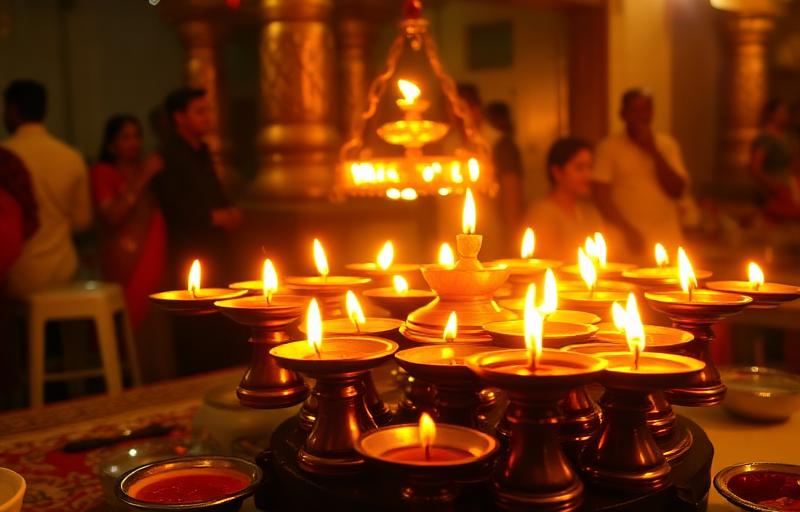
A traditional printed panchang asks you to do the work: find your city's correction, compute the udaya tithi, cross-check the festival rules. A good digital panchang does this for you. The Vandnaa Panchang shows today's tithi, paksha, Hindu month, nakshatra, sunrise and sunset, and the upcoming festival list, all calculated for your location and presented in both English and Hindi. A simple before-puja routine: open the panchang in the morning, note the tithi (any vrat today?), note sunrise if you offer Surya arghya, and glance at the week ahead for approaching Ekadashis or festivals. On festival days, check the specific timing the tradition cares about - parana window, moonrise, or Bhadra end. Remember the purpose throughout: a panchang is not a fortune-telling device, and reading it predicts nothing about your future. It is the devotee's timetable - the same humble role a school timetable plays - so that your bhakti arrives on time, prepared and unhurried.
Reader Questions Answered
What are the 5 parts (angas) of a panchang?+
Tithi (the lunar day), vara (the weekday), nakshatra (the star group the Moon occupies), yoga (a combined sun-moon measure) and karana (half a tithi). Together these five limbs - pancha anga - describe one day of the Hindu calendar completely.
Which part of the panchang matters most for vrats and festivals?+
The tithi. Nearly every vrat and festival - Ekadashi, Janmashtami, Diwali, Navratri - is fixed by tithi and paksha. For most observances, the tithi prevailing at sunrise (udaya tithi) governs the day. A few observances also need nakshatra, moonrise or Bhadra timings, which the panchang lists.
Is reading a panchang the same as astrology?+
No. Reading a panchang for daily devotion is calendar literacy - knowing today's tithi, when a vrat falls, and sunrise timings - just as reading a school timetable is not fortune-telling. Predictive astrology, kundli and horoscopes are a separate field entirely; a devotee needs none of them to use a panchang for puja and festivals.
What is a muhurat in the panchang?+
A muhurat is a window of time considered favourable for beginning a sacred undertaking - a wedding, griha pravesh, mundan or new venture. Purohits fix it by weighing the five angas together. For daily devotion you rarely need a special muhurat; regular puja, japa and aarti are welcome at their usual times, with Brahma muhurat prized for morning sadhana.
Why do panchang timings differ between cities?+
Because sunrise, sunset and moonrise depend on your longitude and latitude. Sunrise in Kolkata is about an hour earlier than in Mumbai, which can change which tithi prevails at sunrise and hence the vrat date. Always use a panchang calculated for your own city, as the Vandnaa Panchang does automatically.
What should I check on the panchang before a puja?+
Three things cover most needs: today's tithi and paksha (any vrat or festival?), sunrise and sunset (for arghya and sandhya), and any special timing the day carries - parana window after Ekadashi, moonrise for Karwa Chauth, or Bhadra end on Raksha Bandhan. The Vandnaa Panchang presents all of these for your location.
About the author
Pandit Ravindra Sharma · Vedic Rituals & Bhakti, 22+ years
Pandit Ravindra is the Vandnaa editorial team's resident specialist on aarti, chalisa, and daily devotion. He has performed home and temple pujas across Varanasi and Delhi for over two decades and contributes the bhakti-focused articles on this site.
Meet the Vandnaa editorial team →