Why Krishna's Birth Hour Defines the Entire Festival
Every Hindu festival has a date. Only one has a minute.
Janmashtami is built around a single, precise moment: the instant Lord Krishna was born inside a prison cell in Mathura, at midnight, during a raging storm, more than 5,000 years ago. Every other ritual of the day - the fasting, the jhula decoration, the bhajans - exists to prepare devotees for that one moment. This is why Janmashtami puja does not begin at a convenient evening hour like most festivals. It is timed backward from midnight itself.
In Hindu tradition, this moment is called Krishna Janma Kshan - the exact instant of divine appearance. Scriptures describe that at this hour, Vasudev carried the infant Krishna across the flooding Yamuna river to keep him safe from King Kansa's soldiers. The urgency of that night is why devotees stay awake until midnight rather than perform puja earlier - in ritual time, the birth has not truly "happened" until the clock strikes twelve.
Janmashtami 2026 falls on Friday, 4 September 2026. Across Mathura, Vrindavan, Dwarka, ISKCON temples worldwide and ordinary homes, the entire day builds toward midnight on this date. Devotees who fast from sunrise are not simply skipping meals - they are ritually re-living the anticipation that Devaki and Vasudev felt on the night Krishna arrived.
Understanding why the hour matters changes how the whole day feels. It stops being a countdown to a meal and becomes a countdown to a birth being renewed, symbolically, in your own home, year after year. This is also why the midnight puja sequence is unusually specific compared to most festival rituals - there is a correct order, and rushing through it is believed to break the emotional arc the ritual is built to create.
Rohini Nakshatra Meets Ashtami Tithi: The 2026 Alignment
Two astronomical conditions must align for Krishna Janmashtami to reach its traditional "Jayanti Yog" status: the Ashtami tithi (eighth lunar day of Krishna Paksha in Bhadrapada month) and the Rohini Nakshatra. Scriptures state Krishna was born when both were present simultaneously at midnight - a combination considered exceptionally rare and powerful.
When both align exactly, the festival is called Jayanti Yog Janmashtami, and its spiritual merit is said to multiply many times over compared to a year when only the tithi falls on the date without the nakshatra overlap. In years when Rohini Nakshatra does not perfectly overlap with midnight, most sampradayas (traditions) still celebrate based on the Ashtami tithi prevailing at midnight, since that is the primary marker used by the majority of temples and households across India.
This is also why you may occasionally notice two different dates being observed in the same week by different communities. Vaishnava sects that follow Smarta calendar calculation versus those that follow ISKCON or Gaudiya Vaishnava convention can arrive at slightly different observance days depending on how tithi and nakshatra are weighted. Neither is "wrong" - they reflect different classical methods of resolving the same astronomical data.
For 2026, mainstream panchangs across India place Janmashtami observance on Friday, 4 September 2026, with the midnight puja performed that night. Because the precise start and end minute of Ashtami tithi shifts slightly by city (based on local sunrise and time-zone calculations within India), the safest approach is to check the exact tithi window for your own city rather than rely on a single national time. The Vandnaa app's panchang feature calculates this automatically for your location.
What matters most for the home devotee is simple: perform your midnight puja as close to 12:00 AM as your household can manage on the night of 4 September, with sincerity mattering far more than second-by-second precision.
The Ritual Sequence at the Stroke of Midnight
When the clock approaches midnight, the sequence of actions in most Krishna temples and homes follows a fairly consistent structure, refined over centuries. Here is the order most devotees follow:
1. Final preparation (11:30 PM onward): The Krishna idol or picture is placed in the mandir, the jhula (cradle) readied, and abhishek items - milk, curd, honey, ghee, sugar, Ganga jal and tulsi leaves - laid out within reach.
2. Panchamrit abhishek (just before midnight): As the clock nears 12:00, the idol of baby Krishna is bathed one by one in milk, then curd, then honey, then ghee, then sugar water, and finally plain water, each poured slowly while chanting "Om Namo Bhagavate Vasudevaya".
3. The birth moment (12:00 AM): At the stroke of midnight, conch shells (shankh) are blown, bells are rung, and many households and temples erupt into cries of "Nand Ghar Anand Bhayo, Jai Kanhaiya Lal Ki" - announcing the birth just as it was announced in Gokul. This is the single most emotionally charged moment of the entire festival.
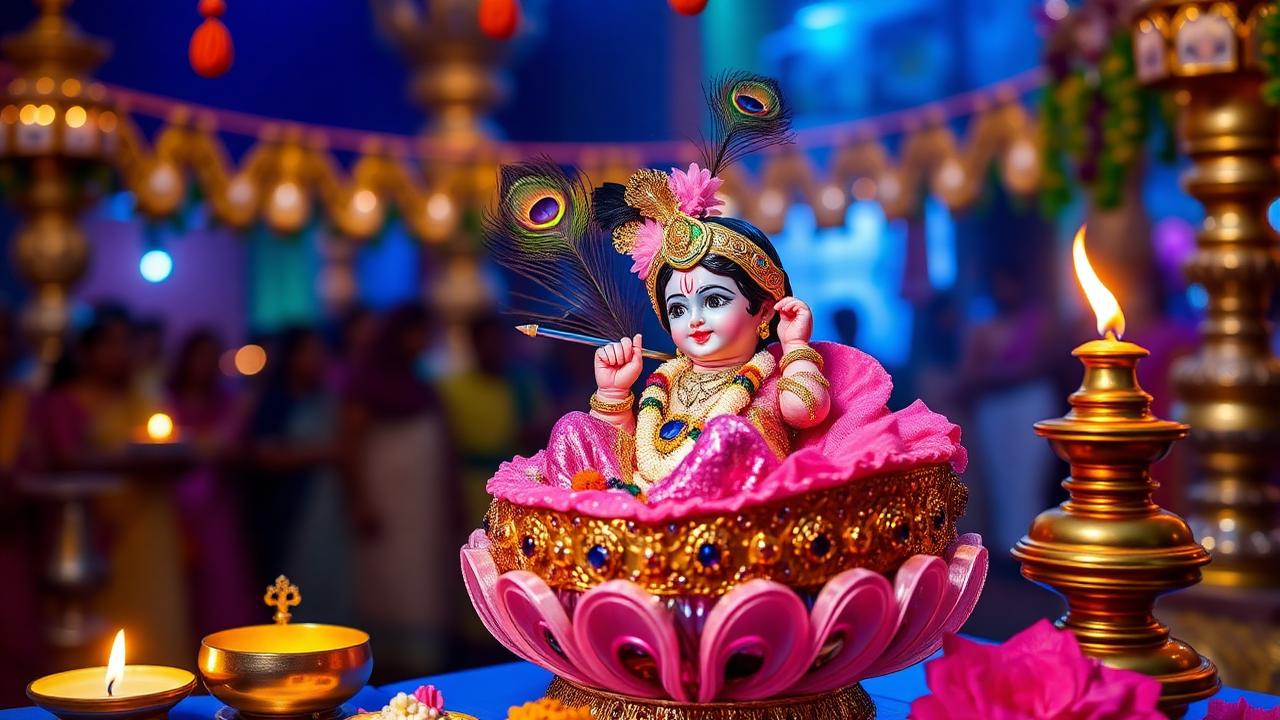
4. Vastra and shringar (dressing the deity): Immediately after, the bathed idol is dried, dressed in new clothes, adorned with a small crown (mukut), peacock feather and jewellery, then placed gently in the decorated jhula.
5. Aarti: The Krishna aarti is performed with a lit diya moved in circular motions before the idol, while the household sings together.
6. Rocking the jhula: Elders and children take turns gently rocking the cradle, symbolically welcoming and soothing the newborn Krishna.
7. First prasad offering: Makhan-mishri (butter and sugar crystals), Krishna's favourite, is offered first, followed by other bhog items prepared for the night.
This entire sequence typically takes 30 to 45 minutes and is rarely rushed, even in busy households, because it is considered the emotional peak of the year for Krishna devotees.
Conch, Bells and Jagran: Building Up to the Moment
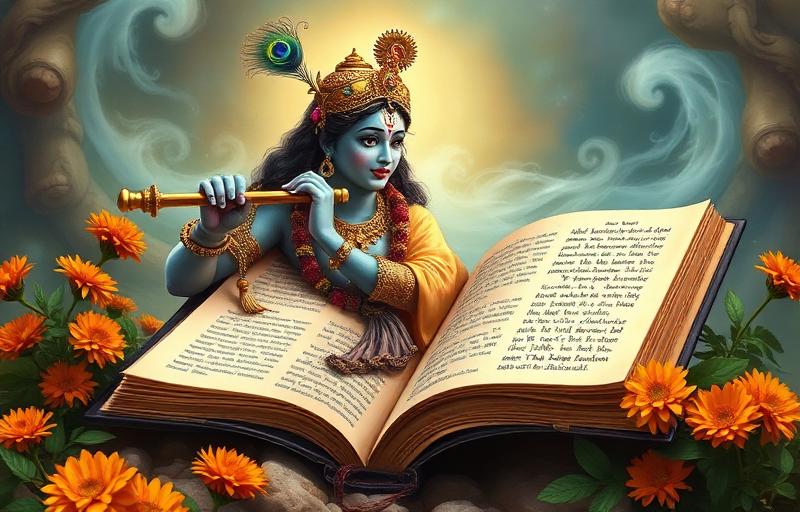
The hours before midnight are not empty waiting time - they are filled with a specific kind of devotional energy called jagran, a night-long vigil of bhajans, kirtan and storytelling that keeps the household spiritually alert until the birth hour arrives.
Most families begin jagran soon after evening aarti, around 9 or 10 PM. Common activities include:
- Singing Krishna bhajans and Radha-Krishna kirtans, often accompanied by dholak and manjira (small cymbals)
- Reading or narrating the Krishna Janma katha - the story of Kansa's tyranny, Devaki's imprisonment, and the miraculous birth
- Playing devotional music softly in the background while children help with last-minute jhula decoration
- Some families watch or perform a short Krishna Leela skit, especially where children are involved
The conch shell (shankh) holds special significance in this build-up. It is blown three times at the exact moment of midnight - once to announce the birth, and traditionally believed to purify the surrounding atmosphere and invite divine energy into the home. Temple complexes in Mathura and Vrindavan blow dozens of conches simultaneously at midnight, creating a sound many devotees describe as unforgettable.
Bells (ghanta) are rung continuously for a minute or two right after the conch, a practice believed to drive away negative energy at the precise threshold of the deity's arrival.
For households with young children who cannot stay awake that late, a shortened jagran of just 30-40 minutes before midnight, with a couple of bhajans and the Krishna janma story told simply, captures the same spirit without exhausting them. The goal of jagran was never to test endurance; it was always to keep the heart awake, even if the body tires.
Temple Celebrations vs a Simple Home Midnight Puja
Not every devotee can travel to Mathura or Vrindavan, and the good news is that the midnight moment carries equal spiritual weight whether celebrated in a packed temple or a quiet one-room home puja.
At major temples (ISKCON centres, Banke Bihari Mandir Vrindavan, Dwarkadhish Mandir), the midnight celebration is elaborate: hundreds to thousands of devotees gather hours in advance, an elaborate abhishek is performed on a large deity idol with multiple priests, live orchestras play bhajans, and the midnight aarti is often shown to overflow crowds outside on large screens. The energy is collective and overwhelming - many devotees describe it as one of the most powerful spiritual experiences of their year. Crowd management is heavy at these venues, so arriving 3-4 hours early is standard practice for a good viewing spot.
At home, the same sequence is simply scaled down. A small brass or marble Krishna idol (or even a printed picture), a modest jhula, home-made panchamrit, and one or two family members singing the aarti together achieve the same ritual completeness. Scriptures repeatedly emphasise bhaav (sincere devotion) over scale - the story of Sudama's simple offering of flattened rice being cherished by Krishna more than royal feasts is often cited in this context.
A middle path many urban families now follow: perform the essential midnight puja at home with the family, then visit a nearby temple the next morning or during the day for community darshan and prasad, avoiding the late-night crowd altogether while still participating in the collective celebration.
Whichever you choose, the one non-negotiable element devotees agree on is timing - the abhishek and aarti happening as close to actual midnight as your household can manage, not simply at a convenient hour on the same day.
After Midnight: Prasad, Charnamrit and Breaking the Fast
Once the aarti concludes and the jhula has been rocked, the focus shifts to prasad - and for many households, this is also when the day's fast quietly comes to an end.
Charnamrit first: A few drops of the panchamrit used in the abhishek (now considered charnamrit, water that has touched the deity) are sipped by every family member before anything else is eaten. This is treated as the most sacred item of the night.
Makhan-mishri: Butter mixed with sugar crystals is the traditional first solid prasad, referencing Krishna's own childhood love for stolen butter. Most households prepare this fresh earlier in the evening so it is ready the instant midnight puja ends.
Fruits and light phalahar: For those observing a fruit-only fast through the day, midnight is typically when slightly heavier phalahar items - sabudana khichdi, kuttu puri, or a simple fruit chaat - are eaten to gently break the fast without shocking an empty stomach.
Distributing prasad to family and neighbours: In many communities, small portions of the night's bhog are sent to neighbouring homes or shared with anyone keeping vigil together, reinforcing the communal spirit of the festival even at such a late hour.
Sleep timing: Because the main ritual concludes close to 1 AM, most families do not attempt a full elaborate meal at that hour - a light bite followed by rest is typical, with a fuller festive meal the next day.
The midnight hour, once it passes, leaves behind a distinctly peaceful feeling in most homes - the anticipation of the entire day resolved into a few quiet, sacred minutes.
📅 Check the exact tithi window and set a midnight puja reminder for your city on the Vandnaa app so you never miss the precise moment.
Reader Questions Answered
What time exactly is the Janmashtami 2026 midnight puja?+
The core midnight puja is performed at 12:00 AM on the night of Friday, 4 September 2026 (technically the early hours of 5 September). The exact start of the Ashtami tithi window can shift by a few minutes depending on your city, so check the Vandnaa app's panchang for your precise local timing before planning the ritual sequence.
Why do we blow a conch shell exactly at midnight during Janmashtami?+
The conch (shankh) is blown to announce Krishna's birth the same way it is believed to have echoed across Gokul and Mathura at the moment he was born. It is also considered to purify the atmosphere and signal the transition from anticipation to celebration. Most households blow it three times right as the clock reaches 12:00 AM.
Can the midnight puja be done a little later if the whole family cannot stay awake exactly at 12 AM?+
Yes, in practice many households perform the full ritual sequence between 12:00 AM and 1:00 AM without any loss of spiritual merit, as long as it happens after the tithi has begun. What matters more than the exact minute is completing the sequence - abhishek, vastra, aarti and prasad - with sincerity while the Ashtami tithi is active at night.
Is Rohini Nakshatra overlapping with Ashtami tithi in 2026?+
The overlap of Rohini Nakshatra and Ashtami tithi (which creates the special Jayanti Yog) varies slightly by year and is calculated to the minute by panchang astronomers. Regardless of the exact overlap in 2026, the mainstream observance date remains Friday, 4 September 2026, and the midnight puja is performed that night in nearly all traditions.
What should be ready before midnight so the puja isn't rushed?+
Keep the Krishna idol, jhula, new clothes and ornaments for the deity, panchamrit ingredients (milk, curd, honey, ghee, sugar), a diya with ghee or oil, incense, and the makhan-mishri prasad all laid out by 11:30 PM. This buffer avoids last-minute scrambling once the clock starts approaching midnight.
Does the midnight puja have to be performed by a priest, or can a family do it themselves?+
A family can absolutely perform this puja themselves. Unlike some elaborate temple ceremonies, the home midnight puja for Janmashtami is traditionally a family ritual and does not require a priest. Any family member familiar with the basic sequence (abhishek, vastra, aarti) can lead it, with everyone else joining in the singing and prasad.
About the author
Acharya Vinaya Kapoor · M.A. Sanskrit, Mantra & Stotra Studies
Acharya Vinaya holds an M.A. in Sanskrit from Banaras Hindu University and writes the mantra and stotra commentary on Vandnaa. Her focus is on accurate pronunciation, traditional context, and helping modern readers connect with classical texts.
Meet the Vandnaa editorial team →Explore on Vandnaa
Related Articles
Janmashtami Fasting 2026: What to Eat Before and After the Vrat
7 min read
Decorating Krishna's Jhula for Janmashtami: A Step-by-Step Guide
7 min read
Krishna Janmashtami 2026: Date, Midnight Puja Vidhi, Mantras & Complete Vrat Guide
11 min read
Krishna Aarti Lyrics in Hindi & English - Aarti Kunj Bihari Ki
9 min read