Why Two Dates Appear
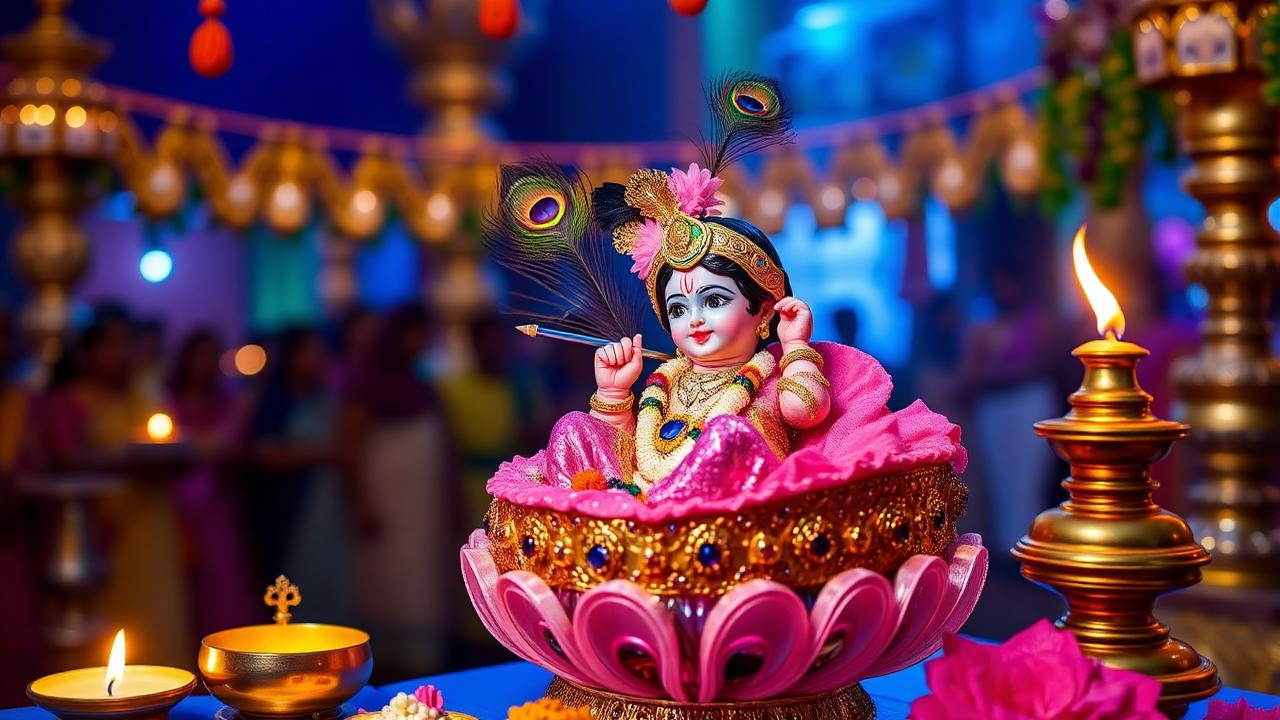
Krishna was born at midnight on Ashtami tithi under Rohini nakshatra. A lunar tithi rarely aligns perfectly with a nakshatra, so when Ashtami covers one midnight and Rohini arrives on the next, two valid observance days emerge. Householders following the Smarta tradition go by the tithi at midnight. Temples and initiated devotees in the Vaishnava tradition, especially ISKCON and Gaudiya lineages, insist that Ashtami must be joined with Rohini and often observe a day later.
Which Date to Follow in 2026
In 2026, mainstream household Janmashtami falls on 3 September, with Dahi Handi on 4 September. If your family temple, guru parampara or local Vaishnava temple announces a different day, follow that - the tradition you belong to matters more than the calendar you happen to buy. What must never be split is the fast and the puja: keep the vrat on whichever day you observe, and do the nishita puja on that same night.
A Simple Rule for Families
Follow your family's kul parampara first. If there is no established custom, householders should take the Smarta date, because the tithi at midnight is the primary criterion in the Dharmashastra for grihastha observance. Never treat the two dates as a conflict - both honour the same birth, and many families quietly observe both by fasting on one and visiting the temple on the other.
What People Ask Most
Is Janmashtami on 3 or 4 September 2026?+
Household Janmashtami is on 3 September 2026 and Dahi Handi on 4 September. Some Vaishnava temples that require Ashtami joined with Rohini nakshatra may announce a different day.
What is the difference between Smarta and Vaishnava Janmashtami?+
Smarta observance follows Ashtami tithi at midnight. Vaishnava observance requires Ashtami to coincide with Rohini nakshatra, which can push the celebration to the following day.
About the author
Pandit Mahesh Trivedi · Festival Traditions & Panchang
Pandit Mahesh leads the festival-date and Panchang content on Vandnaa. He cross-references multiple regional panchangs (Drik, Vaishnava, Bengali, Marathi) for every festival date published on the site.
Meet the Vandnaa editorial team →