Who Was Kabir - The Weaver Saint of Varanasi
Kabir (traditionally 15th century, often dated 1398 to 1518 CE) is among the most fearless voices the bhakti movement ever produced. Tradition tells that he was found as an infant on a lotus leaf at the Lahartara pond near Varanasi and raised by Niru and Nima, a Muslim weaver couple. He grew up at the loom, and the weaver's craft runs through all his poetry - the body as cloth, God as the master weaver, life as a fine chadariya (sheet) that must be returned unstained. Kabir never renounced his trade, never wore the robes of a renunciant, never wrote a book himself; his sayings were remembered and collected by disciples as Kabir Vani, especially in the Bijak, and many appear in the Guru Granth Sahib. A householder, a worker and a mystic at once, he showed that the deepest devotion can live at a loom.
Ramananda's Disciple - The Mantra on the Ghat Steps
Kabir longed for initiation from Swami Ramananda, the great Vaishnava teacher of Varanasi, but knew the social barriers of the time might keep a weaver's son from being accepted. Tradition tells of his famous solution: before dawn, Kabir lay down on the steps of Panchganga Ghat, where Ramananda came daily to bathe in the Ganga. In the darkness the teacher's foot touched the boy, and Ramananda cried out, 'Ram! Ram!' Kabir rose and declared that he had received both his mantra and his guru - the Name of Ram had been given, and given by Ramananda himself. The teacher, struck by the boy's devotion and wit, accepted him. From Ramananda's lineage Kabir received the Name; what he did with it was entirely his own - a nirguna Ram, beyond form and sect, whom he addressed as Ram, Hari, Sahib and Khuda alike.
Nirguna Bhakti - Kabir's Plain Speaking on Ritual and Devotion
Kabir's path was nirguna bhakti - devotion to the formless divine, reached through the Name, the inner guru and an honest heart. From this height he spoke with equal bluntness to Hindu and Muslim alike: to the pandit absorbed in books without love, to the mullah calling loudly to a God who is not deaf, to anyone who confused the costume of religion with its soul. He was not against worship; he was against sleepwalking through it. For Kabir the real pilgrimage is inward, the real fast is from falsehood, and the real temple is the body in which the Lord already dwells: 'Moko kahan dhoondhe re bande, main to tere paas mein' - 'Where do you search for me, O seeker? I am right beside you.' Five centuries later, his plain speech still does what it was made to do: it wakes us up mid-ritual and asks whether our heart is actually present.
Kabir Ke Dohe on the Mind and Self - With Meaning

1. Patience:
धीरे धीरे रे मना, धीरे सब कुछ होय। माली सींचे सौ घड़ा, ऋतु आए फल होय॥
Dheere dheere re mana, dheere sab kuchh hoy; mali seenche sau ghada, ritu aaye phal hoy.
'Slowly, slowly, O mind - everything happens in its own time. The gardener may pour a hundred pots, but fruit comes only in its season.'
2. Looking within:
बुरा जो देखन मैं चला, बुरा न मिलिया कोय। जो दिल खोजा आपना, मुझसे बुरा न कोय॥
Bura jo dekhan main chala, bura na miliya koy; jo dil khoja aapna, mujhse bura na koy.
'I set out to find the wicked and found no one wicked. When I searched my own heart, none was worse than I.'
3. Love over learning:
पोथी पढ़ि पढ़ि जग मुआ, पंडित भया न कोय। ढाई आखर प्रेम का, पढ़े सो पंडित होय॥
Pothi padhi padhi jag mua, pandit bhaya na koy; dhai aakhar prem ka, padhe so pandit hoy.
'The world died reading books, yet no one became wise. One who reads the two and a half letters of prem (love) - he alone is the true pandit.'
4. Remembering God in good times:
दुख में सुमिरन सब करे, सुख में करे न कोय। जो सुख में सुमिरन करे, दुख काहे को होय॥
Dukh mein sumiran sab kare, sukh mein kare na koy; jo sukh mein sumiran kare, dukh kahe ko hoy.
'In sorrow everyone remembers God; in happiness no one does. If one remembered him in happiness, why would sorrow come at all?'
Kabir Ke Dohe on Time, Grace and Humility - With Meaning
5. Do it now:
काल करे सो आज कर, आज करे सो अब। पल में परलय होएगी, बहुरि करेगा कब॥
Kaal kare so aaj kar, aaj kare so ab; pal mein parlay hoegi, bahuri karega kab.
'What you would do tomorrow, do today; what you would do today, do now. The world can end in a moment - when will you do it then?'
6. The prayer of enough:
साईं इतना दीजिए, जा में कुटुम समाय। मैं भी भूखा न रहूं, साधु न भूखा जाय॥
Sai itna dijiye, ja mein kutum samaay; main bhi bhookha na rahun, sadhu na bhookha jaay.
'Lord, give me just so much that my household is sustained - that I do not go hungry, and no guest leaves my door hungry.' The most beautiful definition of 'enough' in any language.
7. Ego and God:
जब मैं था तब हरि नहीं, अब हरि हैं मैं नाहिं। प्रेम गली अति सांकरी, ता में दो न समाहिं॥
Jab main tha tab Hari nahin, ab Hari hain main naahin; prem gali ati saankari, ta mein do na samaahin.
'When "I" existed, Hari was not there; now Hari is, and "I" am not. The lane of love is so narrow that two cannot pass through it.'
8. Humility before time:
माटी कहे कुम्हार से, तू क्या रौंदे मोय। एक दिन ऐसा आएगा, मैं रौंदूंगी तोय॥
Mati kahe kumhar se, tu kya raunde moy; ek din aisa aayega, main raundungi toy.
'The clay says to the potter: why do you trample me? A day will come when I shall trample you.' Pride has a short lease; the earth receives us all.
Magahar - Kabir's Final Teaching Against Superstition
Even Kabir's death was a teaching. Popular belief in his time held that dying in Kashi guaranteed liberation, while dying in Magahar, a town considered cursed, led to a lower birth. So Kabir, who had lived his whole life in Kashi, deliberately walked to Magahar to die - declaring that if God's grace depends on a postal address, it is not grace at all. 'Jo Kabira Kashi mare, to Ramahi kaun nihora' - 'If Kabir dies in Kashi, what credit is that to Ram?' Tradition tells that after he passed, Hindu and Muslim followers disputed over his body - cremation or burial. When the shroud was lifted, devotees believe, only a heap of flowers lay there. The two communities divided the flowers; today a samadhi and a mazar stand side by side at Magahar, the weaver's last fabric woven from both threads.
What Kabir's Dohe Teach Today's Devotee
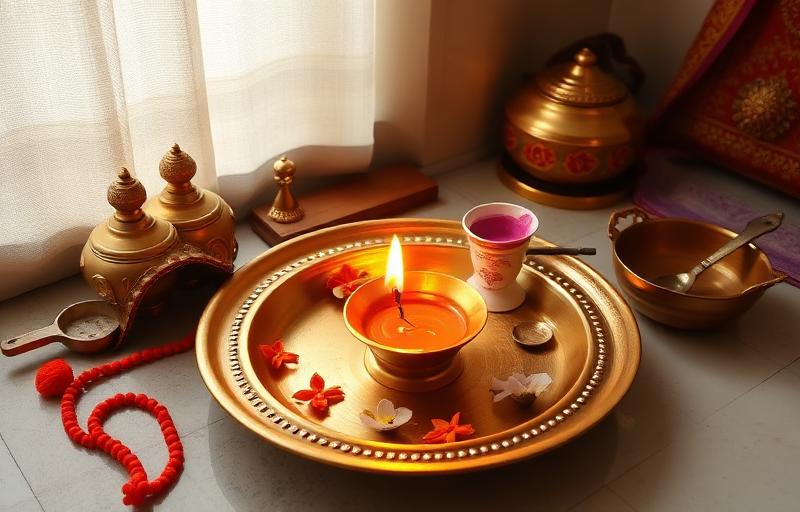
Kabir's dohe survive because they are tools, not ornaments. Memorize a few - their rhythm makes them easy to carry, and they surface exactly when needed: 'dheere dheere re mana' in impatience, 'bura jo dekhan' when judging others, 'kaal kare so aaj kar' against procrastination. Second, let Kabir audit your practice: after your daily puja or japa, ask his question - was my heart in it, or only my hands? Third, take his economics of contentment seriously; 'sai itna dijiye' is a complete philosophy of wealth in two lines. Fourth, honor work as worship - Kabir found God at the loom, and your desk, kitchen or shop can be the same. Finally, his life with Niru and Nima, his guru Ramananda, and the flowers of Magahar all teach one thing: the divine does not check our labels. Bhakti, spoken plainly and lived honestly, is the whole path.
Quick Answers
What are Kabir ke dohe?+
Kabir ke dohe are two-line couplets composed by the 15th-century weaver saint Kabir of Varanasi. In simple, earthy language they teach patience, humility, honest devotion and freedom from empty ritual. Collected by disciples in works like the Bijak, and included in the Guru Granth Sahib, they remain among the most quoted verses in Hindi.
Who was Kabir's guru?+
Tradition holds that Kabir's guru was Swami Ramananda, the great Vaishnava teacher of Varanasi. Kabir lay on the steps of Panchganga Ghat before dawn; when Ramananda's foot touched him, the teacher exclaimed 'Ram! Ram!', and Kabir took the Name as his mantra and Ramananda as his guru. Ramananda then accepted the determined young weaver as a disciple.
What is nirguna bhakti?+
Nirguna bhakti is devotion to the divine as formless and beyond attributes (nirguna means 'without qualities'), approached through the divine Name, the guru's guidance and inner remembrance rather than images. Kabir is its most celebrated voice, calling the formless one Ram, Hari, Sahib and Khuda alike, and insisting that this Lord dwells within every heart.
What is the most famous doha of Kabir?+
Several contend, but 'Bura jo dekhan main chala, bura na miliya koy; jo dil khoja aapna, mujhse bura na koy' is perhaps the most loved: 'I went looking for the wicked and found none; when I searched my own heart, none was worse than I.' Others like 'dheere dheere re mana' and 'kaal kare so aaj kar' are equally widely quoted.
What does 'pothi padh padh jag mua' mean?+
The doha means: 'The world died reading books, yet no one became truly wise; one who reads the two and a half letters of prem (love) becomes the real pandit.' Kabir is not condemning study but warning that scholarship without love of God is fruitless. Knowledge informs, but only love transforms - that is the heart of the verse.
Why did Kabir go to Magahar to die?+
Popular belief held that dying in Kashi guaranteed liberation while dying in Magahar brought a bad rebirth. Kabir deliberately went to Magahar in his final days to demolish this superstition, teaching that liberation depends on devotion and grace, not geography. Tradition tells that after his passing only flowers were found under his shroud, which Hindu and Muslim followers shared.
About the author
Pandit Ravindra Sharma · Vedic Rituals & Bhakti, 22+ years
Pandit Ravindra is the Vandnaa editorial team's resident specialist on aarti, chalisa, and daily devotion. He has performed home and temple pujas across Varanasi and Delhi for over two decades and contributes the bhakti-focused articles on this site.
Meet the Vandnaa editorial team →