Who Was Goswami Tulsidas - A Childhood of Hardship
Goswami Tulsidas (traditionally 1532 to 1623 CE) was born at Rajapur on the banks of the Yamuna in present-day Uttar Pradesh. Tradition tells that his birth itself was extraordinary: he stayed twelve months in the womb, was born with teeth, and instead of crying uttered the word 'Ram' - earning the childhood name Rambola, 'the one who spoke Ram'. But the astrologers called the birth inauspicious, and the infant was abandoned, raised in poverty by a servant woman and then left to beg from door to door. The orphan's fortunes turned when the saint Narharidas took him in, gave him the name Tulsidas, and taught him the katha of Shri Ram at Sookarkhet. The boy who had no family found his family in Ram's story. He later studied Vedas and shastras in Varanasi for many years under the scholar Shesha Sanatana.
Darshan of Hanuman and Ram - As Tradition Tells It
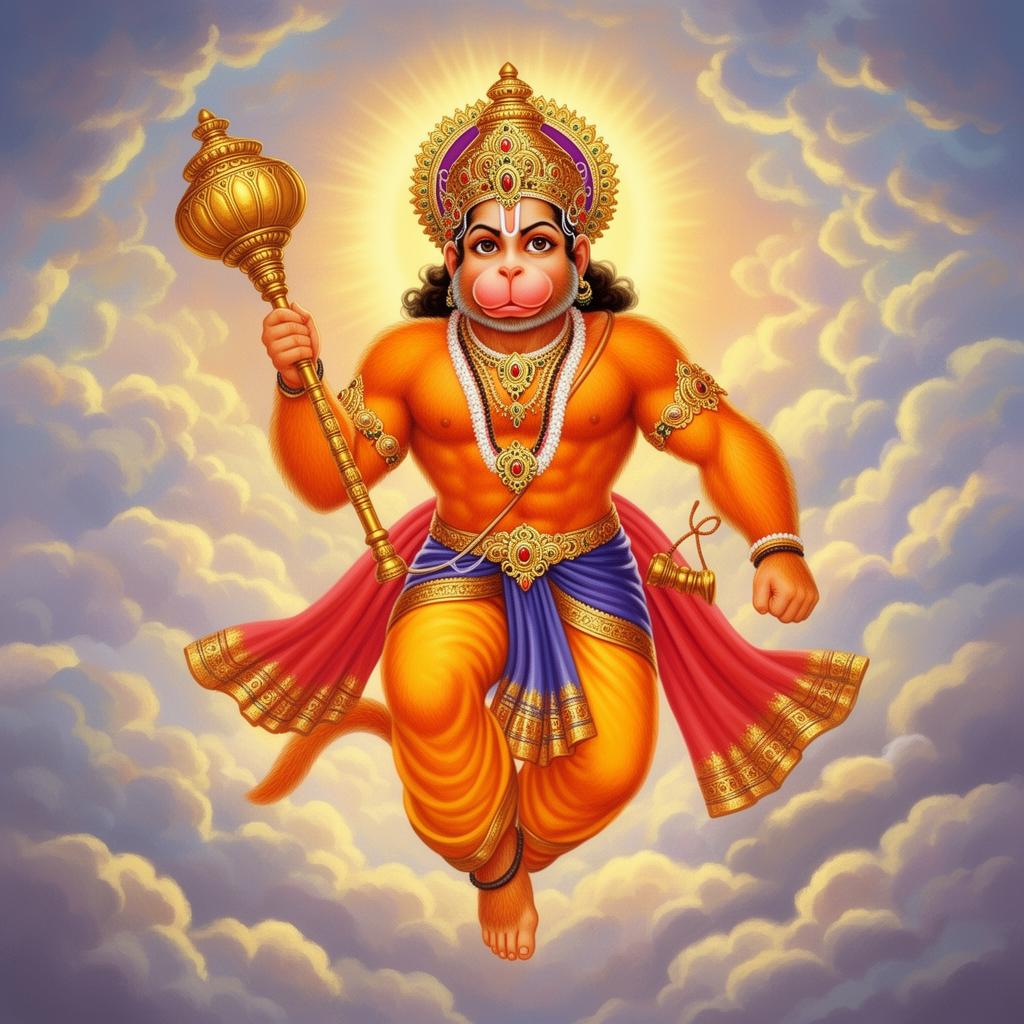
As a renunciant in Varanasi, Tulsidas poured his leftover water daily at the roots of a tree. Tradition tells this pleased a preta (spirit) living there, who offered a boon. Tulsidas asked for one thing only: darshan of Shri Ram. The spirit revealed a secret - Hanuman attends every Ram katha, arriving first disguised as an old man with leprosy and leaving last. At the next katha, Tulsidas fell at the old listener's feet and would not let go. Hanuman revealed his true form, and directed him to Chitrakoot, promising that darshan would come. There, devotees believe, Ram and Lakshman rode past him as young princes on horseback, but Tulsidas failed to recognize them. The next dawn at the ghat, as he ground sandalwood paste, a beautiful boy asked him for tilak - and Hanuman, perched as a parrot, sang:
चित्रकूट के घाट पर भई संतन की भीर। तुलसिदास चंदन घिसैं तिलक देत रघुबीर॥
'On Chitrakoot's ghat, amid the crowd of saints, Tulsidas grinds sandal paste while Raghubir himself receives the tilak.'
Writing the Ramcharitmanas - Ram Katha in the People's Language

Tradition tells that Tulsidas began the Ramcharitmanas in Ayodhya on Ram Navami of Vikram Samvat 1631 (1574 CE) and completed it in about two years and seven months. His revolutionary choice was language: instead of scholarly Sanskrit, he wrote in Awadhi, the tongue of farmers, mothers and shopkeepers, so that Ram's story could enter every home. The pandits of Varanasi were outraged at the 'lowering' of sacred narrative. Tradition tells the manuscript was placed overnight in the Kashi Vishwanath temple beneath the scriptures; in the morning the words 'Satyam Shivam Sundaram' - truth, auspiciousness, beauty - were found written upon it with the signature of Shiva himself. The Manas unfolds in seven kands, from Bal Kand to Uttar Kand, its verses arranged like steps leading down into a holy lake - which is exactly what 'Ramcharitmanas' means: the lake of Ram's deeds.
Hanuman Chalisa and Other Works of Tulsidas
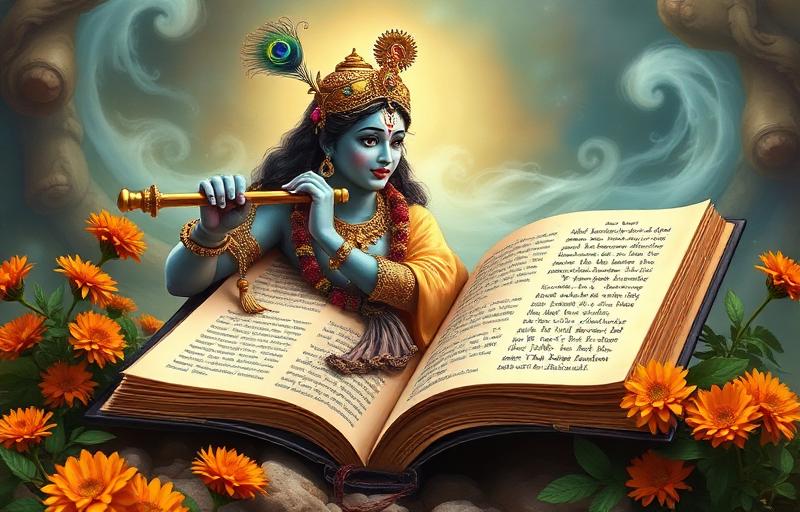
Tulsidas is traditionally revered as the author of the Hanuman Chalisa, the forty verses to Hanuman that are today perhaps the most recited devotional composition on earth. One popular tradition links its composition to a period of imprisonment, when devotees believe Hanuman's grace, invoked through these verses, set events right. Beyond the Chalisa and the Manas, about a dozen works are accepted as his: the Vinaya Patrika, a petition of humble prayers to Ram; Kavitavali, Ram katha in vivid kavitta meters; Dohavali, a treasury of his couplets; Gitavali, the story rendered as songs; and the Barvai Ramayana, among others. Across all of them runs one signature: deep scholarship worn lightly, so that the simplest devotee feels personally addressed. Tulsidas always called himself not a poet but a servant - 'Kavi na hoon, nahin chatur kahavaun' - 'I am no poet, nor do I claim cleverness.'
Famous Chaupais of Tulsidas with Meaning
A few chaupais show why the Manas remains a daily companion for millions.
होइहि सोइ जो राम रचि राखा। को करि तर्क बढ़ावै साखा॥
Hoihi soi jo Ram rachi rakha; ko kari tarak badhavai sakha.
'Only that will happen which Ram has ordained; why grow branches of useless argument?' A verse devotees lean on in every anxiety.
परहित सरिस धर्म नहिं भाई। पर पीड़ा सम नहिं अधमाई॥
Parhit saris dharam nahin bhai; par peeda sam nahin adhamai.
'There is no dharma like doing good to others, brother, and no sin as low as giving others pain.' The whole of ethics in two lines.
बिनु सतसंग बिबेक न होई। राम कृपा बिनु सुलभ न सोई॥
Binu satsang bibek na hoi; Ram kripa binu sulabh na soi.
'Without satsang there is no discernment, and satsang itself is not gained without Ram's grace.' Keep good company - and pray for the grace to find it.
What Tulsidas Teaches Today's Devotee

Tulsidas turned the most humiliating night of his life into the seed of the Ramcharitmanas - the first lesson is that no shame is wasted if it turns us toward God. Second, he democratized devotion: by writing in Awadhi he declared that the door to Ram katha has no gatekeeper of language or learning. Whatever language you pray in is sacred enough. Third, his life models dasya bhava, the devotion of a servant: the mightiest scholar of his age signed himself simply as Ram's dog at the door. Fourth, he shows the power of daily discipline - the Manas and the Chalisa were built verse by verse, day by day, just as our own practice grows. Begin with one chaupai a day, or a daily Hanuman Chalisa, and let Tulsidas's lake fill your own life slowly, the way it has filled north India's heart for four and a half centuries.
Frequently Asked Questions
Who was Goswami Tulsidas?+
Goswami Tulsidas (traditionally 1532 to 1623 CE) was a great Ram bhakta saint and poet, author of the Ramcharitmanas and, by tradition, the Hanuman Chalisa. Abandoned in childhood and raised in hardship, he was taught Ram katha by the saint Narharidas and went on to make the story of Ram accessible to every household in the people's own language.
What did Ratnavali say that changed Tulsidas's life?+
When Tulsidas crossed a stormy river at night out of attachment to her, Ratnavali said: 'This body of mine is mere bone and skin; if you had such love for Shri Ram, you would have no fear of worldly existence.' Tradition tells these words pierced him so deeply that he renounced household life that very moment and turned entirely to Ram.
Did Tulsidas really meet Hanuman and Shri Ram?+
Tradition tells that a spirit revealed to Tulsidas that Hanuman attends every Ram katha disguised as an old leper. Tulsidas caught his feet, Hanuman revealed himself, and directed him to Chitrakoot, where devotees believe Shri Ram gave him darshan as a boy receiving sandalwood tilak at the ghat. These episodes are cherished as the living heart of his story.
In which language is the Ramcharitmanas written and why?+
The Ramcharitmanas is written in Awadhi, the everyday language of the common people of north India, rather than scholarly Sanskrit. Tulsidas chose it deliberately so that farmers, women and ordinary households could receive Ram katha directly, without depending on scholars. This single choice made the Manas the most loved devotional text of north India.
Did Tulsidas write the Hanuman Chalisa?+
Yes, devotional tradition universally attributes the Hanuman Chalisa to Goswami Tulsidas, and its closing verse names him: 'Tulsidas sada Hari chera'. Its forty verses in Awadhi praise Hanuman's strength, wisdom and devotion, and it is today among the most recited prayers in the world, chanted daily by crores of devotees.
How is the Ramcharitmanas different from the Valmiki Ramayana?+
The Valmiki Ramayana is the original Sanskrit epic, composed by sage Valmiki, presenting Ram's life largely as itihasa. The Ramcharitmanas is Tulsidas's 16th-century retelling in Awadhi, soaked in bhakti, where Ram is worshipped as the Supreme Lord throughout. The Manas is shorter, lyrical, meant for singing and daily recitation, and includes beloved episodes shaped by the devotional tradition.
About the author
Acharya Vinaya Kapoor · M.A. Sanskrit, Mantra & Stotra Studies
Acharya Vinaya holds an M.A. in Sanskrit from Banaras Hindu University and writes the mantra and stotra commentary on Vandnaa. Her focus is on accurate pronunciation, traditional context, and helping modern readers connect with classical texts.
Meet the Vandnaa editorial team →