Who the Devi of Kadampuzha Is
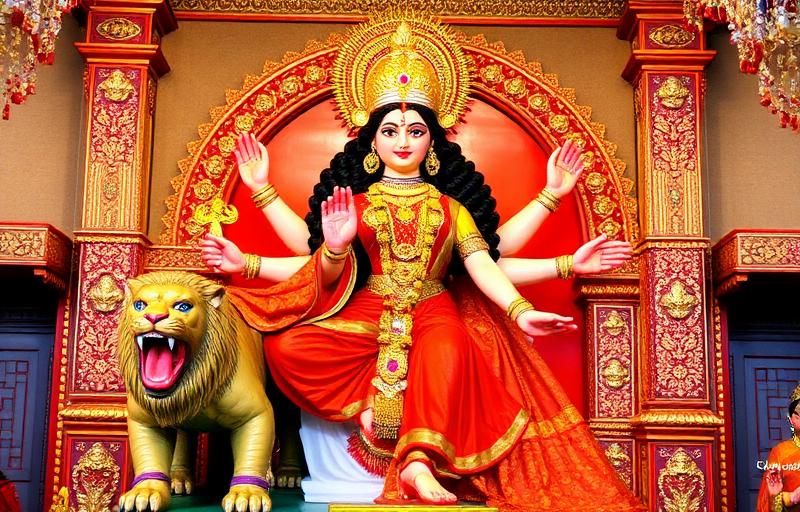
The Devi worshipped at Kadampuzha, in Malappuram district of Kerala, is Parvati in her Kirata form, the appearance she took as a hunter woman when she and Shiva went to test Arjuna during his tapas for the Pashupatastra.
The Kirata episode is well known from the Mahabharata and from the Sanskrit poem Kiratarjuniya. Shiva came as a forest hunter, Parvati as his companion, and a dispute arose with Arjuna over who had struck a boar. The fight that followed ended with Shiva revealing himself and granting the weapon. Kerala tradition holds that the Devi's presence from that moment settled at Kadampuzha.
What makes her worship unusual:
- There is no murti in the sanctum. Worship is offered at a small opening in the ground, understood as the point of her presence.
- She is worshipped in a form associated with the forest and with hunting, closer to Vana Durga than to the seated Devi of most temples
- The consecration of the shrine is traditionally attributed to Adi Shankaracharya, who is said to have recognised the presence at the site
For devotees across Kerala, Kadampuzha is the shrine you visit when something specific has to be cleared out of the way, and the offerings there are shaped entirely around that.
A Temple Without an Idol
The first thing a visitor notices at Kadampuzha is that there is nothing conventional to look at in the sanctum.
Instead of a murti, worship is directed at a small pit or opening in the ground. Devotees are told that its depth is not known, and that the Devi's presence rests there. Offerings are made into and over this opening rather than to a sculpted image.
This is not unique in Kerala, where several old shrines worship presence rather than form, but it is the most visited example. It has some practical effects on how devotion works here:
- There is no alankaram in the usual sense, no dressing or ornamenting of an image
- The flower offering becomes the visual centre of worship, since the flowers themselves cover the shrine
- The devotee's attention is directed at the offering being made rather than at a face looking back
Devotees who come from temple traditions built around darshan of a murti often describe the first visit as unsettling and then as unusually direct. There is no intermediary image. What is offered goes straight into the ground where the Devi is believed to be.
Poomoodal: Covering the Devi in Flowers
The principal offering at Kadampuzha is Poomoodal, literally the covering with flowers.
In this offering, flowers are heaped over the shrine until the opening is completely covered. Devotees book the offering in advance, and it is performed by the temple with the family present. Large quantities of flowers are used, and the sight of the entire shrine buried under them is what most visitors remember.
Why flowers, and why in that quantity? The explanations given at the temple are straightforward:
- The Devi here is a forest form, and flowers are what the forest gives
- A covering offering is a gesture of complete surrender, leaving nothing of the shrine visible and nothing of the request held back
- Since there is no murti to dress, the flower covering serves as the alankaram of this shrine
Poomoodal is offered for a wide range of intentions, most commonly for marriage, for children, for recovery from illness and for success in education. Families frequently vow it for a specific outcome and return to perform it when the prayer is answered.
Muttarukkal: Breaking the Obstacle
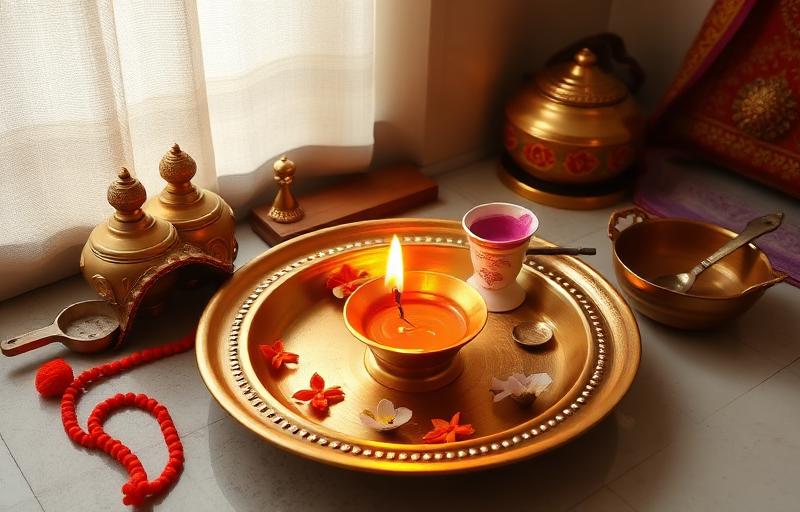
The second offering Kadampuzha is known for is Muttarukkal, which devotees describe as the breaking of an obstruction.
In this offering a coconut is broken as part of a prescribed ritual, with the intention of removing a specific obstacle that is holding up something in the devotee's life. The word carries the sense of cutting through a blockage rather than simply asking for a blessing.
It is most commonly performed for:
- Delayed marriages, which is the single most common reason families come to this temple
- Difficulty in conceiving, or a long wait for a child
- Stalled matters such as property disputes, court cases and long pending official work
- Persistent trouble in a household that the family cannot explain
The combination of Poomoodal and Muttarukkal is what gives Kadampuzha its distinct place among Kerala's Devi temples. One offering surrenders everything, the other cuts something loose. Families often perform both on the same visit, and both are booked at the temple counter with the offering made on their behalf according to the day's schedule.
Kadampuzha Among Kerala's Bhagavathy Temples
Kerala's Devi worship is dense, old and locally specific. Bhagavathy, the Devi, is present in almost every village, and each major temple has a distinct character.
- Kodungallur Bhagavathy - the fierce Bhadrakali temple with the Bharani festival, one of the oldest Devi centres in Kerala
- Chottanikkara Bhagavathy - visited particularly for mental distress, with the well known Guruthi puja at the Keezhkkavu shrine
- Attukal Bhagavathy - where the Pongala offering draws an enormous gathering of women
- Kadampuzha Bhagavathy - the Kirata form, worshipped at a pit, with Poomoodal and Muttarukkal
- Kanyakumari Bhagavathy - at the southern tip, a Shakti Peeth by tradition
What these temples share is that the Devi in Kerala is treated as immediately available, approached with specific requests rather than only with general devotion. What differs is the form and the offering, and in Kerala the offering is often the identity of the temple. At Attukal it is the Pongala pot. At Kadampuzha it is a mound of flowers over an opening in the ground.
Visiting Kadampuzha
The temple is in Malappuram district, on the route between Kozhikode and Thrissur, and is easy to include in a Kerala temple trip.
- Getting there - the nearest major towns are Kottakkal and Tirur, with Kozhikode and Kochi airports both reachable by road
- Best time - mornings, when offerings begin. Navratri and Malayalam month observances bring larger crowds.
- Booking offerings - Poomoodal and Muttarukkal are booked at the temple counter, and popular days can be full, so plan ahead if you are travelling specifically for an offering
- Dress code - Kerala temples follow a traditional dress code. Men are generally expected to remove upper garments and wear a mundu, and women wear saree, set mundu or salwar. Check the current rules before your visit.
- Etiquette - no footwear inside, no photography in the sanctum, and no leather items
- Nearby - Thirunavaya on the Bharathapuzha, Kottakkal for its ayurveda tradition, and Guruvayur about an hour and a half away
A suggestion for first time visitors: watch a Poomoodal being completed before making your own offering. Seeing the shrine disappear under flowers explains the practice better than any description, and most families find it changes how they make their own request.
Reader Questions Answered
Which Devi is worshipped at Kadampuzha?+
Parvati in her Kirata form, the hunter woman appearance she took when she and Shiva tested Arjuna during his tapas. Kerala tradition holds that her presence settled at Kadampuzha from that episode.
Why is there no idol at Kadampuzha temple?+
Worship is offered at a small pit or opening in the ground, understood as the point of the Devi's presence. Several old Kerala shrines worship presence rather than a sculpted form, and Kadampuzha is the best known of them.
What is Poomoodal?+
Poomoodal is the temple's principal offering, in which flowers are heaped over the shrine until it is completely covered. Since there is no murti to adorn, this flower covering serves as the alankaram of the shrine.
What is the Muttarukkal offering for?+
Muttarukkal is performed to remove a specific obstacle. Devotees most often make this offering for delayed marriages, difficulty in conceiving, stalled property or court matters and long pending work.
Who is said to have consecrated the Kadampuzha shrine?+
Tradition attributes the consecration to Adi Shankaracharya, who is said to have recognised the Devi's presence at the site. The shrine has been worshipped in that form since.
Is there a dress code at Kadampuzha temple?+
Yes. Kerala temples follow a traditional dress code, with men generally expected to wear a mundu and remove upper garments, and women wearing saree, set mundu or salwar. Devotees should check the current rules before visiting.
About the author
Pandit Ravindra Sharma · Vedic Rituals & Bhakti, 22+ years
Pandit Ravindra is the Vandnaa editorial team's resident specialist on aarti, chalisa, and daily devotion. He has performed home and temple pujas across Varanasi and Delhi for over two decades and contributes the bhakti-focused articles on this site.
Meet the Vandnaa editorial team →