The Most Beloved Aarti of Maa Kali
'Ambe Tu Hai Jagdambe Kali' is the aarti that rises from millions of homes whenever the mother is worshipped in her fierce, protective form. It addresses her by three names in a single breath - Ambe (mother), Jagdambe (mother of the universe) and Kali (the dark destroyer of evil) - and adds Durge Khappar Wali, the Durga who carries the khappar (skull-bowl) in which she collects and ends all evil. The composer's signature appears in the refrain itself: 'Tere hi gun gaye Bharati' - 'Bharati sings only your glories'. Unlike Sanskrit stotras, this aarti is in simple, heartfelt Hindi, which is exactly why it has travelled from temple courtyards into every household. It is sung at Kali Puja on Diwali night, through Navratri, and at regular evening aarti on Tuesdays and Saturdays, the days dear to the mother.
The Refrain and First Verse: Calling the Mother to Battle
Refrain (Tek):
अम्बे तू है जगदम्बे काली, जय दुर्गे खप्पर वाली। तेरे ही गुण गाएं भारती, ओ मैया हम सब उतारें तेरी आरती॥
Ambe tu hai Jagdambe Kali, jai Durge khappar wali. Tere hi gun gaayein Bharati, O Maiya hum sab utaarein teri aarti.
Meaning: O Amba, you are Jagdamba and Kali; victory to Durga who carries the khappar. Bharati sings your glories alone - O Mother, together we all offer your aarti. The opening makes the devotee's position clear: whatever her form, gentle or fierce, she is first and always Maiya - mother.
Verse 1:
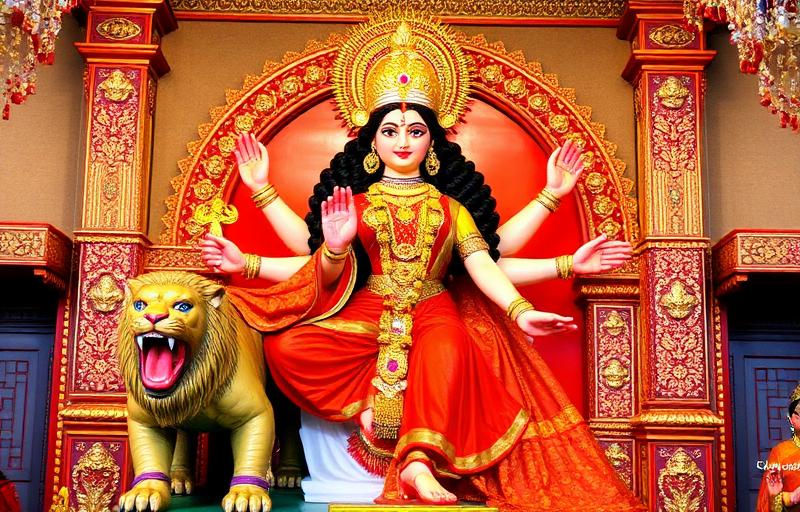
तेरे भक्त जनों पर माता भीड़ पड़ी है भारी। दानव दल पर टूट पड़ो माँ करके सिंह सवारी॥ सौ-सौ सिंहों से तू बलशाली, है अष्ट भुजाओं वाली, दुष्टों को तू ही ललकारती। ओ मैया हम सब उतारें तेरी आरती॥
Tere bhakt janon par Mata bhid padi hai bhaari. Danav dal par toot pado Ma karke sinh sawaari. Sau-sau sinhon se tu balshaali, hai asht bhujaon waali, dushton ko tu hi lalkaarti. O Maiya hum sab utaarein teri aarti.
Meaning: Mother, a heavy crisis has fallen upon your devotees - mount your lion and descend upon the army of demons! You are mightier than a hundred lions, you of the eight arms; you alone dare challenge the wicked. This verse is the devotee's call for rescue: when troubles gather like an army, the mother is invited to fight on our behalf.
Verses 2 and 3: No Mother Was Ever Unmotherly
Verse 2:
माँ-बेटे का है इस जग में बड़ा ही निर्मल नाता। पूत कपूत सुने हैं पर ना माता सुनी कुमाता॥ सब पे करुणा दरसाने वाली, अमृत बरसाने वाली, दुखियों के दुखड़े निवारती। ओ मैया हम सब उतारें तेरी आरती॥
Ma-bete ka hai is jag mein bada hi nirmal naata. Poot kapoot sune hain par na Mata suni kumata. Sab pe karuna darsaane waali, amrit barsaane waali, dukhiyon ke dukhde nivaarti. O Maiya hum sab utaarein teri aarti.
Meaning: The bond of mother and child is the purest in this world. We have heard of unworthy sons, but never of an unmotherly mother. She shows compassion to all, she rains nectar, she removes the sorrows of the suffering. This is the emotional heart of the aarti - the famous line 'poot kapoot sune hain par na mata suni kumata' assures every devotee that however far we fall, her motherhood never fails.
Verse 3:
नहीं मांगते धन और दौलत, न चांदी न सोना। हम तो मांगें माँ तेरे मन में, इक छोटा सा कोना॥ सबकी बिगड़ी बनाने वाली, लाज बचाने वाली, सतियों के सत को संवारती। ओ मैया हम सब उतारें तेरी आरती॥
Nahin maangte dhan aur daulat, na chaandi na sona. Hum to maangein Ma tere man mein, ik chhota sa kona. Sabki bigdi banaane waali, laaj bachaane waali, satiyon ke sat ko sanvaarti. O Maiya hum sab utaarein teri aarti.
Meaning: We ask for no wealth or riches, neither silver nor gold - we ask only for one small corner in your heart, Mother. You who set right what has gone wrong, who protects honour, who guards the virtue of the faithful. This verse teaches the highest form of prayer: not asking the mother for things, but asking for the mother herself.
Verse 4: The Thali at Her Feet

Verse 4:
चरण शरण में खड़े तुम्हारी, ले पूजा की थाली। वरद हस्त सिर पर रख दो, माँ संकट हरने वाली॥ माँ भर दो भक्ति रस प्याली, अष्ट भुजाओं वाली, भक्तों के कारज तू ही सारती। ओ मैया हम सब उतारें तेरी आरती॥
Charan sharan mein khade tumhaari, le pooja ki thaali. Varad hast sir par rakh do, Ma sankat harne waali. Ma bhar do bhakti ras pyaali, asht bhujaon waali, bhakton ke kaaraj tu hi saarti. O Maiya hum sab utaarein teri aarti.
Meaning: We stand in the refuge of your feet, holding the puja thali. Place your boon-giving hand upon our heads, O remover of crises. Fill our cup with the nectar of bhakti, you of the eight arms - it is you alone who completes the tasks of your devotees. The aarti ends as every aarti should: the devotee asks not that troubles never come, but that the mother's hand stay on their head while they pass through them. After this verse, the refrain is sung once more and the aarti concludes with 'Jai Maa Kali'. Small regional variations exist in the verses; sing the version your family or temple follows - the mother listens to the bhav, not the script.
The Fierce Mother: Why Kali Destroys Inner Demons
New devotees sometimes ask why the mother of the universe appears so fierce - dark as the night, tongue extended, wearing a garland of demon heads. Tradition answers with love: Kali is fierce only towards what harms her children. The demons she slays in the puranas - Raktabija, whose every drop of blood spawned a new demon, Chanda and Munda, Shumbha and Nishumbha - live on inside every human heart as anger, ego, greed and fear. Anger is Raktabija: suppress it once and it multiplies. Only the mother can drink it at the root, as Kali drank Raktabija's blood before it touched the ground. Her garland of heads is the harvest of cut egos; her khappar collects what must end so that the devotee may live. To her child she is not frightening but the most reassuring form of God - the mother who will stop at nothing to protect. That is why the aarti, addressed to this fearsome form, is the most tender of all: it simply calls her Maiya and asks for a corner in her heart.
When to Sing It and the Aarti Vidhi
When it is sung: The grandest occasion is Kali Puja on the Amavasya of Diwali night, when Bengal and much of eastern India worship Maa Kali through the night. It is equally at home in Navratri aarti, especially on Saptami, Ashtami and Navami, and in weekly worship on Tuesdays and Saturdays. Many families sing it at daily evening aarti before the mother's image.
Aarti vidhi: 1. Prepare the thali: a ghee diya or camphor (kapur), flowers - red hibiscus is dearest to Kali - sindoor, incense and a small bell. 2. Light the lamp and stand before the mother's image with family gathered. 3. Ring the bell and sing the aarti with full voice, rotating the thali in slow clockwise circles before the image - small circles at the feet, then the face, then the whole form. 4. After the final refrain, offer the flame to the mother, then pass the thali so everyone takes the warmth of the flame over their head with both palms. 5. Distribute prasad - on Kali Puja night this is often kheer, batasha or fruit. The aarti needs no priest and no elaborate samagri; a lamp, a bell and a full heart complete it.
Benefits of Singing the Kali Aarti

Singing the Kali aarti regularly is believed to grant fearlessness above all - the mother's presence dissolves anxiety, nightmares and the sense of being unprotected. Homes where her aarti sounds are said to be guarded against negativity and ill intent. Because Kali destroys inner demons, the practice slowly works on anger, ego and bad habits, replacing them with the steadiness of one who knows the mother stands behind them. The aarti's own verses promise her gifts: bigdi banana (setting right what has gone wrong), laaj bachana (protecting honour) and dukhde nivarna (removing sorrows). And for those who sing it on Diwali night or through Navratri, it becomes a yearly homecoming - the moment the whole family stands together in the lamp's light, children of the same mother.
Reader Questions Answered
Is 'Ambe Tu Hai Jagdambe Kali' a Kali aarti or a Durga aarti?+
It is sung for the mother in her unified form - the refrain itself names her Ambe, Jagdambe, Kali and Durge in one line. It is the principal aarti at Kali Puja and is equally sung during Navratri and Durga worship.
When is Kali Puja celebrated?+
Kali Puja falls on the Amavasya of Kartik month - the same night as Diwali. In Bengal, Assam and Odisha, Maa Kali is worshipped through this night with lamps, aarti and prasad, while much of India performs Lakshmi Puja.
Can I sing the Kali aarti daily at home?+
Yes. The aarti can be sung at daily evening puja by anyone. Tuesdays and Saturdays are especially favoured. No special initiation or ritual is needed - a lamp, a bell and sincere devotion are enough.
Why does Maa Kali look so fierce if she is a loving mother?+
Her fierceness is aimed only at what harms her children - the demons of the puranas and the inner demons of anger, ego and fear. For her devotees she is pure mother; the aarti calls this fearsome form simply 'Maiya'.
What do I need to perform the Kali aarti?+
A thali with a ghee diya or camphor, flowers (red hibiscus is dearest to Kali), sindoor, incense and a small bell. Rotate the thali clockwise before the mother's image while singing, then share the flame and prasad.
What does 'Durge khappar wali' mean in the aarti?+
The khappar is the skull-bowl the mother carries in battle. Devotionally it means she collects and ends all evil and negativity in it, so that nothing harmful remains for her children. It is a symbol of total protection.
About the author
Acharya Vinaya Kapoor · M.A. Sanskrit, Mantra & Stotra Studies
Acharya Vinaya holds an M.A. in Sanskrit from Banaras Hindu University and writes the mantra and stotra commentary on Vandnaa. Her focus is on accurate pronunciation, traditional context, and helping modern readers connect with classical texts.
Meet the Vandnaa editorial team →