The Temple at Patiala
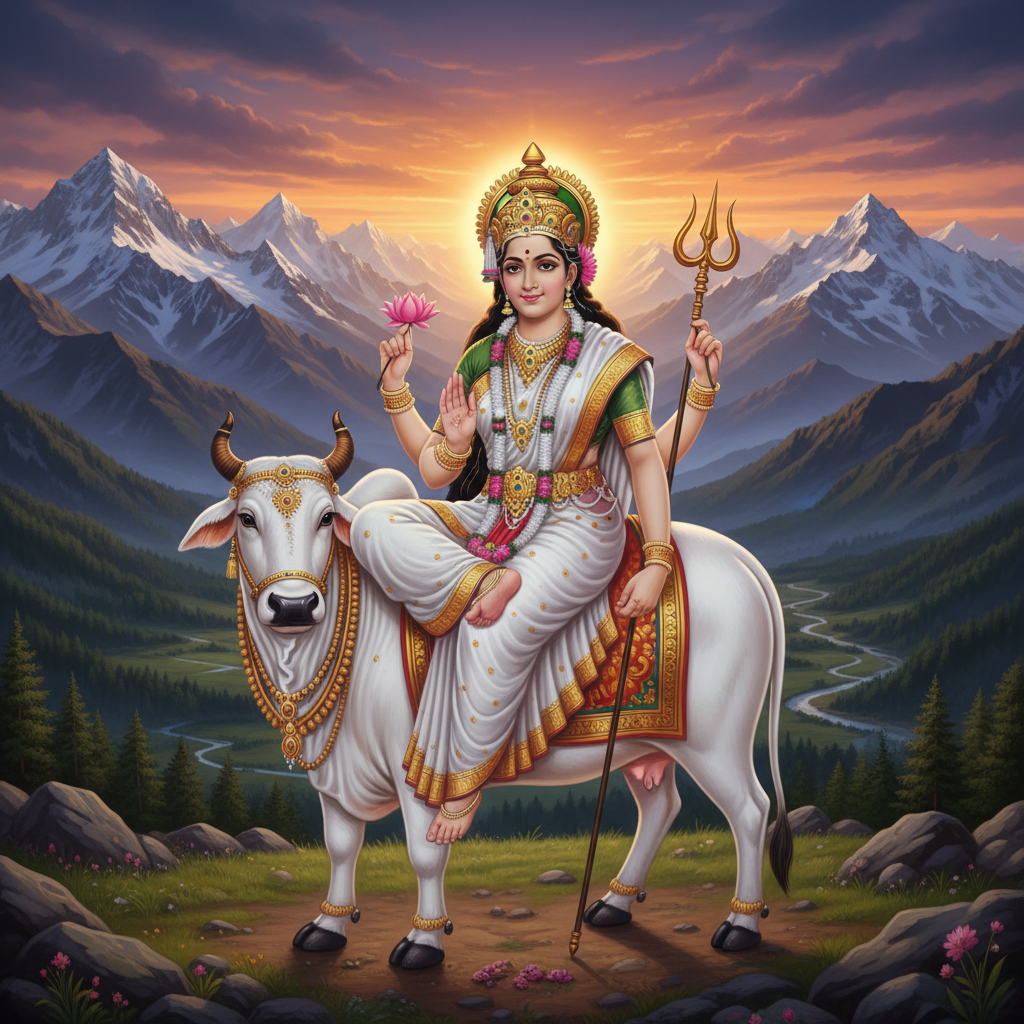
The Kali Devi temple stands at Patiala, Punjab, in the city, and it is among the busiest temples in the state.
What is there:
- A large image of Kali, generally given as around six feet
- A Shiva shrine, and other deities within the complex
- A large modern temple building, extensively expanded
- A sarovar
- Very heavy traffic, especially during Navratri
The founding:
- Built by Maharaja Bhupinder Singh of Patiala, in around 1936
- He is said to have brought the image from Bengal, generally given as from Calcutta
- It was installed at Patiala and the temple built for it
- The temple has grown substantially since
Why this is unusual. Three things at once, and they are worth separating.
First, a Sikh ruler built a Kali temple. As set out at Mansa Devi, that was not unprecedented, and the Punjab religious landscape was less divided than modern categories suggest. But Bhupinder Singh was ruling in the 1930s, well after the boundary drawing of the Singh Sabha period, which makes it more notable than Karam Singh's endowment a century earlier.
Second, the deity was imported. A Kali image brought from Bengal to Punjab is a deliberate transplantation of a specific regional tradition.
Third, the Bengali Kali tradition is distinct. As set out at Haat Kalika, the Bengali devotional relationship with Kali, through Ramakrishna, Ramprasad and the Shyama Sangeet tradition, is one of the most developed in India, and it is not the same as the Kali worship of the Punjab plains.
Maharaja Bhupinder Singh. Since the temple is his, he is worth setting out, and he was one of the more remarkable figures of princely India.
- Ruled Patiala from 1900 to 1938
- The largest of the Punjab princely states
- Captain of the Indian cricket team and a substantial patron of the game, who took an Indian team to England in 1911 and whose son also captained India
- Chancellor of the Chamber of Princes and a significant figure in the constitutional negotiations of the period
- Represented India at the League of Nations
- A very large builder, whose constructions include much of modern Patiala
- Famous for extravagance on a scale that was remarked on even among Indian princes, including the Patiala Necklace made by Cartier in 1928, one of the most expensive pieces of jewellery ever made
- The Patiala peg, the outsize measure of whisky, is attributed to him and to his polo team
And the other side of that. Bhupinder Singh's personal conduct was the subject of serious allegations in his lifetime, including in a petition brought against him in the 1930s.
A guide should note that the extravagance is frequently retailed as colourful anecdote, and that the record includes considerably darker material about how a ruler with absolute local power behaved.
A Bengali Goddess in Punjab
The transplantation of a Bengali Kali to Punjab is worth thinking about, because deities do move and the mechanisms by which they do are interesting.
How deities travel:
- Migration. A community moves and takes its deity, which is how Tamil, Bengali, Marwari and other communities have established shrines across India and abroad
- Trade. Merchant communities established temples along their routes
- Royal patronage, as here
- Teachers and lineages, where a guru's establishment carries a tradition
- Conquest and the removal of images, which was described at Brajeshwari
- Modern migration, which has established Indian temples across the world
Kali outside Bengal:
- Kalighat and the Bengali tradition, which is the centre
- Kamakhya in Assam, related but distinct
- Dakshineswar, associated with Ramakrishna
- Kali shrines across north India, including in Punjab and Delhi
- Kalikambal in Chennai and Kali worship in the south under other names
- The Kali of Kerala, as Bhadrakali, which is a substantially different tradition
- Patiala, here
What travels and what does not. This is the interesting part.
When a deity is transplanted, the image travels, and frequently the name and the iconography. What frequently does not travel is:
- The devotional literature. The Shyama Sangeet is Bengali and stays Bengali
- The priesthood and its specific training
- The festival calendar and its local form. Kali Puja at Diwali is a Bengali observance and did not travel with the image
- The community of practice, in which the deity is embedded
So what arrives is the deity in a form the receiving tradition can use, worshipped in the receiving tradition's way.
At Patiala, Kali is worshipped as a north Indian Devi shrine worships a Devi: with Navratri as the principal season, with chunri and coconut offerings, with mannat threads, in a Punjabi register rather than a Bengali one.
That is neither wrong nor a dilution. It is what happens when a deity is received.
The reverse case. Deities move in both directions and always have.
- Jagannath of Puri, whose form is unlike anything in the Sanskritic mainstream and who is generally understood to derive from a tribal deity of the region, absorbed and elaborated
- Vithoba of Pandharpur, similarly
- Ayyappa, whose enormous modern following spread from Kerala across the south within living memory
- Sai Baba of Shirdi, whose following spread across India in the twentieth century
- Santoshi Ma, whose worship spread nationally in the 1970s following a film, which is the clearest modern case of a deity's cult being created and distributed by mass media
Santoshi Ma deserves a note because it is such a clear case.
- A goddess with limited prior attestation
- The film Jai Santoshi Maa, released in 1975, was an enormous popular success
- Her worship, with the sixteen Friday vrat, spread rapidly across north India and beyond
- Temples were built
- She is now a widely worshipped deity with an established practice
That happened within fifty years, in a documented and traceable way, and it is the best available evidence for how deities have always spread, which is that a compelling story reaches people and they take it up.
Which is what happened at Patiala too, in a different way: a ruler brought an image, built a temple, and a century later a very large number of people go there, and none of them thinks of it as Bengali.
Offerings and the Sacrifice Question
Kali temples raise the question of animal sacrifice, and it should be addressed rather than avoided.
The historical position:
- Animal sacrifice was practised at a substantial number of Devi shrines across India, including in Punjab, Haryana, Himachal, Bengal, Odisha, Assam, Nepal and the south
- It is prescribed in Shakta texts for certain rites
- The animal, generally a goat, was offered and the meat distributed and eaten
- Buffalo sacrifice was practised at some shrines
- The practice was, and is, embedded in specific communities' religion rather than being an aberration within it
What has changed:
- The practice has declined very substantially over the last century
- Reform movements from the nineteenth century onward campaigned against it
- Temple managements have discontinued it at very many shrines
- Legislation in several states restricts or prohibits it, and courts have ruled on it, including the Uttarakhand High Court in 2011 and rulings in Himachal and elsewhere
- Substitutes are widely used: coconuts, pumpkins, gourds, and symbolic offerings
- At many shrines it continues, particularly at local and community level rather than at large managed temples
Where it prominently continues:
- Kamakhya in Assam
- Dakshinkali in Nepal
- Gadhimai in Nepal, which was historically the largest single sacrifice event in the world and has been the subject of very substantial campaigning, with the numbers reduced dramatically
- Various community and village shrines across India
How to write about it. There are two failure modes and both are common.
Failure one: squeamish avoidance. Pretending it does not happen, or that it was never part of the tradition, is false. It is prescribed in texts, it was practised at major shrines, and it continues in places.
Failure two: contemptuous dismissal. Describing the communities that practise it as primitive or barbaric, which is how the argument was frequently framed by reformers and by the colonial administration, is both wrong and has a specific history.
- Campaigns against sacrifice have frequently been aimed at the practices of lower caste and tribal communities, by upper caste reformers, as part of a wider project of imposing brahminical norms
- The communities concerned have frequently experienced it as an attack on their religion by people with more power
- That does not make sacrifice right, and it does mean the argument has never been only about animals
Vandnaa's position, stated directly:
- Animal sacrifice is not something this publication encourages or recommends
- Substitution is widely accepted within the tradition, is theologically well founded, and is what most shrines have adopted
- The tradition's own logic supports it: the offering is about intention and effort, as set out at Bhadrakali with the clay horses
- A person seeking a way to fulfil a vow that traditionally involved sacrifice should know that coconut, pumpkin and symbolic substitution are established and accepted
- Communities that continue the practice should not be spoken about with contempt
At Patiala. The temple has historically been associated with such offerings, as many Kali temples have, and practice has changed over time as it has everywhere.
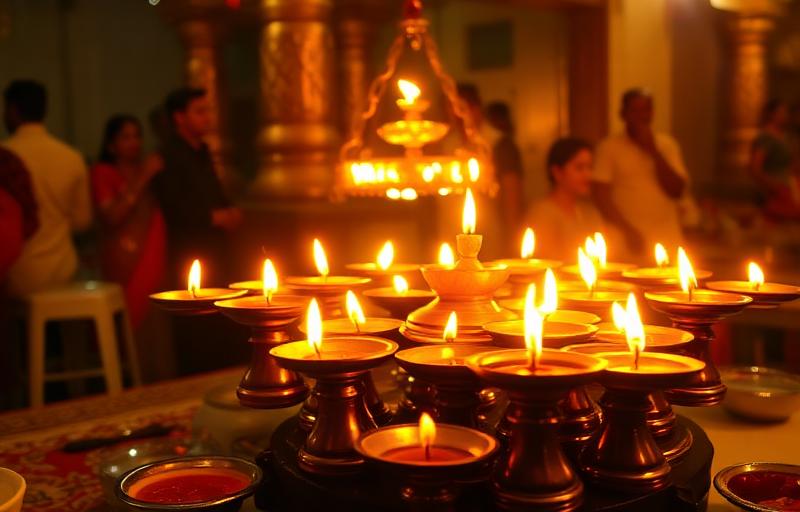
What a visitor will see now is the ordinary apparatus of a busy north Indian Devi temple: chunri, coconut, sweets, flowers, threads and very large numbers of people.
Liquor offerings. Worth a note since they come up at Bhairava and some Kali shrines.
- Offerings of liquor are made at Bhairava shrines and at some Devi shrines, particularly in the tantric register
- The practice is genuine and is prescribed in some texts
- It sits uncomfortably with the very substantial alcohol problem in Punjab and elsewhere
- A guide's position should be that a ritual offering is one thing and a drinking culture is another, and that the second causes an enormous amount of harm in this region specifically
Patiala

The city is worth a section because it is one of the better preserved princely capitals in north India and almost nobody stops in it.
The state:
- Founded by Baba Ala Singh in the eighteenth century
- The largest of the Phulkian states, alongside Nabha and Jind
- Under British paramountcy from the early nineteenth century
- Integrated into PEPSU, the Patiala and East Punjab States Union, in 1948, and into Punjab in 1956
What is in the city:
Qila Mubarak:
- The principal fort and palace complex, in the centre of the old city
- Built from the eighteenth century onward
- Includes the Qila Androon, the inner palace, and its painted rooms
- Substantially deteriorated for a long period; conservation work has been undertaken
Sheesh Mahal:
- The palace of mirrors, built by Maharaja Narinder Singh
- Holding an important collection of Pahari and other paintings, and a medals gallery
- With the Lakshman Jhula, a suspension bridge, over the adjoining tank
- Now a museum
Baradari Gardens, Moti Bagh Palace, which is very large and holds the National Institute of Sports, and various other buildings.
What Patiala is known for culturally:
- The Patiala gharana of Hindustani classical music, founded by Ustad Fateh Ali Khan and Ustad Ali Baksh Khan in the nineteenth century, whose best known exponent was Ustad Bade Ghulam Ali Khan
- The Patiala salwar, the loose pleated salwar which is a defining garment of Punjabi dress
- Patiala jutti, embroidered footwear
- Paranda, the tasselled hair ornament
- Patiala peg, for better or worse
The Patiala gharana deserves emphasis. Bade Ghulam Ali Khan was among the greatest vocalists of the twentieth century in any tradition.
He was born in Kasur, in what is now Pakistan, moved to India after Partition and took Indian citizenship, and his recordings are among the most valued in Hindustani music.
The gharana continues and Patiala's connection to it is a matter of real cultural weight that the city does very little to advertise.
Punjabi music generally. Worth a note since this is Punjab.
- Classical Hindustani, through the Patiala gharana
- Sikh kirtan, the sung recitation of the Guru Granth Sahib in specified ragas, which is a substantial classical tradition in its own right and is what is heard continuously at the Harmandir Sahib
- Sufi qawwali and the poetry of Bulleh Shah, Waris Shah, Shah Hussain and Sultan Bahu, which is shared across the border and across communities
- Folk forms including bhangra, giddha, tappa and boliyan
- Modern Punjabi popular music, which is among the most commercially successful music industries in the world
Bulleh Shah deserves a line. An eighteenth century Punjabi Sufi poet whose verse is sung across Punjab on both sides of the border, in qawwali, in folk performance and in film, and whose subject is overwhelmingly the collapse of the distinctions people insist on.
His lines about not knowing whether he is Hindu or Muslim, believer or unbeliever, are among the most quoted in the language and are sung, at any given moment, somewhere in Punjab.
Why the city is worth stopping in. Patiala is on the road between Delhi and Chandigarh, is a straightforward detour, and holds a fort, a palace museum with a first rate painting collection, a musical tradition of international significance, one of the busiest temples in Punjab, and some of the best food in the state.
Almost nobody stops.
The Princely States and What Happened to Them
This temple is a princely foundation, and since princely patronage built a very large proportion of what this series describes, the system is worth setting out.
What the princely states were:
- Around 565 states at independence, of very varying size
- Ruled by hereditary rulers under British paramountcy, not directly administered by the British
- Ranging from Hyderabad and Kashmir, larger than many European countries, down to estates of a few villages
- Covering around two fifths of the subcontinent's area and about a quarter of its population
How the system worked:
- Rulers had internal authority, subject to British oversight
- They had no external relations, no armies of consequence, and no independent foreign policy
- A Resident or Political Agent represented the paramount power
- Rulers could be, and were, deposed for misgovernment or for opposing British interests
- They paid tribute and provided military support
What they did with their money:
- Palaces, on an extraordinary scale, of which Mysore, Jaipur, Baroda, Hyderabad and Patiala are among the largest
- Temples, gurdwaras, mosques and religious endowments, which is the relevant part for this series
- Public works: railways, irrigation, hospitals, schools and universities. Mysore and Baroda in particular ran genuinely progressive administrations
- Patronage of music, dance, painting and scholarship, which is why so many classical traditions carry princely state names
- A great deal of personal consumption, which is what they are remembered for
The temple patronage record. Very substantial, and it built or endowed a very large proportion of the temples described across this series.
- Travancore and the Padmanabhaswamy temple
- Mysore and Chamundeshwari
- Jaipur, Jodhpur and the Rajasthan temples
- Patiala, here, and at Mansa Devi
- Chamba, Kangra and the hill states
- Countless smaller endowments
The integration:
- At independence in 1947, paramountcy lapsed and the states were technically free to accede to India, to Pakistan or to remain independent
- Sardar Vallabhbhai Patel and V P Menon conducted the integration, and almost all acceded
- The exceptions produced the crises: Junagadh, Hyderabad and Kashmir
- Rulers received privy purses, guaranteed payments, and retained titles and privileges
- The privy purses and titles were abolished by constitutional amendment in 1971
What happened to the buildings. This is where it becomes relevant for a visitor.
- Many palaces became hotels, which is what saved a great many of them
- Some became museums or government buildings
- Some were abandoned and have deteriorated badly
- Temples endowed by rulers passed to trusts, to state boards or to communities
- The endowments that funded maintenance frequently did not survive the transition, and a very large number of buildings have suffered for it
The maintenance problem. It is worth stating because it explains the condition of much of what this series describes.
- A temple built by a ruler was maintained from state revenue or from a dedicated endowment of land
- When the state ended, the revenue ended
- Land endowments were affected by land reform, which was necessary and which also removed the income base of many religious institutions
- Temples that acquired large modern congregations survived and prospered
- Temples that did not have deteriorated, and there are thousands of them
Which is why Patiala's Kali temple is busy and Qila Mubarak was falling down. One acquired a mass following and one did not.
That is not a criticism of anybody. It is the arithmetic of what happens when a patronage system ends and is replaced by voluntary giving, which funds what people currently care about and nothing else.
Visiting the Kali Devi Temple
Getting there
- Kali Devi temple, Patiala, Punjab, in the city
- About 65 km from Chandigarh and roughly 250 km from Delhi
- Patiala railway station is in the city
- Chandigarh airport is the nearest, about 65 km
- On the road between Delhi, Ambala and Chandigarh, so a straightforward stop
Timings
- The temple opens early and runs through the day. Check current timings, which extend substantially during Navratri
When to go
- Navratri, in Chaitra and Ashwin, which is the principal season and is very crowded
- Diwali, when Kali Puja is observed at Kali temples
- Ordinary weekday mornings for a quiet visit
- October to March for weather. Patiala from May to July is very hot
At the temple
- Traditional dress is appropriate; head covering is customary
- Footwear is left outside
- Offerings include chunri, coconut, sweets and flowers
- Very heavy crowds at Navratri; go early
Combining the visit: Patiala
- Qila Mubarak, the fort and palace complex in the old city
- Sheesh Mahal, with its painting collection, medals gallery and the Lakshman Jhula
- Baradari Gardens
- Moti Bagh Palace, from outside
- The old city bazaars, for jutti, paranda and salwar
- Gurdwara Dukh Niwaran Sahib, a major gurdwara in the city
Patiala food. Worth planning for.
- The dhabas and the city's own Punjabi cooking
- Patiala lassi
- Chhole bhature, paranthas and the standard Punjabi repertoire done well
- The halwai shops of the old city
Combining further
- Chandigarh and Panchkula, 65 km, with Mansa Devi described in this batch
- Sirhind, about 60 km, with the Fatehgarh Sahib gurdwara marking the execution of Guru Gobind Singh's two younger sons, and the Aam Khas Bagh and Mughal period remains
- Anandpur Sahib, about 90 km, with Virasat e Khalsa
- Kurukshetra, about 100 km
- Nabha and Jind, the other Phulkian states
- Ludhiana and Amritsar, further into Punjab
Fatehgarh Sahib deserves emphasis. At Sirhind, the gurdwara marks the place where Zorawar Singh and Fateh Singh, the two younger sons of Guru Gobind Singh, aged around nine and six, were executed in 1704 on the orders of the governor of Sirhind after refusing to convert.
The Shaheedi Jor Mela is held there in December in their memory and draws very large numbers.
It is one of the most significant and most affecting sites in Sikh history, it is an hour from Patiala, and it should be visited quietly.
A closing thought. A Sikh maharaja, in 1936, in a Punjab where communities had spent fifty years defining themselves against each other, sent to Bengal for an image of Kali and built her a temple in his capital.
He was, by all accounts, a man of enormous appetites and questionable conduct, who also captained his country at cricket, represented it at the League of Nations, and built a great deal of what is still standing in his city.
The temple he built is now one of the busiest in Punjab. Almost nobody who goes there knows any of the above, and the goddess is from Calcutta.
Reader Questions Answered
Where is the Kali Devi temple in Patiala?+
In the city of Patiala, Punjab, about 65 km from Chandigarh and roughly 250 km from Delhi. Patiala railway station is in the city, Chandigarh airport is the nearest at about 65 km, and it is on the road between Delhi, Ambala and Chandigarh, so it makes a straightforward stop.
Who built the temple?+
Maharaja Bhupinder Singh of Patiala, in around 1936. He is said to have brought the image from Bengal, generally given as from Calcutta, and installed it at Patiala with a temple built for it. He ruled Patiala from 1900 to 1938, captained the Indian cricket team, chaired the Chamber of Princes and was famous for extravagance, though his personal conduct was also the subject of serious allegations in his lifetime.
Why would a Sikh maharaja build a Kali temple?+
Rulers patronise what their subjects worship, and Patiala's population was mixed with a large Hindu majority in many areas. The Punjab religious landscape was historically much less divided than modern categories suggest, and Patiala's rulers had endowed Devi shrines before, including the second temple at Mansa Devi in around 1840. Endowing shrines of all traditions in a territory was standard practice for Indian rulers of every faith.
Is animal sacrifice performed at Kali temples?+
It was historically practised at a substantial number of Devi shrines across India and is prescribed in Shakta texts for certain rites, but it has declined very substantially over the last century, has been discontinued by many temple managements, and is restricted or prohibited by legislation in several states. Substitutes including coconuts, pumpkins and symbolic offerings are widely used and are theologically well founded.
What else is worth seeing in Patiala?+
Qila Mubarak, the fort and palace complex in the old city; the Sheesh Mahal, with an important Pahari painting collection, a medals gallery and the Lakshman Jhula; the Baradari Gardens; Moti Bagh Palace; Gurdwara Dukh Niwaran Sahib; and the old city bazaars for jutti, paranda and the Patiala salwar. The Patiala gharana of Hindustani music, whose best known exponent was Ustad Bade Ghulam Ali Khan, is the city's other great cultural inheritance.
What happened to temples built by princely rulers?+
A temple built by a ruler was maintained from state revenue or a dedicated land endowment. When the states were integrated after 1947 and the privy purses abolished in 1971, that revenue ended, and land endowments were affected by land reform. Temples that acquired large modern congregations survived and prospered; thousands that did not have deteriorated, which explains the condition of a great deal of India's religious architecture.
About the author
Pandit Mahesh Trivedi · Festival Traditions & Panchang
Pandit Mahesh leads the festival-date and Panchang content on Vandnaa. He cross-references multiple regional panchangs (Drik, Vaishnava, Bengali, Marathi) for every festival date published on the site.
Meet the Vandnaa editorial team →