The Temple at Gurugram
The Sheetla Mata temple stands at Gurugram, Haryana, in the old settlement rather than in the new city, and it is among the busiest temples in the state.
What is there:
- The goddess Sheetla, worshipped here and identified in local tradition with Kripi, the wife of Dronacharya
- A large modern temple complex, extensively rebuilt to handle numbers
- Facilities for mundan, the first haircut ceremony, which is performed here in very large numbers
- A sarovar and the associated arrangements
- A major fair in Chaitra
The city's name. This is the fact that connects everything.
- Gurugram means the village of the guru
- Tradition holds that the Pandavas gave this land to Dronacharya, their teacher, as gurudakshina, the offering made to a teacher
- The village took his name
- Gurgaon, as it was spelled for a long period, is the same name
- The state renamed it Gurugram officially in 2016
Dronacharya. Since the connection is his, the figure should be set out.
- The teacher of both the Pandavas and the Kauravas in weapons
- A brahmana by birth who took up the profession of arms, which is itself a complication the epic makes much of
- Son of the sage Bharadwaja
- Married to Kripi, sister of Kripacharya
- Father of Ashwatthama
- Commander of the Kaurava army after Bhishma fell
- Killed at Kurukshetra, after Yudhishthira's ambiguous statement about Ashwatthama's death caused him to lay down his weapons
Kripi as Sheetla. Local tradition identifies the goddess with Drona's wife, and the temple's connection to the epic runs through her.
That identification is the kind of local incorporation described at Haat Kalika, in which a village goddess acquires a Puranic or epic identity while remaining what she was.
What she was, and what a Sheetla is, is the subject of the next section.
The Pox Goddess
Sheetla is one of the most widely worshipped goddesses in north India and her domain is specific.
Who she is:
- The goddess of smallpox and by extension of measles, chickenpox and pox diseases generally
- Her name means the cool one, which is the point
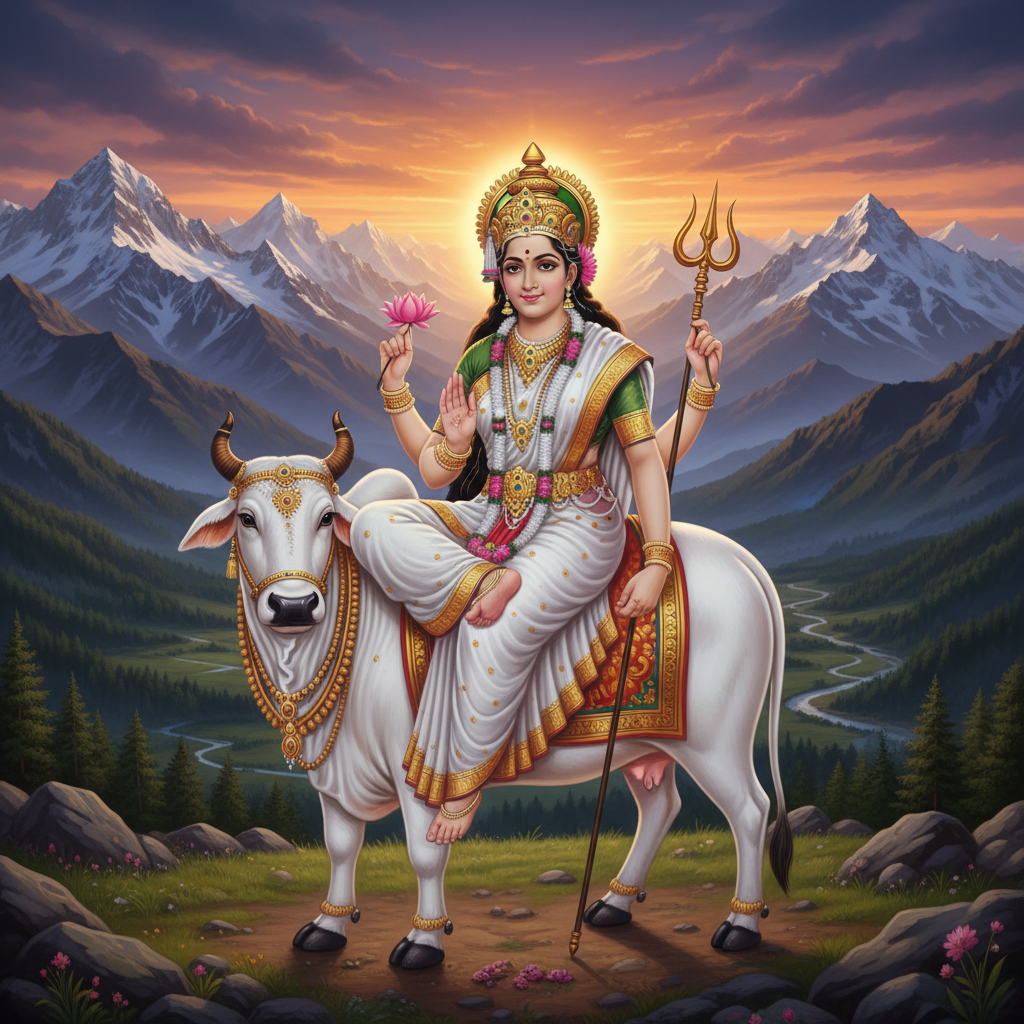
- Depicted riding a donkey, holding a broom, a winnowing fan, a pot of cool water and sometimes neem leaves
Her regional counterparts:
- Sheetla in north India
- Mariamman in Tamil Nadu
- Pochamma in Telangana, described at Karmanghat
- Shitala in Bengal, with her own extensive literature including the Shitala Mangal Kavya
- Hardaul and various local figures elsewhere
The crucial theological point. Sheetla does not merely cure the disease. In the tradition she is it.
- The eruptions are her presence in the body
- The patient has been visited, not infected
- You do not fight her; you make her comfortable so that she leaves
- The name, the cool one, is what you are asking for
What that produced in practice. The care given to a pox patient followed from that understanding, and it maps onto sensible practice remarkably well.
- The patient is kept cool, which is correct for a febrile illness
- Given light, cooling food, and specifically cold foods, curd and gruel
- Kept clean
- Neem leaves are placed on and around the patient, and neem has genuine antimicrobial and insecticidal properties, and the leaves also reduce scratching
- The patient is isolated, since the goddess is present in that house and others should not disturb
- No cooking with oil or heat in the house, which reduces the temperature and, incidentally, the fire risk around a delirious patient
- The family behaves with restraint and does not quarrel, since a guest is present
That is a coherent set of nursing instructions derived from a theological premise, and it produced better outcomes than most premodern alternatives.
What it did not do. It did not prevent transmission in any systematic way, it did not stop the disease, and smallpox killed enormous numbers of people in India across every century until it did not.
Variolation. Worth stating because it is a genuinely important and little known piece of Indian medical history.
- Variolation, deliberate inoculation with material from a smallpox lesion to produce a mild case and subsequent immunity, was practised in India before European vaccination
- It was performed by specialist inoculators, the tikadars, in Bengal and elsewhere
- It carried real risk, including of producing full smallpox and of transmitting other diseases, and killed a proportion of those inoculated
- It was nonetheless substantially safer than natural infection
- The practice was suppressed by the colonial administration in favour of vaccination after Jenner
Eradication. Smallpox was declared eradicated globally in 1980, and India's last case was in 1975.
That was achieved by mass vaccination, by surveillance and containment, and by an enormous field effort in which health workers went village to village looking for cases.
And what happened to Sheetla. She did not disappear.
- Her temples are as busy as they have ever been
- Her domain expanded to other illnesses, particularly of children
- She continues as a protector of children generally
- The mundan ceremony, described below, is now among the principal reasons families come
A goddess whose disease was eliminated and whose worship grew is a good illustration of what these deities are actually for. She was never only about smallpox. She was about a family with a sick child and nothing they could do.
Mundan
Mundan, the first haircut, is performed at this temple in enormous numbers and is worth explaining properly.
What it is:
- The child's first haircut, at which the birth hair is shaved off completely
- One of the samskaras, the life cycle rites, called chudakarana or mundana in the texts
- Performed generally between the first and third year, and in some communities at odd ages, one, three or five
- At a temple, at a family shrine, or at a specified place by community custom
What is done:
- The child is bathed
- A puja is performed
- The barber shaves the head, frequently leaving a shikha, a tuft, in communities that keep one
- The hair is offered, at the temple, in a river, or buried
- The child is bathed again and dressed in new clothes
- A meal follows, and the occasion is a family gathering
Why it is done. Several explanations are offered and they operate together.
- The birth hair is regarded as carrying the impurity of birth and of any previous life, and removing it is a fresh start
- It is an offering of something from the child's own body, which is the first thing a child has to give
- It is held to be good for the hair and the head, which is a practical belief with limited evidence
- It marks a stage: the child is no longer an infant
- It brings the child formally to the family's deity for the first time in many communities
Why at a temple. Because the rite is an offering and it goes to somebody.
At Sheetla Mata, families come from Gurugram, Delhi and across the region, in very large numbers, particularly at weekends and on auspicious days.
The practical scene. This is worth knowing before you arrive.
- Barbers operate at the temple, in designated areas
- There is a system, and it is busy
- There will be a great many small children, most of them upset, since a stranger is shaving their head
- The noise is considerable
- The whole thing is a family occasion and the atmosphere is festive rather than solemn
Guidance for families:
- Go early, particularly at weekends
- Bring a change of clothes for the child
- Bring something to comfort and distract them
- Book or check the arrangement in advance if you can
- Bring food and water
- Expect it to take longer than you think
Other places mundan is done:
- Sheetla Mata, Gurugram
- Bhadrakali at Kurukshetra, described in this batch, where Krishna's own mundan is said to have taken place
- Tirumala, where head shaving by devotees of all ages is on an entirely different scale
- Vaishno Devi, Khatu Shyam, Salasar, and a very large number of regional shrines
- At rivers and at family shrines
Tirumala's tonsure. Worth a note for scale.
At Tirumala, head shaving is performed by devotees as an offering, by men, women and children, in numbers that make it one of the largest such operations anywhere. The hair is collected, graded and sold at auction, and the proceeds are a significant part of the temple's income.
The global human hair trade is substantially supplied from Indian temples, and the extensions sold in salons worldwide were, in many cases, offered at a temple by somebody who had asked for something.
The Chaitra Mela

The temple's principal occasion is a fair held over a period in Chaitra, generally March or April.
What happens:
- A fair running over several weeks, with the peak around Sheetla Ashtami and through Chaitra
- Very large numbers, in the lakhs across the period
- Devotees from Haryana, Delhi, Rajasthan and western Uttar Pradesh
- Mundan performed continuously
- A market, with the usual fair economy of food, toys and goods
Sheetla Ashtami. Worth explaining because the observance has a specific and interesting form.
- Observed on the eighth day after Holi, in Chaitra, in the north Indian calendar
- Also called Basoda
- The distinguishing practice is that food is cooked the day before and eaten cold on the day itself
- No fire is lit and nothing is cooked on the day
- The cold food is offered to the goddess and eaten by the family
Why cold food. It follows directly from what Sheetla is.
- She is the cool one
- Heat is what you are trying to remove
- A household that lights no fire on her day is keeping itself cool for her
- Offering her cold food is offering her the thing she is
That is a very neat piece of ritual logic and it is observed across north India by families who may not be able to articulate the reasoning.
A practical note on Basoda. Eating food cooked the previous day, unrefrigerated, at the start of the north Indian hot season, is a food safety question.
If you observe it, keep the food refrigerated overnight, which does not violate anything, and do not eat anything that smells or tastes wrong. The observance is about not lighting a fire, not about risking food poisoning.
Other Sheetla shrines:
- Gurugram, this one, the largest in the region
- Village Sheetla shrines across north India, frequently a small structure at the village edge with a simple stone
- Sheetla temples in Delhi, Rajasthan, Uttar Pradesh, Punjab and Madhya Pradesh
- The pattern of a boundary shrine applies, as with the Telangana grama devatas
The village goddess pattern in Haryana:
- Most Haryana villages have a Dada Khera or village founder shrine, and a Devi shrine
- Bhumiya, the earth deity, is worshipped at the village level
- Sheetla, Mansa and local goddesses have shrines at village and regional level
- A johad, a village pond, frequently has a shrine associated with it
That layer is what Gurugram was before it became what it is, and the Sheetla temple is the surviving piece of it at metropolitan scale.
The City That Grew Around It
Gurugram is one of the most striking urban transformations in India and the temple is a good place from which to look at it.
What was here:
- A district town and a set of agricultural villages in southern Haryana
- Arid, with erratic rainfall, on the edge of the Aravalli
- Traditionally dependent on groundwater and on johads, village ponds, for water
- Poor agricultural land compared with the canal irrigated districts to the north
- The Sheetla Mata temple, the old village and the Aravalli hills
What happened:
- From the 1980s and accelerating enormously through the 1990s and 2000s, Gurgaon was developed as a corporate and residential centre
- Proximity to Delhi and to the airport was the driver
- Land was acquired from farmers and developed privately at a very large scale
- It became the location of choice for multinational offices, and a substantial proportion of large companies operating in India have offices there
- Population grew from a small town to well over a million
What is unusual about it. Gurugram is frequently described as having been built largely by private developers ahead of public infrastructure, and that description is broadly accurate.
- Individual developments have their own power generation, water supply and security
- Municipal services, drainage and public transport lagged very substantially behind construction
- The result is a city of high quality private enclaves connected by inadequate public infrastructure
The consequences:
- Flooding. Gurugram floods severely in heavy rain, most notoriously in 2016 when the city was gridlocked for many hours in an event widely reported as Gurujam. The cause is construction over natural drainage, the loss of the Najafgarh drainage system's function and the paving of catchments
- Groundwater. Extraction has far exceeded recharge for decades and the water table has fallen dramatically. The district has been classified as over exploited
- The Aravalli. Quarrying, construction and encroachment on the hills have removed the forest and the recharge zone that fed the aquifer
- The johads. Village ponds, which recharged groundwater and buffered floods, have been built over across the district
Why this belongs in a temple guide. Because it is a religious question as well as a planning one, and the tradition has a position on it.
- The johad and the village pond were, in a very large number of Indian villages, associated with a deity and protected as sacred
- The Aravalli hills carry shrines and sacred groves
- The sacred grove and sacred tank mechanisms described at Haat Kalika and Mahanandi are precisely the institutions that failed here
- A city that built over its ponds and quarried its hills lost the water it needed, and the prohibition that would have prevented it was a religious prohibition
That is not an argument that religion is a substitute for planning. It is an observation that where the customary protections held, the water frequently did too, and that Gurugram is a case where they did not hold.
Standing at the temple. From the old settlement around Sheetla Mata you can see, within a few kilometres, glass towers, an expressway, an urban village, an Aravalli ridge with quarry scars on it, and a temple that has been there since before any of it.
On a Chaitra weekend there will be several hundred thousand people at the temple and a very large number of small children having their heads shaved, and the city will be doing what it does around it.
That is a fair picture of urban India, and it is worth twenty minutes of standing still.
Visiting Sheetla Mata
Getting there
- Sheetla Mata temple, Gurugram, Haryana, in the old city area near Sheetla Mata Road
- About 32 km from central Delhi
- Gurugram railway station is close; Delhi stations are the main options
- Delhi airport is about 20 km
- The Delhi Metro yellow line reaches Gurugram; the temple is reached by auto or cab from HUDA City Centre
- Traffic in Gurugram is heavy. Allow time
Timings
- The temple opens early and runs through the day. Check current timings, which extend during the mela
When to go
- The Chaitra mela, March or April, which is the principal season and extremely crowded
- Sheetla Ashtami or Basoda, the eighth day after Holi
- Navratri, in Chaitra and Ashwin
- Ordinary weekday mornings for a quiet visit
- October to March for weather. Gurugram from April to June is very hot
If you are bringing a child for mundan
- Go early, especially at weekends
- Bring a change of clothes, food, water and something to distract the child
- Expect noise, crowds and a wait
- Check the current arrangement for booking
- The child will be upset. That is normal and everybody there has seen it
Practicalities
- Traditional dress is appropriate
- Footwear is left outside
- Offerings and prasadam are available at the temple
- Parking is very difficult during the mela
Combining the visit
- Delhi, with everything in it
- Sultanpur national park, about 15 km, a wetland and one of the best bird sites near Delhi, with very large numbers of wintering waterfowl
- Damdama and Badkhal lakes, in the Aravalli
- Sohna, with its hot springs
- Neemrana and Alwar, into Rajasthan
- Nuh and the Mewat region, with its own distinct culture and history
- Kurukshetra, about 180 km north, for the sites described elsewhere in this batch
Sultanpur deserves a note. It is a shallow wetland about 15 km from Gurugram, a national park and a Ramsar site, holding very large numbers of wintering birds including flamingos in some years, and a long resident list.
It is close to one of India's most intensively developed districts and it survives because it was protected. It is a good half day and it is the counterpart to everything else in this entry: a piece of the pre urban landscape that was kept.
Mewat. The region south of Gurugram, historically Mewat and now largely Nuh district, has a distinct history, a substantial Meo Muslim population with its own traditions, and among the worst development indicators of any district in India.
It is thirty kilometres from one of the wealthiest urban districts in the country. That contrast is worth knowing about and is not visible from the expressway.
A closing thought. The Pandavas gave this land to their teacher. His wife is in the temple. The village took his name and kept it for three thousand years by the tradition's reckoning.
Then in about thirty years it became a city of a million and a half people with an office park in it, and on a Sunday in Chaitra several hundred thousand of them come to the old village to have their children's heads shaved by the goddess who used to bring the smallpox.
There is no tidy conclusion to draw from that. It is simply what the place is.
What People Ask Most
Where is the Sheetla Mata temple?+
At Gurugram, Haryana, in the old city area near Sheetla Mata Road, about 32 km from central Delhi. The Delhi Metro yellow line reaches Gurugram and the temple is a short auto or cab ride from HUDA City Centre. Delhi airport is about 20 km away and traffic in Gurugram is heavy, so allow time.
How is the temple connected to the city's name?+
Gurugram means the village of the guru. Tradition holds that the Pandavas gave this land to Dronacharya, their teacher, as gurudakshina, and the village took his name. The goddess at the temple is identified in local tradition with Kripi, Dronacharya's wife. The city was officially renamed from Gurgaon to Gurugram in 2016.
Who is Sheetla Mata?+
The goddess of smallpox and by extension of pox diseases generally, whose name means the cool one, depicted riding a donkey with a broom, winnowing fan and pot of cool water. In the tradition she is the disease as well as its cure, so the eruptions are her presence and the patient has been visited rather than infected, and care follows from that: keeping the patient cool, clean, isolated and on light food with neem leaves.
What is mundan and why is it done here?+
The child's first haircut, one of the samskaras, generally performed between the first and third year, at which the birth hair is shaved off completely and offered. It marks a stage, removes what is held to carry the impurity of birth, and brings the child formally to the deity. It is performed at Sheetla Mata in very large numbers, particularly at weekends and during the Chaitra mela.
What is Sheetla Ashtami or Basoda?+
An observance on the eighth day after Holi in Chaitra, on which food is cooked the day before and eaten cold, with no fire lit and nothing cooked on the day itself. Since Sheetla is the cool one and heat is what you are trying to remove, a household that lights no fire on her day is keeping itself cool for her, and offering her cold food offers her what she is.
What happened to Sheetla worship after smallpox was eradicated?+
It did not decline. Smallpox was declared eradicated globally in 1980 with India's last case in 1975, and her temples are as busy as they have ever been. Her domain expanded to other childhood illnesses and to general protection of children, and the mundan ceremony is now among the principal reasons families come. She was never only about smallpox but about a family with a sick child and nothing they could do.
About the author
Pandit Ravindra Sharma · Vedic Rituals & Bhakti, 22+ years
Pandit Ravindra is the Vandnaa editorial team's resident specialist on aarti, chalisa, and daily devotion. He has performed home and temple pujas across Varanasi and Delhi for over two decades and contributes the bhakti-focused articles on this site.
Meet the Vandnaa editorial team →