The Temple at Devi Koop
The Bhadrakali temple, formally Shri Devikoop Bhadrakali, stands at Kurukshetra, Haryana.
What is there:
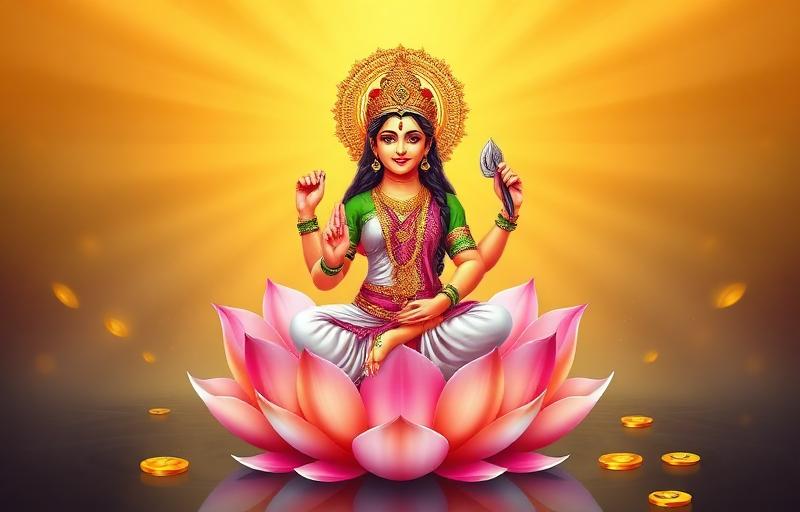
- The goddess Bhadrakali, the presiding deity
- A koop, a well, from which the temple takes part of its name
- Very large numbers of terracotta horses, offered by devotees and accumulated at the temple
- A busy complex within the Kurukshetra tirtha landscape
The Peetha claim. Bhadrakali is counted among the Shakti Peethas, and the part associated with it is the right ankle, the gulf, of Sati.
As set out at Naina Devi, the Peetha lists vary and different lists assign parts differently. Kurukshetra appears on several.
The name:
- Bhadra means auspicious, good, fortunate
- Bhadrakali is therefore the auspicious Kali, which is a specific and interesting combination
- Devi Koop refers to the well at the site
Why Bhadrakali rather than Kali. The epithet matters and it is used across India.
- Kali in her fierce form is described at Haat Kalika
- Bhadrakali is a form in which the fierceness is oriented toward protection rather than destruction
- She appears in the Devi Mahatmya and in the Puranas
- In Kerala, Bhadrakali is the principal Devi form, described at Thirumandhamkunnu
- The epithet appears at temples from Kerala to Kurukshetra, which is a very wide distribution
The Daksha connection. In one standard account, Bhadrakali emerged alongside Virabhadra from Shiva's wrath after Sati's death, and the two went to destroy Daksha's sacrifice.
That places her at the origin of the Peetha network itself, since the destruction of Daksha's sacrifice is the episode from which the whole Peetha geography follows.
Where Bhadrakali temples are:
- Kurukshetra, this one
- Thirumandhamkunnu and the Bhagavathy tradition across Kerala
- Warangal, described in the Telangana batch
- Itkhori in Jharkhand and various sites across the north and east
- Numerous local shrines
Why this one matters. Three things, and the second is the distinctive one.
- It is a Shakti Peetha
- It has the horse offering, which is unlike anything at most temples
- It carries a claim about Krishna's mundan having been performed here
The Horses
The temple's distinctive offering is a horse, and the story explains it.
The katha:
- Before the Kurukshetra war, the Pandavas came to this temple, or in some tellings Krishna brought them
- They prayed for victory
- They vowed that if they won, they would offer horses at the temple
- They won
- They returned and fulfilled the vow
- The practice has continued since
What is offered now:
- Terracotta horses, of clay, in a wide range of sizes from a few inches to substantial figures
- They are bought at the temple and around it
- They are offered and accumulate at the shrine in very large numbers
- Some devotees offer metal horses, and some offer other materials
Why a horse. Several things converge and they are worth setting out.
- A horse was the military offering. An army that has won a war offers what an army needs
- The Ashvamedha, the horse sacrifice, was the supreme royal rite of the Vedic tradition, and a horse is the highest thing a king can offer
- Horses were extremely valuable in India, which does not breed good cavalry horses well and imported them for centuries at great expense
- So offering a horse was, historically, offering something almost nobody could afford
And what happens when the offering is too expensive. This is the interesting part and it is a general principle.
- The substitute appears
- A clay horse stands for a real one
- The offering continues at a scale everybody can manage
- The form is preserved and the cost is not
Where else this substitution happens:
- Terracotta horses at Ayyanar shrines across Tamil Nadu, in enormous numbers, some of them very large, where the deity is understood to ride out at night on them
- Clay elephants, clay figures and clay limbs at shrines across India
- Coconuts replacing animal sacrifice at very many Devi temples
- Pumpkins and gourds, cut in place of an animal
- Effigies and models offered in place of the thing itself
- The Kode Mokku bull at Vemulawada, described in the Telangana batch, where a real bull is offered and passed on unharmed
The Ayyanar horses deserve a paragraph. In Tamil Nadu, shrines to Ayyanar, a guardian deity of village boundaries, accumulate terracotta horses in numbers that can run into the hundreds at a single site.
- They are made by specialist potter communities
- Some are very large, several metres high
- The deity is held to ride out at night on them to patrol the village boundary
- They weather and dissolve back into the earth over years, and are replaced
The scale and the visual effect of a grove full of terracotta horses in various states of decay is one of the more extraordinary things in Indian religious practice, and it is the same offering as at Kurukshetra in a different tradition.
What the substitution says about the tradition. It is worth drawing out.
- The offering is about intention and effort, not about value
- A poor person's clay horse is not a lesser version of a rich person's real one; it is the same offering
- The tradition has, over and over, found ways to keep expensive rites available
- That is not a corruption of the original practice. It is the practice adapting so that it can continue
And a caution. The same logic is used to justify practices that are simply commercial, in which an offering is manufactured and sold in volume with no relationship to what it once meant.
The distinction is whether the substitute preserves the meaning or only the transaction. At Kurukshetra, a family that could not have offered a horse in any century offers a clay one and the vow is complete, which is the substitution working correctly.
Krishna's Mundan
The temple carries a further claim: that the mundan ceremonies of Krishna and Balarama were performed here.
The tradition:
- Vasudeva and Devaki, or Nanda and Yashoda in some accounts, brought the boys to this temple for the ceremony
- The rite was performed here
- Families accordingly bring their own children here for mundan, following the precedent
Why that matters. It gives the temple a specific and continuing function, as at Sheetla Mata.
A temple where the deity's own family is said to have brought their children establishes precedent, and precedent is what most religious practice runs on.
Mundan at Bhadrakali:
- Performed in large numbers
- Arrangements exist at the temple
- Combined with the horse offering by many families
The general practice is described in the Sheetla Mata entry in this batch, including the practical guidance for families.
Krishna at Kurukshetra. Since the connection is his, the wider association is worth setting out.
Kurukshetra is Krishna's ground in a specific sense.
- He is Arjuna's charioteer at the battle, having refused to fight
- He speaks the Bhagavad Gita at Jyotisar, before the battle begins, when Arjuna refuses to fight his own family
- He intervenes repeatedly and decisively through the eighteen days
- Several of his interventions are morally questionable and the epic knows it
The Gita's situation. It is worth restating because it is frequently forgotten.
- Two armies are drawn up
- Arjuna looks across and sees his teachers, his cousins, his grandfather and his friends
- He puts down his bow and says he will not fight
- The entire Bhagavad Gita is Krishna's answer, delivered between two armies with everybody waiting
- At the end Arjuna picks up his bow
That setting is the point. It is not a philosophical treatise composed in a study. It is presented as an argument made to a man in a crisis of conscience who is about to have to do something terrible.
What it argues:
- That action cannot be avoided, since not acting is also an act
- That the correct approach is to act according to one's dharma without attachment to the results
- That the self is not the body and is not destroyed
- That there are multiple valid paths: knowledge, action and devotion, and that devotion is available to anybody
And what is contested about it. Honestly stated.
- The Gita is used to justify doing one's duty regardless of consequence, and that reading has been used to justify things
- Gandhi read it as an allegory of internal struggle, not as an endorsement of war
- Tilak read it as a call to action, including political action
- Ambedkar was critical of it, reading it as a defence of the varna order
- All of those readings are available in the text and the argument continues
Where to encounter it at Kurukshetra. Jyotisar, about 8 km from Bhadrakali, is where the Gita is said to have been spoken, with a banyan held to descend from the tree Krishna spoke under.
Whether or not you accept the location, standing at a spot where a text of that importance is said to have been given, on the plain where the war is said to have been fought, is a substantial thing to do.
Gita Jayanti, in Margashirsha, generally December, is when Kurukshetra observes it, and it is now a week long festival with recitation, performance and very large numbers.
Terracotta and the Potters
The horses are made by potters, and the craft is worth a section because it is the oldest continuous manufacturing tradition in India.
Terracotta in India:
- Fired clay figures are among the earliest artefacts from Indian sites
- The Indus Valley civilisation produced terracotta figurines in very large numbers, from around 2600 BCE
- Every subsequent period has produced them
- Terracotta votive figures are made and offered across India today, continuously since
That continuity is remarkable. A potter making a clay horse at Kurukshetra now is working in a tradition with a five thousand year unbroken record in the same region.
The great terracotta traditions:
- Ayyanar horses of Tamil Nadu, the largest votive terracotta in India
- Bankura horses of Bengal, with their distinctive stylised elongated form, which became the emblem of Indian handicrafts
- Molela plaques of Rajasthan, votive terracotta relief tablets made for tribal communities of Rajasthan and Gujarat
- Gorakhpur terracotta of Uttar Pradesh
- The temple terracotta of Bengal, in which entire temple facades are built of moulded and carved brick, at Bishnupur and elsewhere
- Votive figures across Haryana, Punjab, Bihar and everywhere else
The Bankura horse deserves a note. The stylised terracotta horse of Bankura district, Bengal, with its long neck and geometric form, was adopted as the logo of the All India Handicrafts Board and became the most widely recognised Indian craft object.
It is a votive figure, made for offering at village shrines, that became a national symbol of design.
Molela deserves one too. At Molela in Rajsamand district, Rajasthan, potters make terracotta relief plaques of deities, principally for Bhil and other communities of southern Rajasthan and Gujarat, who come annually to collect them and carry them home for their shrines.
That is a craft producing for a specific religious clientele across a considerable distance, and it has a GI tag.
Why terracotta specifically:
- Clay is available everywhere
- The skill is widely distributed
- The material is cheap, so an offering is affordable
- It dissolves back into the earth, so an accumulation does not become a permanent waste problem in the way that plastic or plaster does
- The firing is simple and can be done locally
That last point matters more than it seems. A votive tradition in an impermanent material can accumulate indefinitely because the accumulation returns to the ground.
What has changed:
- Plaster and plastic offerings have replaced terracotta at many shrines, which does not dissolve and does become a waste problem
- Mass produced items have displaced hand made ones
- Potter communities have lost markets to plastic and to industrial ceramics
- The craft survives where a religious demand keeps it alive, which is increasingly the main thing sustaining it
Which means that buying a clay horse at Kurukshetra, rather than a plaster or plastic one, is a small decision with a real effect: it supports a potter, and what you leave at the temple will go back into the ground.
A note for visitors. Buy the terracotta. It costs slightly more, it is made by somebody nearby, and it is what the offering actually is.
Counting the Peethas
Bhadrakali is a Shakti Peetha, and the network's structure is worth setting out properly since it comes up throughout this series.
The counts:
- 51 is the commonest figure
- 52 appears in many lists
- 64 in others
- 108 in some
- 18 Maha Shakti Peethas is a separate and shorter list, of the most important
Why the counts vary:
- Different texts give different lists, including the Devi Bhagavata, the Kalika Purana, the Pithanirnaya and the Tantrachudamani
- Lists were compiled in different regions at different times
- Local shrines were added as regions were incorporated into the tradition
- Some sites are identified with more than one part in different lists
- Some parts are assigned to more than one site
The 18 Maha Shakti Peethas. The shorter list, associated with a stotra attributed to Adi Shankaracharya, includes:
- Shankari in Sri Lanka at Trincomalee
- Kamakshi at Kanchipuram
- Shrinkhala in Bengal
- Chamundeshwari at Mysore
- Jogulamba at Alampur
- Bhramaramba at Srisailam
- Mahalakshmi at Kolhapur
- Ekaveerika at Mahur
- Mahakali at Ujjain
- Puruhutika at Pithapuram
- Girija at Draksharamam
- Manikyamba at Draksharamam
- Kamarupa at Guwahati
- Madhaveswari at Prayag
- Vaishnavi at Jwalamukhi
- Sarvamangala at Gaya
- Vishalakshi at Varanasi
- Saraswati at Kashmir, that is Sharada Peeth
Lists of the eighteen vary, as everything else does.
The geography. This is what makes the network remarkable.
- It extends into Pakistan at Hinglaj
- Into Bangladesh at Sugandha, Chattal and elsewhere
- Into Nepal at Guhyeshwari
- Into Sri Lanka at Trincomalee
- Into Tibet at Manasarovar in some lists
What that means. The Shakti Peetha network is a religious geography that:
- Predates every modern state in the region
- Crosses every international border in South Asia
- Was never administered by anybody
- Maps a single body onto a subcontinent
Hinglaj. Worth setting out because it is the most striking case.
- In Balochistan, Pakistan, in desert country in the Hingol valley
- The head is said to have fallen there
- The shrine is active, maintained by Pakistan's Hindu community, principally from Sindh
- The annual Hinglaj Yatra draws very large numbers of Pakistani Hindus, in what is the largest Hindu pilgrimage in Pakistan
- Local Muslims also visit and know the shrine as Nani Mandir
- Indian pilgrims cannot reach it
Sharada Peeth. The other case worth naming.
- In the Neelum valley, in Pakistan administered Kashmir
- One of the most important centres of learning in the history of the subcontinent, whose script, Sharada, is named after it and was the script of Kashmir for centuries
- Now a ruin
- A campaign by Kashmiri Pandits for access has been ongoing for years, and a corridor has been proposed on the model of Kartarpur
The Kartarpur corridor. Since it is the precedent, it should be mentioned.
Gurdwara Darbar Sahib Kartarpur, in Pakistan, where Guru Nanak spent his last years and died, was made accessible to Indian pilgrims through a visa free corridor opened in 2019.
That is a working example of a religious site across a hostile border being made accessible by agreement, and it is the reason the Sharada Peeth proposal is taken seriously.
What Bhadrakali's place in this is. It is one node in a network of fifty one or fifty two points scattered across five countries, marking where a body fell, and it is in Haryana, and clay horses are piled up outside it.
Visiting Bhadrakali
Getting there
- Shri Devikoop Bhadrakali temple, Kurukshetra, Haryana
- Within Kurukshetra, near Thanesar
- About 160 km from Delhi
- Kurukshetra Junction on the Delhi to Ambala main line
- Delhi and Chandigarh for airports
- Autos and local transport within Kurukshetra
Timings
- The temple opens early and runs through the day. Check locally
When to go
- Navratri, in Chaitra and Ashwin, which is the principal season
- Solar eclipse days and Somvati Amavasya, when Kurukshetra generally is at its busiest
- Gita Jayanti, in December
- October to March for weather
Making the horse offering
- Terracotta horses are sold at and around the temple in a range of sizes
- Buy the terracotta rather than plaster or plastic, for the reasons given above
- Offer it in the normal way at the temple
- Prices vary with size and it is an affordable offering at the small end
If you are bringing a child for mundan
- The practical guidance in the Sheetla Mata entry applies
- Go early, bring food, water and a change of clothes
- Check the temple's current arrangement
Practicalities
- Traditional dress is appropriate
- Kurukshetra has accommodation and is well connected
- The tirtha sites are spread out; a vehicle or autos help
Combining the visit
- Sthaneshwar Mahadev, described in this batch
- Brahma Sarovar and Sannihit Sarovar
- Jyotisar, about 8 km
- Bhishma Kund at Narkatari
- Krishna Museum and the Panorama and Science Centre
- Sheikh Chilli's tomb at Thanesar
- Harsh ka Tila
- Pehowa, about 25 km, described in this batch
- Panipat and Karnal, on the way back to Delhi
A Kurukshetra day:
- Morning: Bhadrakali and Sthaneshwar
- Midday: Brahma Sarovar and Sannihit Sarovar
- Afternoon: Jyotisar and the Krishna Museum
- Late afternoon: Sheikh Chilli's tomb and Harsh ka Tila
That is a full day and it covers the epic sites, a Shakti Peetha, a capital's mound and a Mughal tomb, in a district most people drive through on the highway.
Panipat, on the way back, deserves a mention. Three battles that changed the course of Indian history were fought there.
- 1526, Babur against Ibrahim Lodi, which established the Mughal empire
- 1556, Akbar's forces against Hemu, which secured it
- 1761, Ahmad Shah Durrani against the Marathas, which broke Maratha power in the north and cleared the way for what followed
There is a memorial and a museum. Very few people going up the highway stop.
A closing thought. An army promised horses if it won a war. It won, and it paid.
Three thousand years later, by the tradition's count, families who have never owned a horse and never will buy small clay ones from a potter and leave them at the same temple, having asked for something.
The vow is the same vow. The horses got smaller.
Frequently Asked Questions
Where is the Bhadrakali temple at Kurukshetra?+
Within Kurukshetra near Thanesar, Haryana, about 160 km from Delhi. Kurukshetra Junction is on the Delhi to Ambala main line and is well connected, with Delhi and Chandigarh the nearest airports, and autos and local transport run within the town.
Why do people offer horses here?+
The katha says the Pandavas came here before the Kurukshetra war, prayed for victory and vowed to offer horses if they won. They won, returned and fulfilled the vow, and the practice has continued. Since horses were extremely valuable and almost nobody could afford one, terracotta horses became the offering and are bought at and around the temple in a range of sizes.
Which Shakti Peetha is Kurukshetra?+
The right ankle of Sati is associated with Bhadrakali at Kurukshetra. The Peetha lists vary between 51, 52, 64 and 108 depending on the text, different lists assign parts differently, and some sites are identified with more than one part, so the assignments are not fixed.
Was Krishna's mundan performed here?+
The temple carries that tradition, holding that the mundan ceremonies of Krishna and Balarama were performed here. Families accordingly bring their own children for mundan following the precedent, and arrangements exist at the temple. Many combine it with the horse offering.
Should I buy a terracotta or a plastic horse?+
Terracotta. It costs slightly more, it supports a potter working in a tradition with a five thousand year record in the same region, and it dissolves back into the earth rather than becoming a permanent waste problem the way plaster and plastic do. What you leave at the temple will go back into the ground.
Where else are terracotta figures offered in India?+
Ayyanar horses across Tamil Nadu in enormous numbers, some several metres high, where the deity is held to ride out at night to patrol village boundaries; Bankura horses of Bengal, which became the emblem of Indian handicrafts; Molela plaques in Rajasthan, made for Bhil and other communities who collect them annually; and votive figures across Haryana, Punjab, Bihar and everywhere else.
About the author
Anjali Mehta · Editor, M.A. Religious Studies
Anjali is the managing editor for Vandnaa and oversees the festival and vrat coverage. She holds an M.A. in Religious Studies and reviews every published article for accuracy, accessibility, and tradition-fidelity.
Meet the Vandnaa editorial team →