The Temple at Thanesar
The Sthaneshwar Mahadev temple stands at Thanesar in Kurukshetra district, Haryana.
What is there:
- A Shiva temple with a linga, the presiding deity
- A tank, the Sthaneshwar tirtha, whose water carries a specific tradition
- A temple complex, rebuilt at various periods
- Located within the town, which is itself within the larger Kurukshetra sacred landscape
The name:
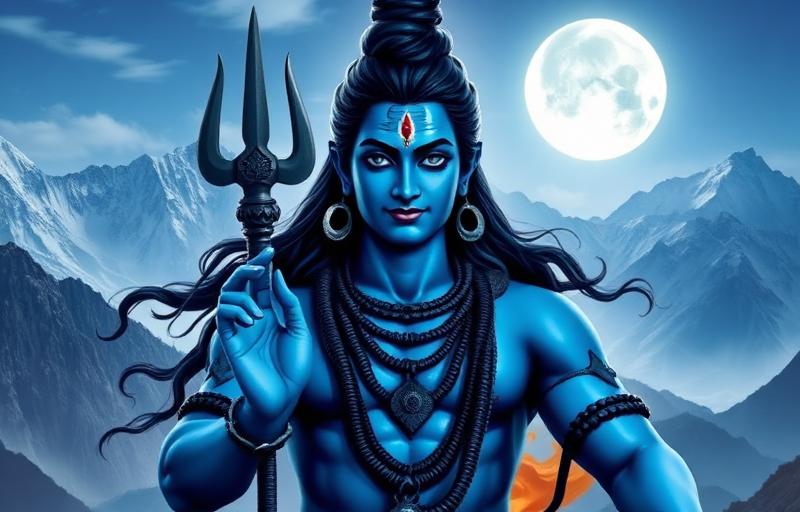
- Sthanu is a name of Shiva, meaning the pillar, the fixed one, the immovable
- Sthaneshwar is the lord of that place, or the immovable lord
- Sthanvishvara is the classical form of the town's name
- Thanesar is the same name, worn down
So the town is named after the temple, which is not the usual direction. Most temples take their name from the place.
Why the name Sthanu. It is worth a note because it carries a specific idea.
- Sthanu means a post, a stump, a pillar, something that does not move
- Applied to Shiva it refers to his immobility in meditation, his fixity, and to the linga as a pillar
- It is one of the names in the Shiva Sahasranama
- The related idea of Shiva as the stambha, the pillar of light without beginning or end, is the founding image of the Jyotirlinga concept
The Jyotirlinga story, since it connects. Brahma and Vishnu argued over which of them was greater. A pillar of fire appeared with no visible top or bottom. They agreed that whichever of them found an end to it was the greater. Vishnu went down and Brahma up. Vishnu returned admitting he had found nothing. Brahma claimed falsely to have found the top, and was cursed for it, which is one of the standard explanations for why Brahma has almost no temples.
The pillar was Shiva, and the twelve Jyotirlingas are where it manifested.
Sthanu belongs to that family of names, and the temple's is the pillar that does not move.
Before the War
Local tradition holds that the Pandavas, with Krishna, came to this temple and prayed here before the Kurukshetra war.
What the tradition says:
- They worshipped Shiva at Sthaneshwar and sought his blessing before the battle
- The blessing was granted
- They then went to the field
Why they would. In the epic's own logic this makes sense.
- The Pandavas knew they were about to fight their own family
- The war's outcome, in the narrative, is not simply about strength but about dharma and about who has the right
- Shiva is the deity who grants weapons to those who earn them, as at Indrakeeladri where Arjuna obtained the Pashupatastra
- Seeking Shiva's blessing before a war is what a party in the Mahabharata does
Sthaneshwar's place in the Kurukshetra landscape. It is one of a very large number of sites in the district, all connected to the epic.
- Jyotisar, where the Bhagavad Gita is said to have been spoken, with the banyan held to be a descendant of the tree under which Krishna spoke
- Brahma Sarovar, the great tank at Kurukshetra, one of the largest in Asia
- Sannihit Sarovar, where the tirthas are held to meet on Amavasya
- Bhishma Kund at Narkatari, where Bhishma lay on his bed of arrows and where Arjuna is said to have brought water from the ground for him with an arrow
- Jyotisar, Sthaneshwar, Bhadrakali and dozens of smaller tirthas
- The battlefield itself, which is the whole plain
How to hold the Mahabharata geography. This is worth setting out because it comes up throughout this series.
- The Mahabharata is a text of enormous length and complexity that reached its present form over centuries
- Whether it records a historical conflict, and if so of what scale and date, is genuinely disputed by historians and archaeologists
- Painted Grey Ware archaeology at sites associated with the epic, including Hastinapur, has been used to argue for a historical core, and the arguments are contested
- What is not disputed is that an enormous number of sites across north India identify themselves with the epic, and have done so for a very long time
What that means for a visitor. The Kurukshetra sites are not primarily archaeological.
What they are is a landscape that a text has been mapped onto, over a very long period, by communities who used the text to understand the ground they lived on.
Standing at Jyotisar and being told that the Gita was spoken there is not an archaeological claim and does not need to be assessed as one. It is a statement that this community has held that this ground carries that text.
And the effect of that. It is not small.
A farmer in Kurukshetra district ploughs a field that his tradition tells him is the field where the eighteen day war was fought, where Bhishma lay for fifty eight days, and where the Gita was spoken.
Whatever the archaeology says, that is a real relationship between a person and a piece of ground, and it has shaped the district's religious life completely.
Harshavardhana's Capital
Thanesar was the capital of one of the more interesting Indian empires, and the connection is worth setting out.
The Pushyabhuti or Vardhana dynasty:
- Ruling from Sthanvishvara, that is Thanesar
- Rising in the sixth century as the Guptas declined
- Prabhakaravardhana established the kingdom's power
- His son Rajyavardhana succeeded and was killed
- His younger son Harshavardhana took the throne in around 606 CE at about sixteen
Harshavardhana:
- Ruled for around forty one years, until around 647
- Extended his authority over most of north India, from Punjab to Bengal and down to the Narmada
- Was checked in the Deccan by Pulakeshin II of the Chalukyas, at a battle that both sides recorded
- Moved his capital to Kanauj
- Was the last ruler to hold most of north India under one authority until the Delhi Sultanate
Why he is well documented. Unusually for an Indian ruler of the period, there are two substantial contemporary sources.
- Banabhatta, his court poet, wrote the Harshacharita, a biography in ornate Sanskrit prose, which is among the earliest surviving Indian historical biographies
- Xuanzang, the Chinese Buddhist monk, travelled in India between roughly 629 and 645 and spent extensive time at Harsha's court, recording what he saw in detail
Xuanzang deserves a section of his own. His account is among the most important sources for seventh century India.
- He travelled from China to India for Buddhist texts, along the Silk Road and through Central Asia
- He spent around sixteen years away
- He studied at Nalanda, the great monastic university in Bihar
- He returned with a very large quantity of manuscripts and spent the rest of his life translating them
- His record, the Great Tang Records on the Western Regions, describes the geography, cities, rulers and religious life of the places he passed through
- It has been used extensively by archaeologists to identify sites, including in the excavation of Buddhist sites across India
What he says about Harsha. He describes a ruler who patronised Buddhism substantially while also supporting other traditions, who held great assemblies at Kanauj and Prayag at which he distributed his treasury, and who governed with unusual attention.
That picture should be read with the awareness that Xuanzang was a guest at Harsha's court and was writing about a patron who supported his religion.
Harsha as a writer. He is credited with three Sanskrit plays, the Ratnavali, the Priyadarshika and the Nagananda, which are performed and studied.
Whether he wrote them himself or they were written under his name is debated, which is the usual position with royal authorship.
The end. Harsha died without an heir in around 647, and the empire dissolved almost immediately.
A Chinese mission arriving shortly afterwards, under Wang Xuance, found the succession usurped, was attacked, and returned with Nepali and Tibetan military assistance to defeat the usurper, which is one of the odder episodes in Indian diplomatic history.
What remains at Thanesar:
- The Sthaneshwar temple
- Harsh ka Tila, a large mound in the town, an archaeological site with occupation layers running from the Kushana period through the Harsha period and later, excavated at intervals
- The general topography of an ancient town
Harsh ka Tila is worth visiting for anyone interested. It is a stratified urban mound in the middle of a modern town, and it is the physical remains of the capital.
The Tank and the Cure

The Sthaneshwar tirtha, the tank at the temple, carries a specific tradition.
The claim:
- The water of the tank is held to cure disease, particularly skin conditions and leprosy
- The tradition is connected in some accounts to Skanda, or Kartikeya, who was afflicted and was cured here
- Devotees bathe in it
The Skanda connection. As it is told, Skanda was afflicted by a condition and, on bathing here, was cured, after which the water retained the property.
How to write about healing claims. This series has taken the same position throughout and it should be restated.
- Do not dismiss the practice. People come to healing shrines because they are ill and because they have frequently tried everything else available to them
- Do not endorse the claim. Water does not cure leprosy
- State what medicine actually offers, because it is frequently better than people know
Leprosy specifically. This deserves accurate treatment because the stigma attached to it in India has been, and remains, severe.
- Leprosy is caused by Mycobacterium leprae, a bacterium
- It is curable, completely, with multi drug therapy, which has been available free through the public health system in India for decades
- Early treatment prevents the disability that produces the visible deformity
- The deformity, which is what people fear, results from nerve damage and from injuries to numb limbs, not from the disease eating the body as the folklore holds
- It is not highly contagious. The great majority of people are naturally immune, and treated patients become non infectious very quickly
- India has made enormous progress and case numbers have fallen dramatically, though transmission continues
The stigma:
- People affected by leprosy have historically been expelled from families and villages in India
- Leprosy colonies, settlements of affected people and their descendants, exist across the country and many people born in them have never had the disease
- Legal discrimination persisted for a very long time, and leprosy remained grounds for divorce under several Indian personal laws until amendments in 2019
- That stigma is the actual disease burden now, more than the infection is
Why this belongs at a temple. Because temples like this one are where affected people went, and in many cases still go.
A shrine that offers a bath and no judgement, to somebody whose family has expelled them, is providing something the medical system was not providing for most of Indian history.
That is worth acknowledging. It is also, now, unnecessary, because the drugs exist, are free, and work.
What a guide should say:
- If you have a skin patch that has lost sensation, see a doctor. That is the classic early sign and early treatment prevents everything that follows
- Treatment is free at government facilities under the National Leprosy Eradication Programme
- A person who has been treated is not infectious and requires no separation of any kind
- Do not treat leprosy as a curse, a karmic punishment or a moral judgement, because it is a bacterial infection and treating it as anything else is what has ruined a very large number of Indian lives
And the temple. Go, bathe if you wish, and see a doctor. Those are not in conflict.
The Raids and the Rebuilding
Thanesar's later history includes repeated destruction, and the subject should be handled with the care set out at Brajeshwari.
What is recorded:
- Mahmud of Ghazni raided Thanesar in around 1014, and the raid is described in contemporary Persian sources
- The temple and the town were plundered
- Thanesar was on the route between the Punjab and the Gangetic plain and was consequently raided repeatedly across subsequent centuries
- The temple was rebuilt more than once
- Later Mughal period building and subsequent restoration produced the present structure
How to hold this. The framework from Brajeshwari applies directly and it is worth restating.
What is true:
- Temple destruction and plunder by invading and by Indian powers is a documented part of the historical record
- Some of it was on a very large scale and was accompanied by killing
- It was motivated by wealth, by iconoclasm and by political humiliation, in varying proportions in different cases
- The sources include the accounts of the raiders themselves, who frequently boasted of it
What is also true:
- Indian rulers had raided each other's temples and removed deities as trophies before the Turkic invasions, which is documented in Chola, Paramara and other records
- Muslim rulers in India also endowed and protected temples on a very large scale, which is equally documented, including grants to temples by Mughal emperors
- The record is mixed, complicated and does not support either of the simple narratives usually offered
And what follows from it:
- The temple was rebuilt, repeatedly
- It is standing and in worship now
- The community that rebuilt it did so each time
Why this matters for how the history is used. It is the most important point and it should be stated plainly.
Stories of medieval destruction are used in present day India to make claims about people living now. That use is illegitimate and it should be resisted by anybody writing about temples.
- A raid in 1014 tells you about the eleventh century
- It tells you nothing about your neighbour
- Indian Muslims are not the descendants of the raiders in any meaningful sense; the overwhelming majority are the descendants of people who were already here
- A history used as a grievance against living people is not history
The better reading. A site that has been destroyed and rebuilt several times over a thousand years is a record of persistence rather than of destruction.
What is at Thanesar is a temple that people kept putting back, in a town named after it, next to the mound of a capital that fell fourteen hundred years ago, on a plain that a text says a war was fought on three thousand years before that.
That is a very long continuity and it is what the site is actually about.
Kurukshetra today:
- A district town and a university town, with Kurukshetra University and the National Institute of Technology
- A major pilgrimage centre, particularly at the solar eclipse and at Gita Jayanti
- The Krishna Museum and the Kurukshetra Panorama and Science Centre
- Extensive development of the tirtha sites by the Kurukshetra Development Board
Visiting Sthaneshwar and Kurukshetra
Getting there
- Sthaneshwar Mahadev, Thanesar, Kurukshetra district, Haryana
- About 160 km from Delhi and roughly 40 km from Karnal
- Kurukshetra Junction is on the Delhi to Ambala main line and is very well connected
- Delhi and Chandigarh for airports
- The temple is within Thanesar town, which adjoins Kurukshetra
Timings
- The temple opens early and runs through the day. Check locally
When to go
- Maha Shivaratri, the principal festival at this temple
- Somvati Amavasya and solar eclipse days, when the Kurukshetra tirthas draw very large numbers
- Gita Jayanti, in Margashirsha, generally December, which is now a substantial week long festival at Kurukshetra
- October to March for weather. Haryana from April to June is very hot
The solar eclipse gathering. Worth explaining because it is the district's largest occasion.
- Bathing at the Kurukshetra tirthas during a solar eclipse is held to carry very great merit
- Enormous numbers come, in the lakhs, for eclipses visible in the region
- Sannihit Sarovar is the principal site, where all the tirthas are held to gather on Amavasya
- It is one of the largest single day religious gatherings in north India when a major eclipse falls
A note on eclipse practice. Traditional observance involves fasting, not eating during the eclipse, bathing after, and avoiding certain activities.
The astronomical event is entirely predictable and harmless. Do not look at the sun directly during a partial eclipse without proper eclipse glasses, which is a genuine eye safety matter and has nothing to do with tradition.
The Kurukshetra circuit. There is a great deal here and it is well organised.
- Brahma Sarovar, the enormous tank, the centre of the complex
- Sannihit Sarovar, the second great tank
- Jyotisar, about 8 km, where the Gita is said to have been spoken, with the banyan and a light and sound show
- Sthaneshwar Mahadev, this temple
- Bhadrakali temple, described separately in this batch
- Bhishma Kund at Narkatari
- Krishna Museum and the Kurukshetra Panorama and Science Centre
- Sheikh Chilli's tomb, a fine Mughal period monument at Thanesar, of Abd ur Rahim, with a madrasa complex, which is under the Archaeological Survey and is architecturally excellent
- Harsh ka Tila, the archaeological mound
Sheikh Chilli's tomb deserves a mention. It is a seventeenth century Mughal tomb at Thanesar, in white marble with a Persian style dome, in a garden complex with a madrasa.
It is one of the finer Mughal buildings in Haryana, it is a hundred metres from the Sthaneshwar area, and it is visited by almost nobody who comes for the tirthas.
That two such buildings sit adjacent in one small town is a fair summary of what Indian towns are actually like, and seeing both in one afternoon is a better use of a visit than seeing either alone.
Practicalities
- Kurukshetra has accommodation and is on the main highway and rail line
- The tirtha sites are spread out and a vehicle or autos are needed
- Traditional dress is appropriate at the temples
- Very crowded on eclipse days and at Gita Jayanti
Combining further
- Pehowa, about 25 km, described in this batch
- Kapal Mochan, about 100 km
- Karnal, Panipat and the battlefield sites
- Patiala, about 100 km
- Chandigarh and Panchkula, about 100 km
- Delhi, 160 km
A closing thought. The town is named after the temple, which is unusual. The temple is where an army is said to have prayed before a war that a text says decided the age.
Six hundred years after the text reached its present form, an empire was run from that town for forty one years and then stopped existing within months of its ruler's death.
And the temple is still open, and somebody will be there at six tomorrow morning.
Frequently Asked Questions
Where is the Sthaneshwar Mahadev temple?+
At Thanesar in Kurukshetra district, Haryana, about 160 km from Delhi and roughly 40 km from Karnal. Kurukshetra Junction is on the Delhi to Ambala main line and is very well connected, with Delhi and Chandigarh the nearest airports. The temple is within Thanesar town, which adjoins Kurukshetra.
How did the temple name the town?+
Sthanu is a name of Shiva meaning the pillar or the immovable one, and Sthaneshwar is the lord of that place. Sthanvishvara is the classical form of the town's name, worn down to Thanesar. Most temples take their name from the place, so this is unusual in running the other way.
What is the Pandava connection?+
Local tradition holds that the Pandavas, with Krishna, came to this temple and worshipped Shiva here before the Kurukshetra war, seeking his blessing before the battle. Sthaneshwar is one of a very large number of sites in the district connected to the epic, along with Jyotisar, Brahma Sarovar, Sannihit Sarovar and Bhishma Kund.
Who was Harshavardhana?+
The ruler of the Pushyabhuti dynasty who took the throne at Thanesar in around 606 CE at about sixteen and ruled for around forty one years, extending his authority over most of north India before moving his capital to Kanauj. He is unusually well documented through Banabhatta's Harshacharita and the account of the Chinese monk Xuanzang, and the empire dissolved almost immediately after his death.
Does the tank water cure disease?+
The water is held to cure disease, particularly skin conditions and leprosy, connected in some accounts to Skanda being cured here. Leprosy is caused by a bacterium and is completely curable with multi drug therapy, available free through the public health system in India for decades. A skin patch that has lost sensation is the classic early sign and needs a doctor. Bathing and treatment are not in conflict.
What else is there to see at Kurukshetra?+
Brahma Sarovar and Sannihit Sarovar, the two great tanks; Jyotisar about 8 km where the Gita is said to have been spoken; the Bhadrakali temple; Bhishma Kund at Narkatari; the Krishna Museum and the Panorama and Science Centre; Harsh ka Tila, the archaeological mound of the capital; and Sheikh Chilli's tomb, a fine seventeenth century Mughal monument at Thanesar that almost nobody visits.
About the author
Pandit Ravindra Sharma · Vedic Rituals & Bhakti, 22+ years
Pandit Ravindra is the Vandnaa editorial team's resident specialist on aarti, chalisa, and daily devotion. He has performed home and temple pujas across Varanasi and Delhi for over two decades and contributes the bhakti-focused articles on this site.
Meet the Vandnaa editorial team →