
What Is the Kalpavriksha
Kalpavriksha, also called Kalpataru or Kalpadruma, is the divine wish-fulfilling tree of Hindu tradition. Whoever sits in its shade and makes a sincere wish is said to have that wish granted at once. It is one of the celestial treasures and a symbol of limitless generosity, giving endlessly without ever being diminished. In its imagery it stands for the boundless grace of the divine, which can fulfil every need of body, mind and soul.
Origin in the Samudra Manthan
Like Kamadhenu, the Kalpavriksha arose during the Samudra Manthan, the great churning of the ocean by the devas and asuras. Among the fourteen divine treasures that emerged was this wish-granting tree, which was taken to the heavens. Its appearance from the same churning links it forever with abundance, immortality and the reward of patient, righteous effort, since the nectar of immortality (amrita) rose from that same churning.
Its Home in Indra's Heaven
The Kalpavriksha was planted in Swarga, the heaven of Indra, king of the gods, where it adorns the divine gardens of Nandana. There the gods and celestial beings enjoy its endless gifts. A closely related celestial tree is the Parijata, the fragrant night-flowering tree of Indra's heaven, which Krishna is said to have brought to earth for Satyabhama - a beloved tale showing how heavenly grace can be drawn down by love and devotion.
Symbolism and Spiritual Meaning
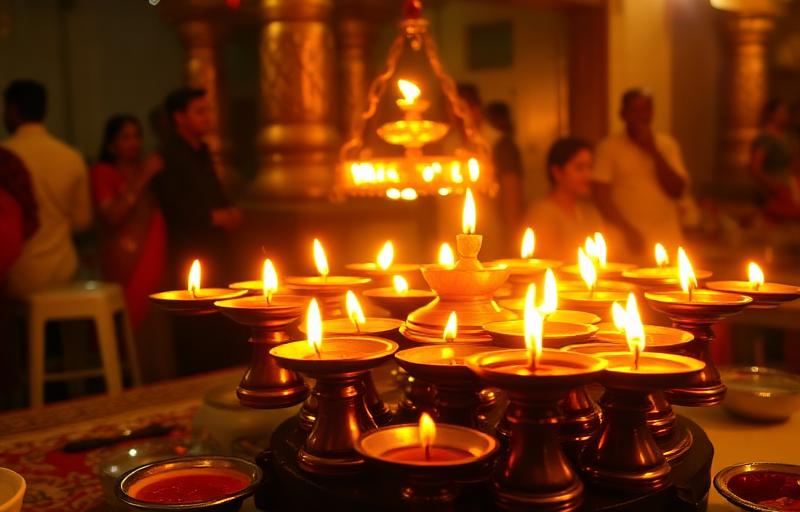
The Kalpavriksha symbolises fulfilment, generosity and the fruit of good karma. Because it grants whatever is asked, sages warn that one must wish with wisdom and purity, for selfish or careless desires bring only fleeting results. In a deeper sense the true Kalpavriksha is the Guru, the divine name and devotion itself, which fulfil the highest wish of all - peace and liberation - rather than mere worldly gains.
Earthly Trees Linked to Kalpavriksha
On earth, several trees are revered as forms of the Kalpavriksha for their endless usefulness. The Peepal, the Banyan, the coconut and the Bael are all honoured in this way, as is the Parijata grown in temple gardens. People tie sacred threads, light lamps and offer prayers at such trees, treating them as living wish-fulfillers and as reminders that nature itself is a generous divine gift.
The Lesson for Seekers Today
The Kalpavriksha teaches that the universe is abundant and giving when we approach it with gratitude and clean intent. It invites us to wish wisely, to give as freely as the tree does, and to protect trees and nature as living forms of the divine. Above all it reminds the seeker that the deepest fulfilment comes not from endless wants but from a heart resting in devotion.
Quick Answers
What is the Kalpavriksha?+
Kalpavriksha, also called Kalpataru, is the divine wish-fulfilling tree of Hindu tradition. Whoever sits beneath it and wishes sincerely is said to have that wish granted.
Where did the Kalpavriksha come from?+
The Kalpavriksha emerged during the Samudra Manthan, the churning of the cosmic ocean, as one of the fourteen divine treasures, and was taken to the heavens.
Where is the Kalpavriksha said to grow?+
It is said to grow in Swarga, the heaven of Indra, adorning the divine gardens of Nandana. The fragrant Parijata is a closely related celestial tree of the same heaven.
What is the Parijata's link with Kalpavriksha?+
The Parijata is a fragrant night-flowering celestial tree of Indra's heaven, closely linked to the Kalpavriksha. Krishna is said to have brought it to earth for Satyabhama.
What does the Kalpavriksha symbolise?+
It symbolises fulfilment, generosity and the fruit of good karma. In a deeper sense, the true Kalpavriksha is the Guru, the divine name and devotion, which grant peace and liberation.
Which earthly trees are linked to the Kalpavriksha?+
Trees like the Peepal, Banyan, coconut, Bael and the Parijata are revered as earthly forms of the Kalpavriksha for their endless usefulness, and prayers are often offered at them.
About the author
Anjali Mehta · Editor, M.A. Religious Studies
Anjali is the managing editor for Vandnaa and oversees the festival and vrat coverage. She holds an M.A. in Religious Studies and reviews every published article for accuracy, accessibility, and tradition-fidelity.
Meet the Vandnaa editorial team →Explore on Vandnaa
Related Articles
Kamadhenu - The Divine Cow, Significance in Hinduism
9 min read
Krishna's Life Lessons - Teachings for Modern Life
10 min read

Moksha & the 4 Purusharthas - Dharma, Artha, Kama, Moksha
9 min read
Dharma - Meaning & Significance in Hinduism
9 min read
Lakshmi Aarti Lyrics – Om Jai Lakshmi Mata (लक्ष्मी आरती)
8 min read
Dashavatar - 10 Avatars of Lord Vishnu: Names, Order, Meaning, Significance
11 min read