
The Temple in the Grove
The Kanak Durga temple stands at Chilkigarh, in Jhargram district of West Bengal, inside a forest on the bank of the Dulung river.
What is there:
- The Kanak Durga shrine, with the Devi worshipped in a form of gold, from which the name is understood
- The sacred grove surrounding it, protected over generations, with old trees and considerable plant diversity
- The Dulung river flowing past
- The Chilkigarh rajbari, the palace of the local ruling family, a short distance away
The temple is associated with the Chilkigarh ruling line, and the Devi is held to be their kuladevi.
What makes the site notable beyond its worship is the forest. The grove around the temple has been protected because the Devi is held to reside in it, and cutting within it has been prohibited by custom for a very long time. The result is a stand of old growth vegetation with a species diversity that has drawn the attention of botanists, in a district where most forest has been cleared or converted.
Jhargram belongs to the Jungle Mahal, the forested country of western Bengal running into Jharkhand and Odisha, and the temple is a good introduction to that region.
Sacred Groves
The Chilkigarh grove belongs to a category of protected forest found across India, and it is worth understanding as a system.
What a sacred grove is:
- A patch of forest protected by religious prohibition rather than by law
- Associated with a deity held to reside in it, usually a Devi or a local guardian
- Governed by rules against cutting, hunting or removal, enforced by the community rather than by the state
- Often the last remaining old vegetation in a heavily cleared landscape
Where they are found:
- Sarna groves across Jharkhand, central to the religion of the Adivasi communities there, which is a distinct faith
- Devrai in Maharashtra
- Kavu in Kerala, including the snake groves
- Orans in Rajasthan
- Law Kyntang in Meghalaya
- Thousands more across the country, most of them small
What botanists have found in them is significant. Because the groves were never cut, they preserve species compositions that have disappeared elsewhere, including medicinal plants and old trees, and several have been documented as refugia for locally extinct species.
The Chilkigarh grove is among the studied ones, and its diversity is directly attributable to the prohibition that protects it.
Worship at the Shrine
Worship follows the Bengali Devi pattern with local particulars.
- Daily puja at the shrine
- Offerings of flowers, sindoor, sweets and fruit
- Durga Puja in Ashwin as the greatest occasion, kept with the region's own customs
- Kali Puja and the Bengali Devi calendar observed
- Local families coming for vows, marriage blessings and household concerns
- The Chilkigarh family's traditional role maintained in certain rites
What should be said about animal sacrifice. As at many Shakta shrines across eastern India, the tradition here has historically included it, and practice has varied over time and by occasion. Many families now offer substitutes. Where sacrifice occurs it is governed by local custom and law. Visitors uncomfortable with it can simply choose ordinary days, when nothing of the kind takes place.
What is distinctive about the setting is the walk. Reaching the shrine means going into the grove, and the forest is genuinely a forest, quiet and closed in, with the river beyond.
For a Bengali Devi shrine, that setting is unusual. Most of the state's major Devi temples are in towns and cities, embedded in built environments. Kanak Durga is in the trees, which is closer to how a great many Devi shrines began.
The Jungle Mahal
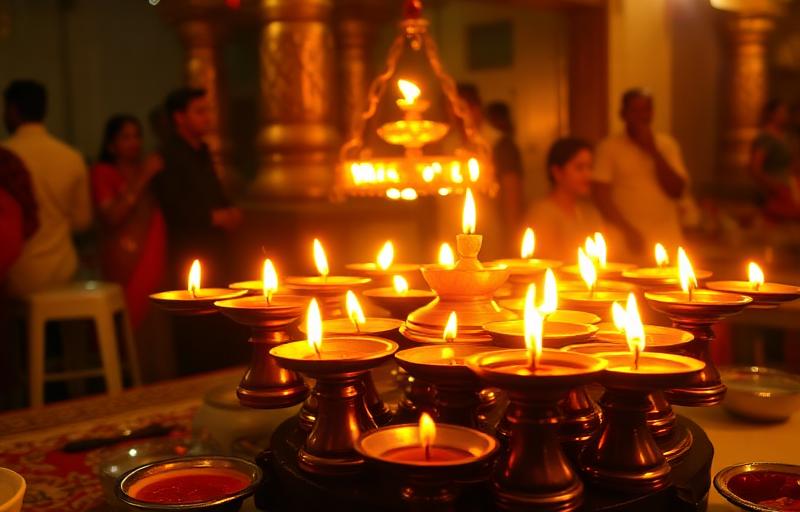
Jhargram belongs to a region with a distinct character within West Bengal.
What the Jungle Mahal is:
- The forested western districts of West Bengal, including Jhargram, Bankura and Purulia, running into Jharkhand and Odisha
- Country of sal forest, laterite soil, low hills and seasonal rivers
- Home to significant Adivasi populations, principally Santhal, with Munda, Bhumij, Lodha and other communities
- A region with its own art, music and festival traditions distinct from the Bengal delta
What the region holds:
- Chhau dance in Purulia, one of the three schools of the form
- Terracotta temples across Bankura, at Bishnupur above all
- Baul and folk traditions
- Sacred groves and village deities across the countryside
- Dokra metal casting and other craft traditions
Jhargram itself has:
- The Jhargram rajbari, now partly a heritage hotel
- Sal forest and the Dulung river country
- Kanak Durga at Chilkigarh
- Belpahari and the hill country beyond
A note on the Adivasi communities of the region. Santhal religious tradition, centred on Sarna and its own deities and observances, is a distinct faith with its own practices, and should not be described as a variant of anything else.
Devi Worship in West Bengal
Kanak Durga sits within one of India's most Devi centred religious cultures.
What Bengal's Devi practice includes:
- Durga Puja in Ashwin, the state's defining festival, with community pandals across every neighbourhood
- Kali Puja on Kartik amavasya, coinciding with Diwali elsewhere
- Jagaddhatri Puja, particularly at Chandannagar and Krishnanagar
- Lakshmi Puja on Kojagari Purnima
- Annapurna, Shitala, Manasa and the household goddesses
- Shakti Peethas including Kalighat and Tarapith
- Village Devi shrines and sacred groves across the countryside
What is distinctive about Bengali Durga Puja is that it is a homecoming. The Devi is understood to return to her father's house for the four days, with her children, and the observance is structured as a daughter's visit: her arrival, her days at home, and the grief of her departure on Dashami.
The songs, the customs of Sindoor Khela and the emotional register of Bijoya all follow from that framing.
At Chilkigarh, in a forest in the Jungle Mahal, the same festival is kept in a very different setting from the pandals of Kolkata, and seeing both is the best way to understand how much room the tradition contains.
Visiting Chilkigarh
Practical notes.
Getting there
- Chilkigarh is about 15 km from Jhargram town in West Bengal
- Jhargram station is on the Kharagpur to Tatanagar line, with connections from Kolkata
- Kolkata is roughly 170 km by road
- Autos and taxis run from Jhargram town
When to go
- Durga Puja in Ashwin, the greatest occasion
- Winter, November to February, when the Jungle Mahal is at its most pleasant
- Spring, when the palash is in flower across the region, which is worth seeing in itself
- Avoid heavy monsoon, when forest roads are difficult
At the site
- The shrine is reached through the grove, so allow time for the walk
- Offerings are flowers, sindoor, sweets and fruit
- Dress modestly and remove footwear at the designated place
- Do not pick, cut or remove anything from the grove, which is protected by custom and matters ecologically
- Carry water and take your litter out with you
Combining the visit
- Jhargram rajbari and the town
- Belpahari and the hill country
- Bishnupur in Bankura, for the terracotta temples
- Purulia, for Chhau
- Ghatshila and Jamshedpur, across in Jharkhand
A closing thought. A forest that survived because people believed a goddess lived in it is doing two things at once, and both of them matter. Chilkigarh is a good place to think about what religious prohibition has actually preserved in India, in the absence of any other protection.
Common Questions From Devotees
Where is the Kanak Durga temple?+
At Chilkigarh, about 15 km from Jhargram town in West Bengal, inside a sacred grove on the bank of the Dulung river. Jhargram station is on the Kharagpur to Tatanagar line and Kolkata is roughly 170 km away by road.
What is a sacred grove?+
A patch of forest protected by religious prohibition rather than law, associated with a deity held to reside in it, governed by community enforced rules against cutting, hunting or removal. Such groves are often the last remaining old vegetation in a cleared landscape.
Why is the Chilkigarh grove ecologically important?+
Because it was never cut, it preserves old growth vegetation and a species diversity, including medicinal plants and old trees, that has disappeared elsewhere in a district where most forest has been cleared or converted. It is among the groves that have been studied.
What is the Jungle Mahal?+
The forested western districts of West Bengal, including Jhargram, Bankura and Purulia, running into Jharkhand and Odisha. It is sal forest country with laterite soil and low hills, home to significant Adivasi populations, principally Santhal, with its own art and festival traditions.
When is the best time to visit?+
Durga Puja in Ashwin is the greatest occasion. Winter from November to February is the most pleasant, and spring is worth seeing for the palash in flower across the region. Avoid heavy monsoon, when forest roads become difficult.
How should visitors behave in the grove?+
Do not pick, cut or remove anything, since the grove is protected by custom and matters ecologically. Carry water, take your litter out with you, dress modestly at the shrine and remove footwear at the designated place.
About the author
Pandit Ravindra Sharma · Vedic Rituals & Bhakti, 22+ years
Pandit Ravindra is the Vandnaa editorial team's resident specialist on aarti, chalisa, and daily devotion. He has performed home and temple pujas across Varanasi and Delhi for over two decades and contributes the bhakti-focused articles on this site.
Meet the Vandnaa editorial team →Explore on Vandnaa
Related Articles

Sarbamangala of Bardhaman: The Devi Recovered from a Tank
7 min read
Dharmathakur: The Bengal Deity Worshipped as a Stone, With No Brahmin Priest
8 min read
Bipattarini Devi: The Bengali Vrat Kept Between the Two Rath Yatras
8 min read

Loknath Baba: The Bengali Saint Whose Photograph Is in Every Second Shop
8 min read