Who Bipattarini Devi Is
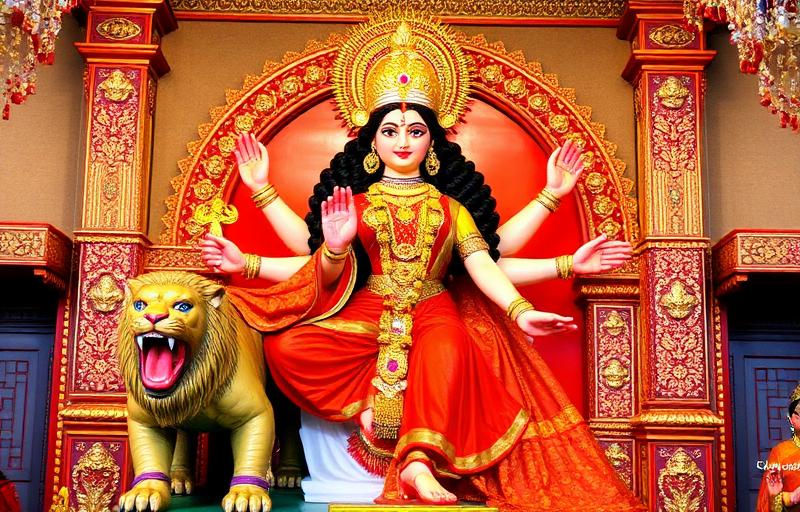
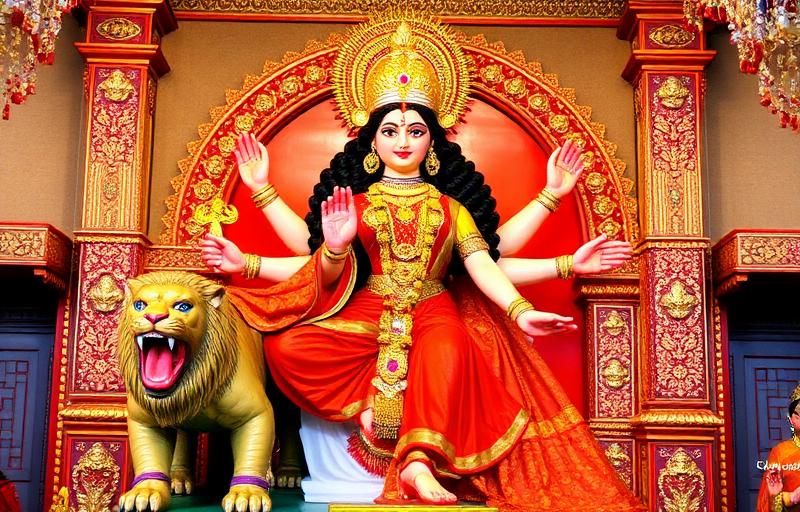
Bipattarini, also written Bipodtarini or Vipattarini, is a form of the Devi worshipped mainly in Bengal. The name is the whole meaning: bipad is danger or calamity, and tarini is the one who carries you across it. She is the goddess who takes a devotee through trouble rather than removing the trouble in advance.
She is understood as a form of Durga, closely associated in Bengali devotion with Sankatnashini, the destroyer of crisis. In many households she is worshipped without a permanent murti, through a ghat, a picture or the presence invoked for the day of the vrat.
What is distinctive about her worship:
- It is a vrat centred devotion, kept mainly by women, rather than a temple centred one
- It is observed on a specific short window in the Bengali calendar, between the two Rath Yatras
- It centres on a red thread with thirteen knots, tied on the arm and left to wear away naturally
- The number thirteen governs the whole offering, with thirteen of everything
For Bengali families, Bipattarini Puja belongs to the same layer of devotion as the family's other bratas, small household observances kept by women for the protection of the family, learnt from mothers and grandmothers rather than from books.
When the Vrat Is Kept
Bipattarini Puja has a narrow and clearly defined window in the Bengali calendar.
It is observed in the month of Ashadha, on a Tuesday or Saturday that falls between Ratha Yatra and Ulto Rath, the return journey of the chariot. In most years this gives one or two possible days, and families follow the day named in the Bengali panjika.
The timing is not incidental:
- Tuesday and Saturday are traditionally associated in Bengal with the fierce protective deities, which suits a goddess invoked against danger
- The Rath Yatra window places the vrat within the larger festival season, when Jagannath, Balabhadra and Subhadra are away from the temple, a period Bengal marks with its own observances
- Ashadha is the start of the monsoon, historically a season of illness, flooding and travel risk, which fits a vrat asking for protection
Because the window shifts every year with the lunar calendar, families check the panjika rather than a fixed date. Those who cannot keep it on the exact day sometimes observe it on the following occasion, though tradition prefers the prescribed window.
The Vrat and the Thirteen Knots
The observance is simple in structure and strict about its details, and the number thirteen runs through all of it.
- The vrati keeps a fast through the day, generally taking no rice, and eats after the puja is complete
- The offering is prepared in sets of thirteen - thirteen flowers, thirteen fruits, thirteen leaves, thirteen blades of durba grass and thirteen sweets in most household traditions
- A red thread with thirteen knots, called the tagaa, is worshipped along with the offering and then tied on the arm - traditionally the left arm for women and the right for men
- The vrat katha is read or narrated during the puja, since in Bengali brata tradition the katha is as essential as the offering
- Thirteen kinds of fruit and thirteen paan leaves feature in more elaborate household versions
The thread is not removed. It is left on the arm until it wears away and falls off by itself, and many devotees replace it only at the next year's puja.
What devotees ask for is consistent with the name. Protection through a period of difficulty, safety for family members travelling or working away, recovery from illness, and the passing of a crisis already underway. This is a vrat for situations that are already difficult, not a general prayer for prosperity.
The Katha Read at the Puja
The Bipattarini vrat katha is one of the best known household kathas in Bengal, and it is told in several versions.
In the most widely narrated version, a queen had a close friendship with a woman from a community outside her own. Curious about a custom she had never seen, the queen went with her friend to observe it, and was given something to carry back which, if discovered, would have caused a serious scandal at court and severe punishment.
On her return the king asked what she was hiding. The queen, with nothing to say, remembered the Devi and prayed. When she opened the cloth in front of the court, what she had hidden had turned into flowers.
The katha is not read as a story about a clever escape. Bengali households read it for its central claim, which is stated at the end: that the Devi does not prevent a devotee from getting into trouble, but does not leave them inside it either.
Other versions circulate, including kathas involving a merchant's family and a devotee wrongly accused, but all of them turn on the same point. The devotee is already in difficulty when the Devi is remembered, and the remembering is what the vrat trains.
Bipattarini in Bengal's Devotional Year
Bengal's devotional calendar is unusually full, and Bipattarini occupies a specific place in it.
- Rath Yatra and Ulto Rath in Ashadha - the window within which the vrat falls
- Manasa Puja in Shravan - for the serpent goddess, kept especially in rural Bengal
- Durga Puja in Ashwin - the year's central festival
- Lakshmi Puja on Kojagari Purnima, days after Durga Puja
- Kali Puja on Deepavali amavasya - Bengal's own form of the Diwali night
- Jagaddhatri Puja in Kartik - especially at Chandannagar and Krishnanagar
- Household bratas through the year - Itu, Sejuti, Tusu and others kept by women
What distinguishes Bipattarini from the large pujas is scale. It has no pandals, no visarjan processions and very little public presence. It happens in kitchens and puja rooms, and the only visible sign of it afterwards is the red thread on people's arms through the following weeks.
That quietness is worth noting. Bengal is known nationally for its enormous public pujas, but a large part of its actual devotional life runs through small household bratas like this one, kept by women, transmitted orally, and unchanged for generations.
Keeping the Vrat Today
For families who want to keep the vrat but did not learn it at home, the essentials are straightforward.
- Check the panjika for the Tuesday or Saturday between Rath Yatra and Ulto Rath in the current year
- Prepare the offering in thirteens - thirteen flowers, fruits, leaves, durba and sweets. Households vary in the details, and using what is available locally is accepted.
- Keep the fast through the day, avoiding rice, and complete the puja before eating
- Worship the thread with the offering, then tie it on the arm, left for women and right for men
- Read the katha aloud during the puja. Bengali brata tradition treats the katha as part of the offering, not as optional background.
- Leave the thread on until it falls away naturally
If you cannot fast for health reasons, the customary substitution is a lighter fast with fruit and milk, or having a family member keep the vrat on the household's behalf. Elders are generally clear that the vrat should not damage health, since the whole purpose of the goddess is protection.
One last note that Bengali households repeat: this is a vrat of the family rather than of the individual. It is kept for the household, and the thread on the arm is a reminder that someone in the family took on that responsibility for the year.
Frequently Asked Questions
Who is Bipattarini Devi?+
Bipattarini is a form of Durga worshipped mainly in Bengal, whose name means the one who carries a devotee across danger. She is closely associated with Sankatnashini, the destroyer of crisis.
When is Bipattarini Puja observed?+
In the month of Ashadha, on a Tuesday or Saturday falling between Rath Yatra and Ulto Rath. The exact day changes every year, so families follow the Bengali panjika.
What is the thirteen knot thread in Bipattarini Puja?+
It is a red thread called the tagaa, tied with thirteen knots, worshipped along with the offering and then tied on the arm, traditionally the left arm for women and the right for men. It is left on until it wears away by itself.
Why is everything offered in thirteens?+
The number thirteen governs the entire offering in this vrat, with thirteen flowers, fruits, leaves, blades of durba and sweets, along with the thirteen knots on the thread. It is a fixed feature of the observance as it has been passed down.
What does the Bipattarini katha teach?+
In the best known version a queen prays to the Devi when something she was hiding is about to be discovered, and it turns into flowers. The point Bengali households draw from it is that the Devi does not prevent a devotee from getting into difficulty but does not leave them in it either.
Can the vrat be kept if fasting is not possible?+
Yes. The customary substitution is a lighter fast with fruit and milk, or another family member keeping the vrat on the household's behalf, since the vrat is kept for the family rather than for one person.
About the author
Pandit Mahesh Trivedi · Festival Traditions & Panchang
Pandit Mahesh leads the festival-date and Panchang content on Vandnaa. He cross-references multiple regional panchangs (Drik, Vaishnava, Bengali, Marathi) for every festival date published on the site.
Meet the Vandnaa editorial team →