Who Is Manasa Devi
Manasa Devi is worshipped across Bengal as the goddess of serpents, revered for her power to protect devotees from snakebite and to watch over the wellbeing of the household. In tradition, she is described as the manasa-putri, the mind-born daughter of Shiva, and the sister of Vasuki, the serpent king who holds a place of honor in Hindu scripture. Her very name, drawn from the word manas meaning mind, reflects the belief that she came into being through her father's thought alone.
Across the villages of Bengal, and in parts of Assam, Bihar and Jharkhand, Manasa is worshipped both as an independent goddess and as a protective presence invoked especially during the monsoon months, when snakes are more active in the fields and homes of rural households.
The Legend of Behula and Lakhindar
Manasa's worship is inseparable from the story told in the medieval Bengali devotional poems known as the Manasamangal Kavyas. These verses describe the merchant Chand Sadagar, a devoted worshipper of Shiva who refused to bow before Manasa, and the suffering that followed his defiance. Tradition holds that Manasa took the lives of his sons one by one, until only Lakhindar, his youngest, remained.
On the night of Lakhindar's wedding to Behula, tradition tells that a snake reached him through a single opening overlooked in an iron chamber built to keep him safe, and he died of the bite. Refusing to accept his death, Behula is remembered for her extraordinary devotion, carrying her husband's body down the river on a raft until her faith moved the gods to restore his life. Chand Sadagar is said to have finally offered worship to Manasa, though tradition remembers him doing so with his left hand, a gesture of reluctant surrender rather than willing devotion.
How Manasa Devi Is Worshipped
Manasa's worship follows customs that have been passed down within families for generations.
- She is often worshipped through a ghot, a small pitcher, or through a branch placed in a corner of the home, rather than always through an elaborate temple image
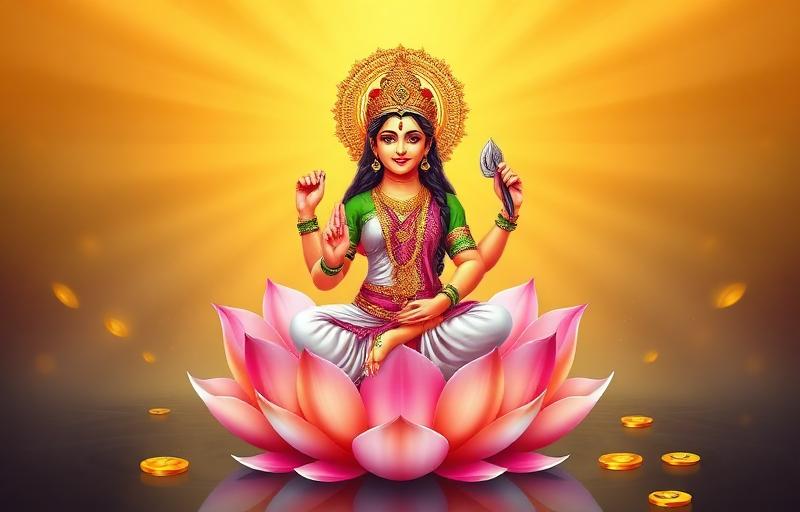
- Milk, flowers and vermillion are common offerings, along with an image showing her seated on a lotus, encircled by snakes
- Household worship is especially observed during the monsoon month of Shravan, when the fear of snakebite in rural homes traditionally runs highest
- Manasa Puja is also held as a community festival in many villages, bringing families together for a shared day of devotion
A Goddess Rooted in Bengal's Soil
While Manasa's worship is closely identified with Bengal, her presence extends into the devotional life of neighboring regions as well, carried by shared rivers, shared monsoons and a shared fear of the snakebite that once claimed many lives before modern medicine became widespread. Local shrines dedicated to her are often modest, a platform beneath a tree or a small room within a village, yet they remain deeply cherished by the families who tend them across generations.
This regional rootedness is part of what makes Manasa Devi's worship distinct within the wider Hindu tradition, a devotion shaped as much by the land and its dangers as by scripture and legend.
Significance for Devotees
For devotees, Manasa Devi represents the protective, watchful aspect of the Divine Mother, worshipped not for grand blessings alone but for the everyday safety of the household. Her worship is also connected to Astika Muni, remembered in the Mahabharata tradition as her son, credited with halting the great snake sacrifice of King Janamejaya, a story that ties Manasa's worship to themes of mercy and protection over destruction.
Devotees often say that Manasa's grace is felt not in dramatic miracles but in the quiet safety of a season passed without harm.
A Devotee's Takeaway
Manasa Devi's story, carried through generations of song and household worship, reminds devotees that faith often grows strongest not in temples of stone but in the everyday fears and hopes of ordinary life. Her worship endures in Bengal as a quiet, steady devotion, passed from one generation to the next through a small ghot, a remembered verse and an unbroken trust in her protection.
Common Questions From Devotees
Who is Manasa Devi in Hindu tradition?+
Manasa Devi is worshipped as the goddess of serpents, described in tradition as the mind-born daughter of Shiva and the sister of Vasuki, the serpent king, revered chiefly for protection from snakebite.
What is the story of Behula and Lakhindar?+
It is the central legend of Manasa's worship, describing how Behula's devotion brought her husband Lakhindar back to life after a snakebite, ultimately leading his father Chand Sadagar to accept Manasa's worship.
When is Manasa Devi worshipped?+
She is especially honored during the monsoon month of Shravan, when the fear of snakebite in rural Bengal households traditionally runs highest, though many families keep her worship as a year-round practice.
About the author
Pandit Ravindra Sharma · Vedic Rituals & Bhakti, 22+ years
Pandit Ravindra is the Vandnaa editorial team's resident specialist on aarti, chalisa, and daily devotion. He has performed home and temple pujas across Varanasi and Delhi for over two decades and contributes the bhakti-focused articles on this site.
Meet the Vandnaa editorial team →