The Chieftain Who Stopped
Kanaka Dasa, roughly 1509 to 1609, is one of the two great Haridasa poets of Karnataka, alongside Purandara Dasa, and he is the one the tradition remembers for being kept out.
His birth name: Thimmappa Nayaka.
Where: Baada, near Bankapura, in Haveri district, Karnataka.
His community: Kuruba, the shepherd caste, which in the order of the time was a Shudra community. This is the fact everything in his life ran into.
His first career
He was a chieftain and a military commander.
- He held the title Danadanayaka, and administered a small territory around Bankapura
- He led men in battle
- He was seriously wounded in an engagement and nearly died
How he got the name Kanaka: kanaka means gold. The accounts say he found a treasure, which is where the name comes from, though the version in which it is a description of his wealth as a chieftain is also given.
The turn: after the wound and the recovery, he left the position, gave away what he had, and became a dasa.
His guru: Vyasatirtha at Hampi, the same teacher who initiated Purandara Dasa.
His ankita: Kaginele Adikeshava, the Adikeshava of Kaginele, which is the temple in Haveri district he was attached to. Every composition ends with it.
Two stories from his time with Vyasatirtha
Both are famous and both are about the same thing.
One. Who will attain moksha.
Vyasatirtha asked the assembled students which of them would be liberated. The others gave modest answers.
Kanaka said, in Kannada, a sentence that can be heard two ways: naanu hodare hodenu.
Heard one way it means: if I go, I will go, which sounds like arrogance.
Heard the other way it means: if the I goes, then it may go.
That is the answer, and the tradition preserves it because the pun is the teaching: what stands between a person and liberation is the I, and the sentence performs the ambiguity rather than explaining it.
Two. The banana.
Vyasatirtha gave each disciple a banana and told them to eat it somewhere nobody could see them.
They all went away, found somewhere private, and ate.
Kanaka brought his back uneaten.
He said he had looked, and there was no place where he was not seen.
Both stories put him ahead of the others, and both were told in a context where he was the one whose caste was being held against him.
The Window
The story he is known for.
Udupi is the seat of the Krishna temple established by Madhvacharya in the thirteenth century, and the centre of the Dvaita tradition, with eight mathas administering it in rotation.
Kanaka Dasa came there.
And he was not allowed in, because of his caste.
What he did: he stayed outside, on the western side of the temple, and sang.
What the tradition says happened:
- The wall on the western side cracked, or opened
- And the image of Krishna, which faced east, turned around to face west, toward him
- So that he could see it through the opening
What is there now: the Kanakana Kindi, Kanaka's window, a small aperture in the western wall of the Udupi Krishna temple.
And this is the part that matters: all darshan at Udupi is taken through that window.
Not through the main door. Everybody, of every caste and every status, sees the Krishna of Udupi through the small opening in the wall where a man of the shepherd caste was made to stand outside.
The honest historical note
Since this app states what is disputed:
- The west facing orientation of the Udupi image and the arrangement of darshan through the window are the established practice and are not in question
- Whether that orientation predates Kanaka Dasa is debated by historians, and some argue the arrangement is older and the story attached to it later
- Kanaka Dasa's exclusion by caste is entirely consistent with the period and is not seriously questioned
- The turning is a devotional account
What is not disputed: a man was kept out of a temple because of his birth, and the tradition's response to that memory was to make his window the only way anybody gets to see.
How to hold it
Compare it with the two Maharashtrian cases in this series:
- Chokhamela is buried at the step, outside the Pandharpur temple, because caste kept him out
- Kanhopatra is buried inside the same temple, at the southern door
- Kanaka Dasa has the window, and everybody now looks through it
Three saints, three doors, one problem.
And the same honest observation applies to all three: the veneration afterwards was real, and it did not undo the exclusion, and the exclusion continued for centuries after each of them.
Untouchability and caste exclusion from temples are illegal in India, under Article 17 of the Constitution, the Protection of Civil Rights Act 1955, and the SC and ST Prevention of Atrocities Act 1989, which specifically covers denial of temple entry. The National SC Commission helpline is 1800-180-0203, and complaints may be filed at any police station.
Udupi today:
- The Krishna Matha, with the Kanakana Kindi on the western wall
- The ashta mathas, eight monasteries founded by Madhvacharya's direct disciples, which take charge in rotation
- The Paryaya, the biennial handover ceremony between mathas, in January of even years
- The Kanaka Gopura above the window
- The temple's anna dana kitchens, which feed very large numbers daily
Ragi Against Rice
His most remarkable work, and one of the most unusual poems in any Indian language.
Ramadhanya Charitre, the story of Rama's grain.
The premise: two grains come before Rama to be judged, each claiming to be the superior one.
Rice, in Kannada akki or vri: the prestige grain. The food of the wealthy, the food of ceremony, the grain used in ritual, white, refined, and expensive.
Ragi, finger millet: the food of the poor. Coarse, dark, cheap, the grain that grows on bad land with little water, and the staple of labouring people in Karnataka.
They argue.
Rice states his superiority: he is offered to gods, he is eaten by kings, he is served at weddings, he is what people aspire to.
Ragi answers that he feeds people who work.
The test Rama sets: both grains are to be locked in a storeroom for six months, and then examined.
What happens: after six months the room is opened.
The rice has rotted. It has spoiled, it is infested, and it is worthless.
The ragi is intact. It has kept perfectly and is exactly as it was.
And Rama gives judgement for ragi, and it takes the name Raghava dhanya, Rama's grain, which is where the title comes from.
What the poem is
It is an allegory of caste and class, and it is not subtle, and it is not meant to be.
Rice is the upper caste, the wealthy, the ceremonially pure, the socially prestigious.
Ragi is the labouring poor, the communities that grow and eat it, and Kanaka Dasa's own people.
And the test is durability. Not refinement, not prestige, not ritual purity, not what the gods are offered. Which one is still there after six months of neglect.
Written by a man of the Kuruba shepherd community who was refused entry to a temple.
The other thing it is: an accurate agricultural observation. Ragi genuinely does store far better than rice, keeps for years, and is drought resistant, which is why it is the food security crop of the Deccan.
So the allegory is not a stretch. It is a real property of a real grain, used to make a point about people.
His other works
- Mohanatarangini, on Krishna's life, in the sangatya metre, around 2,800 verses
- Nalacharitre, the story of Nala and Damayanti
- Haribhaktisara, in bhamini shatpadi, over a hundred verses on devotion, which is widely recited and is his most commonly read work
- Ramadhanya Charitre
- Around 240 or more keertanas and devaranamas
The best known songs:
- Kula Kula Kulavendu Hodedaduvira: why do you keep fighting about caste, caste, caste. It asks what the caste of the soul is, what caste the elements are, and what happens to caste at death
- Ellaru Maduvudu Hottegaagi: everything everybody does is for the sake of the stomach. A song about how much religious display, learning and posturing reduces to earning a living
- Tallanisadiru Kandya Talu Manave: do not be agitated, be patient, my mind
- Baradhe Karunanidhi: will you not come
- Neenyako Ninna Hangyako: I do not need you or your obligation, addressed to the deity, and among his sharpest
Kula kula kulavendu is the one to know. It is the Haridasa movement's most direct statement on caste and it is sung constantly in Karnataka.
What He Said About Caste
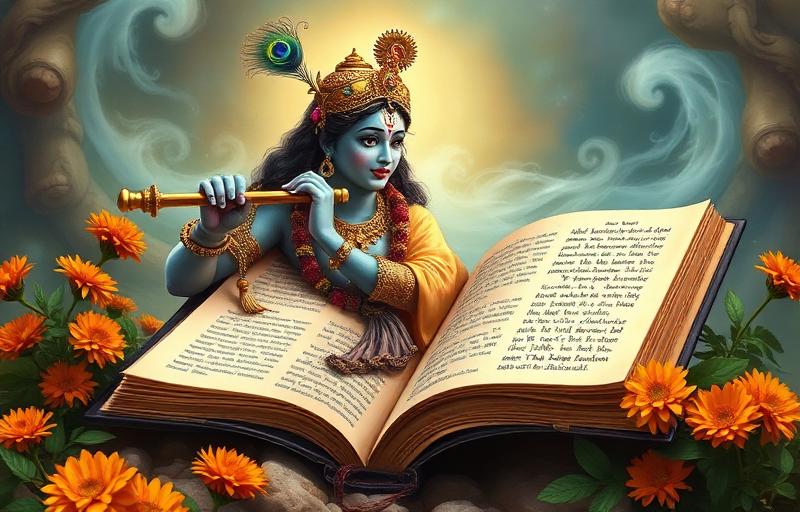
Kula kula kulavendu hodedaduvira is worth going through, because it is a sustained argument and not a slogan.
Its questions, in substance:
- You keep fighting about caste. What is the caste of the soul
- The five elements make up every body. What caste are they
- When a person dies, what caste is the corpse
- The water everybody drinks, the fire everybody cooks on, the air everybody breathes: whose caste are they
- The cow gives milk and the milk is pure, and the cow eats what it eats
- What is the caste of a person who has understood
And the closing move: he says that the person who knows the truth of it has no caste, and signs it Kaginele Adikeshava.
The other song, Ellaru maduvudu hottegaagi, is doing something different and arguably harder.
Its claim: everything everybody does is for the sake of the stomach.
He then goes through the list: the person who learns the scriptures, the person who does penance, the person who takes up renunciation, the person who performs rituals, the person who sings devotional songs. All of it, he says, is for the stomach.
That is a poet who sings devotional songs for a living, saying that singing devotional songs is for the stomach.
Why the song is admired: because it does not exempt him. It is a piece of self implicating honesty of a kind that is rare in any devotional literature.
And the point is not cynicism. The song's function is to strip away the assumption that religious activity is automatically of a higher order than any other work. Once that assumption is gone, what is left is whatever is actually there.
Kanaka Dasa's position among the Haridasas
- Purandara Dasa: the systematiser, the composer of the syllabus, the one who made the tradition teachable
- Kanaka Dasa: the outsider, the one whose caste was held against him, and the one who wrote the social criticism
Both were disciples of Vyasatirtha. They knew each other, and the tradition has stories of Purandara Dasa defending Kanaka against the other students who objected to his presence.
One such story has Vyasatirtha asking why the others were disturbed, and Purandara answering that Kanaka was ahead of all of them, and the banana episode is generally told in that setting.
Kanaka Dasa Jayanti is observed as a public event in Karnataka, generally in November, in the month of Kartika, with programmes, processions and singing.
Kaginele, in Haveri district, has the Adikeshava temple and a Kanaka Dasa memorial, and is the source of his ankita.
What to Take From Him
One. The window.
Whatever the historical sequence, the arrangement that exists at Udupi now is that nobody enters by the main door. Everybody, of every status, takes darshan through the small opening in the wall where a shepherd caste singer was made to stand.
As a principle: the place where somebody was excluded is the place everybody should have to stand.
Two. The ragi test.
When two things are competing for status, ignore the refinement, the prestige, the ceremony and the price, and ask which is still there after six months of neglect.
That applies to people, to work, to institutions, and to your own practice. The grain that keeps is the grain that keeps.
Three. What is the caste of the soul.
His song asks a chain of questions with only one possible set of answers: what caste are the five elements, the water everybody drinks, the fire everybody cooks on, the corpse.
And the modern statement that goes with it: caste exclusion from temples is illegal in India under Article 17, the 1955 Act and the 1989 Act, and it is reportable, at any police station, with the National SC Commission helpline at 1800-180-0203.
Four. Everything is for the stomach.
His hardest song refuses to exempt religious activity, including his own, from ordinary human motivation.
Used properly, that is not cynicism; it is a way of removing the automatic prestige of religious behaviour so that you can see what is underneath it. It is also an excellent test to apply to anybody making a living from religion, including anybody charging you for a blessing, a remedy, a stone or a pooja.
Five. If the I goes, it may go.
His answer to Vyasatirtha, which works as a pun and as a doctrine at the same time.
A daily practice from this entry:
- Kula Kula Kulavendu or Tallanisadiru Kandya, listened to or sung. Both are widely recorded
- The Haribhaktisara, a verse at a time, which is his most read work
- The ragi question, applied once in a while to whatever you are ranking
- At Udupi, the darshan through the Kanakana Kindi, knowing why it is there
- On Kanaka Dasa Jayanti, in Kartika, generally November
A closing thought
A shepherd caste chieftain was badly wounded in a battle, recovered, gave up his territory, and went to Hampi to learn.
The other students objected to his being there.
He wrote a poem in which a grain of rice and a grain of ragi come before Rama arguing about which of them is superior, and Rama locks both in a room for six months, and when the room is opened the rice has rotted and the ragi is exactly as it was.
And when he went to the great Krishna temple at Udupi they would not let him in because of his birth, so he stood outside the western wall and sang.
And every person who takes darshan at Udupi today, of any caste, of any country, looks through the window that opened where he was standing.
The Short Version
Who: Kanaka Dasa, roughly 1509 to 1609, born Thimmappa Nayaka at Baada near Bankapura in Haveri district, Karnataka, of the Kuruba shepherd community. He was a chieftain and military commander who was badly wounded in battle, and afterwards gave up his position and became a Haridasa.
His guru: Vyasatirtha at Hampi, the same teacher who initiated Purandara Dasa.
His ankita: Kaginele Adikeshava.
The Udupi story: he was refused entry to the Krishna temple because of his caste, stayed outside on the western side and sang, and the tradition says the wall opened and the image turned to face him. The Kanakana Kindi, Kanaka's window, is in the western wall today, and all darshan at Udupi is taken through it rather than through the main door. Historians debate whether the west facing arrangement predates him; his exclusion by caste is not seriously questioned.
Ramadhanya Charitre: his most remarkable work, in which rice and ragi come before Rama arguing about which is superior. Rama locks both in a storeroom for six months, and when it is opened the rice has rotted and the ragi is intact. It is an allegory of caste and class, and it is also an accurate agricultural fact.
His other works: Mohanatarangini, Nalacharitre, Haribhaktisara, and around 240 keertanas. The best known songs are Kula Kula Kulavendu Hodedaduvira, which asks what caste the soul and the elements and the corpse are, and Ellaru Maduvudu Hottegaagi, which says everything everybody does, including his own singing, is for the stomach.
Kanaka Dasa Jayanti: observed publicly in Karnataka, generally November, in Kartika.
What to keep: ask which grain is still there after six months.
Frequently Asked Questions
Who was Kanaka Dasa?+
A Kannada Haridasa poet and singer, roughly 1509 to 1609, born Thimmappa Nayaka at Baada near Bankapura in Haveri district, Karnataka, of the Kuruba shepherd community, which was a Shudra caste in the order of the time. He was a chieftain and military commander with the title Danadanayaka until he was badly wounded in battle, after which he gave up his position and became a dasa. His guru was Vyasatirtha at Hampi and his ankita is Kaginele Adikeshava.
What is the Kanakana Kindi at Udupi?+
A small window in the western wall of the Udupi Krishna temple. Kanaka Dasa was refused entry because of his caste, stayed outside on the western side and sang, and the tradition says the wall opened and the image, which faced east, turned around to face him. All darshan at Udupi is now taken through that window rather than through the main door, so everybody of every caste and status sees the deity through the opening where a shepherd caste singer was made to stand outside.
Is the Udupi window story historically established?+
Partly. The west facing orientation of the image and the arrangement of darshan through the window are the established practice and are not in question. Whether that orientation predates Kanaka Dasa is debated by historians, and some argue the arrangement is older and the story was attached later. His exclusion by caste is entirely consistent with the period and is not seriously questioned, and the turning of the image is a devotional account. What is not disputed is that a man was kept out of a temple for his birth and that the tradition made his window the only way anybody now gets to see.
What is Ramadhanya Charitre?+
Kanaka Dasa's most remarkable work, in which rice and ragi, finger millet, come before Rama each claiming to be the superior grain. Rice cites being offered to gods, eaten by kings and served at weddings; ragi answers that he feeds people who work. Rama has both locked in a storeroom for six months, and when it is opened the rice has rotted and the ragi is intact, so judgement goes to ragi, which takes the name Raghava dhanya. It is an unsubtle and deliberate allegory of caste and class, written by a man of the shepherd community, and it is also an accurate fact: ragi genuinely stores for years and is drought resistant.
What did Kanaka Dasa say about caste?+
His song Kula Kula Kulavendu Hodedaduvira asks why people keep fighting about caste, and then asks a chain of questions: what is the caste of the soul, what caste are the five elements that make up every body, what caste is a corpse, whose caste is the water everybody drinks and the fire everybody cooks on. He closes by saying that the person who knows the truth of it has no caste. It is the Haridasa movement's most direct statement on caste and is sung constantly in Karnataka.
What is the story of Kanaka Dasa and the banana?+
Vyasatirtha gave each disciple a banana and told them to eat it somewhere nobody could see them. They all went away, found somewhere private, and ate. Kanaka brought his back uneaten, saying he had looked and there was no place where he was not seen. It is told alongside another exchange in which Vyasatirtha asked which of the students would be liberated and Kanaka answered naanu hodare hodenu, a sentence that can mean either if I go I will go, which sounds arrogant, or if the I goes then it may go, which is the teaching.
About the author
Pandit Ravindra Sharma · Vedic Rituals & Bhakti, 22+ years
Pandit Ravindra is the Vandnaa editorial team's resident specialist on aarti, chalisa, and daily devotion. He has performed home and temple pujas across Varanasi and Delhi for over two decades and contributes the bhakti-focused articles on this site.
Meet the Vandnaa editorial team →