A Demon Who Chose His Own Weakness
The Sthala Purana associated with Kanyakumari, at India's southernmost tip in present-day Tamil Nadu, tells of a powerful demon, most commonly named Banasura or Bana in this specific local tradition, who terrorised the region and could not be defeated in ordinary combat, having secured through his own penance the specific condition that only a virgin goddess could ever kill him, a boon he considered, as boon-holders across this series consistently do, effectively unassailable.
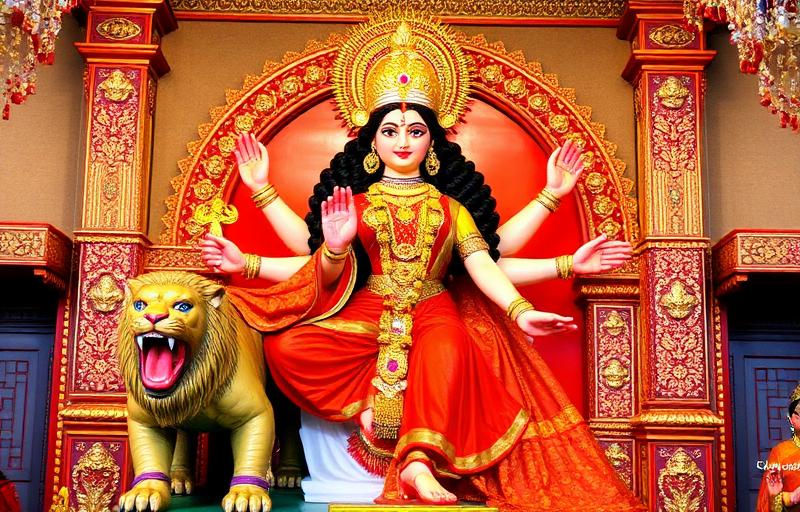
To fulfil the condition and defeat him, Parvati is said to have incarnated in this region specifically as Kanya Devi, a young goddess sworn to eternal virginity for the express purpose of retaining the exact quality required to end the demon's reign.
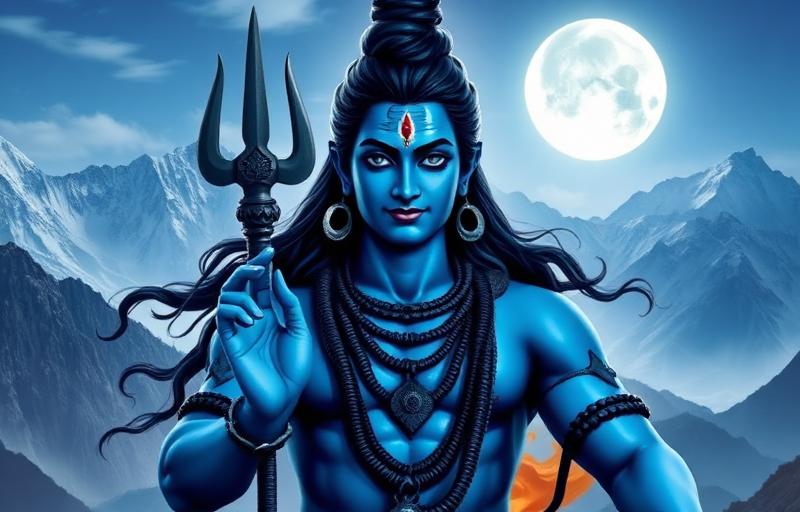
Before she could confront Banasura, however, Kanya Devi undertook intense penance of her own, seeking Shiva himself as her husband, and Shiva, moved by her devotion, agreed to marry her, with the wedding arranged for an auspicious moment during the pre-dawn hours, the muhurta calculated with the same precision this tradition applies to every major wedding.
One False Dawn From a Different Ending
The gods and sages, aware that Banasura's continued reign of terror depended entirely on Kanya Devi remaining unmarried and therefore still able to fulfil the boon's specific condition, grew alarmed as the wedding's appointed hour approached, since a completed marriage would have disqualified her from ever killing him.
Narada, whose interventions appear across many stories in this series, is credited in this telling with the solution: using his own power, he caused a rooster to crow prematurely, hours before actual dawn, making it appear the auspicious muhurta had already passed.
Shiva, believing the correct astrological window had closed and that proceeding further would render the marriage inauspicious, withdrew and did not arrive for the ceremony, and Kanya Devi, having prepared every offering for a wedding that never actually happened, was left waiting, still a virgin, the wedding rice and other ritual offerings said in local tradition to have turned to stone or sand exactly as they lay, still visible in the region's distinctive multicoloured sands according to devotees today.
A Grief That Became a Boundary
Having remained unmarried, precisely as the larger purpose required, Kanya Devi went on to confront and kill Banasura, fulfilling the boon's own narrow condition exactly as it had been worded, and settled at the southernmost point of the land, at the meeting point of three seas, the Arabian Sea, the Bay of Bengal and the Indian Ocean, where the temple dedicated to her stands today.
Kanyakumari's own worship remains centred specifically on her identity as a virgin goddess, distinct from other forms of Devi more commonly depicted alongside a consort, and the temple's own traditions, including certain restrictions historically placed on how close to the sanctum male visitors could approach, are tied by local tradition directly to this preserved, unmarried status.
The story gives the town's name its own layered meaning: Kanyakumari, the virgin princess, a goddess whose interrupted wedding became, rather than a personal tragedy simply endured, the very condition that let her save the region entirely - a sacrifice the tradition asks devotees to read not as loss but as the specific shape her particular power needed in order to work.
Reader Questions Answered
Why did Kanya Devi's wedding to Shiva never take place?+
Narada, aware that a completed marriage would have disqualified her from killing the demon Banasura (who could only be killed by a virgin), tricked a rooster into crowing before actual dawn, making Shiva believe the auspicious wedding hour had passed.
Why could only a virgin kill Banasura?+
Banasura had secured this specific condition through his own penance, believing it made him effectively invulnerable. Parvati incarnated as Kanya Devi specifically to fulfil that exact condition and end his reign.
Where is Kanyakumari located and what marks the wedding that never happened?+
At India's southernmost tip, where three seas meet. Local tradition holds that the unused wedding rice and ritual offerings turned to stone or sand, said to be visible in the region's distinctive multicoloured sands today.
About the author
Pandit Ravindra Sharma · Vedic Rituals & Bhakti, 22+ years
Pandit Ravindra is the Vandnaa editorial team's resident specialist on aarti, chalisa, and daily devotion. He has performed home and temple pujas across Varanasi and Delhi for over two decades and contributes the bhakti-focused articles on this site.
Meet the Vandnaa editorial team →