What Karma Really Means
Karma literally means action. At its simplest, the law of karma describes the principle that every action carries a consequence, a natural cause-and-effect relationship that shapes both this life and, according to tradition, lives beyond it.
This is a much broader idea than the popular shorthand of karma as instant cosmic payback. It is less about punishment and reward, and more about how thought, word and deed ripple outward and eventually return in some form.
Common Misconceptions About Karma
- Karma is not the same as fate, it describes cause and effect shaped by one's own choices, not a fixed destiny handed down from outside
- Karma is not a tool for judging another person's suffering, tradition warns strongly against assuming misfortune is deserved punishment
- Karma is not only about past lives, everyday choices in this very life carry consequences too, some immediate and some more subtle
- Karma is not identical to astrology or prediction, it describes a moral and natural law, not a method for foretelling specific future events
The Three Types of Karma
Tradition speaks of karma in three related forms. Sanchita karma is the vast accumulated store of past actions carried across lifetimes, Prarabdha karma is the portion of that store currently ripening and shaping this present life, and Kriyamana karma is the fresh action being created right now, through today's choices.
Understanding these three helps explain why some circumstances feel already set in motion, prarabdha, while others remain entirely within one's present control, kriyamana.
Karma Yoga and the Idea of Selfless Action
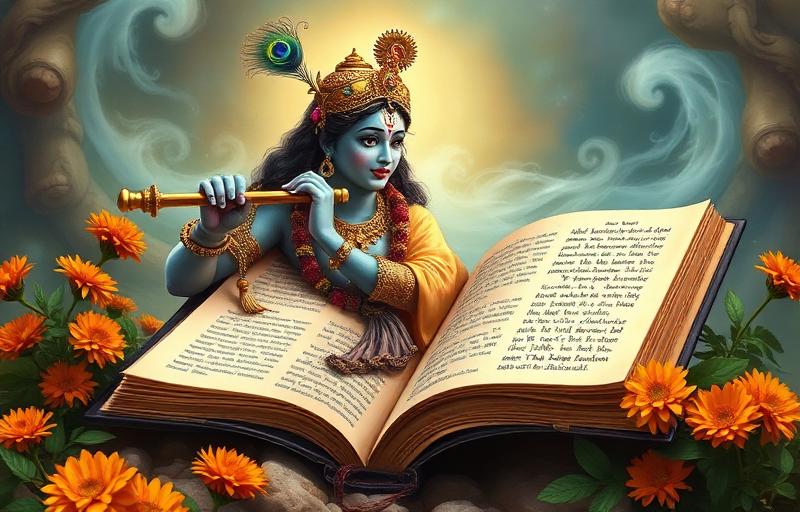
The Bhagavad Gita offers what is perhaps Hindu tradition's most practical teaching on karma, karma yoga, the path of selfless action. Krishna teaches Arjuna to perform his duty sincerely while surrendering attachment to the outcome, an approach known as nishkama karma, action without craving for its fruit.
This teaching reframes karma not as something to fear, but as an invitation to act with full sincerity in the present, trusting the results to unfold as they should.
The Takeaway
Karma, understood correctly, is less a cosmic scoreboard and more an invitation to live thoughtfully, since every choice genuinely matters. It does not exist to frighten a devotee but to remind them of their own agency.
As per tradition, the most practical response to karma is not endless analysis of the past but sincere, selfless action in the present, the surest way to shape a lighter and more peaceful path ahead.
Reader Questions Answered
Is karma the same thing as fate or destiny?+
No, karma describes cause and effect shaped by one's own actions and choices, not a fixed destiny imposed from outside. It leaves room for present choices, kriyamana karma, to shape the future.
What are the three types of karma?+
Tradition describes Sanchita karma (the accumulated store from past actions), Prarabdha karma (the portion currently shaping this life) and Kriyamana karma (new action being created right now).
What is karma yoga?+
Karma yoga is the path of selfless action taught in the Bhagavad Gita, where a person performs their duty sincerely while surrendering attachment to the outcome, known as nishkama karma.
About the author
Anjali Mehta · Editor, M.A. Religious Studies
Anjali is the managing editor for Vandnaa and oversees the festival and vrat coverage. She holds an M.A. in Religious Studies and reviews every published article for accuracy, accessibility, and tradition-fidelity.
Meet the Vandnaa editorial team →