Who Mata Kaushalya Is
Kaushalya is the eldest queen of Dasharatha and the mother of Sri Ram. In the Ramayana she appears at the moments that matter most and speaks the fewest words about herself: at Ram's birth, at the announcement of his coronation, at the exile that follows within a day, and at his return fourteen years later.
Her name carries her origin. Kaushalya means she who belongs to Kosala, and tradition holds that she was the princess of Dakshin Kosala, the southern Kosala region that corresponds to present day Chhattisgarh. Ayodhya was the capital of Uttar Kosala, the northern kingdom. Her marriage joined the two.
This is why Chhattisgarh describes itself as Ram's nanihal, his mother's home, and why the state's devotion to Ram has a distinctly familial tone. He is not addressed only as maryada purushottam here. He is addressed as the bhanja, the sister's son, the boy who belongs to the household through his mother.
That relationship shapes local custom in a way visitors notice quickly. In Chhattisgarh it is traditional to greet a bhanja with respect and even to bow to him, and people in the region will tell you plainly that this is because Ram was a bhanja of this land.
The Temple at Chandkhuri
The Kaushalya Mata temple stands at Chandkhuri, a village about twenty five kilometres from Raipur, in what is traditionally identified as the region of her father's kingdom.
What devotees find there:
- The temple sits at the centre of a large tank, reached by a causeway, so the shrine appears to float on water
- The sanctum holds a murti of Kaushalya seated with the infant Ram on her lap, a form found almost nowhere else in India
- The complex includes a Ram Van Gaman Path installation, since Chandkhuri was developed as the first major node of the route tracing Ram's forest journey through Chhattisgarh
- The older shrine at the site is attributed to the medieval period, and the complex was substantially rebuilt and expanded in 2021
The murti is the point of the visit. Ram is worshipped across India as king, as exile, as archer and as god. Here he is a child in his mother's lap, and the deity being worshipped is the mother. For devotees who have spent a lifetime in Ram temples, the shift in emphasis is unmistakable.
Chhattisgarh as Ram's Nanihal
The claim that Chhattisgarh is Ram's maternal land is not a modern tourism idea. It rests on the identification of the region with Dakshin Kosala, an identification supported by long standing local tradition, place names and the folk memory of Ram's forest years.
The Ram Van Gaman Path traces the route by which Ram, Sita and Lakshman are believed to have travelled through the region during the exile. Prominent stops include:
- Sitamarhi Harchauka, Koriya - described as the first entry point into the region
- Ramgarh, Ambikapur - with its ancient caves and the Sita Bengra site
- Shivrinarayan, Janjgir Champa - associated with the Shabari katha, where the berries were offered to Ram
- Turturiya - linked in local tradition to Valmiki's ashram and the birth of Luv and Kush
- Rajim - the Kuleshwar and Rajiv Lochan temples at the confluence of the Mahanadi
- Chandkhuri - the Kaushalya temple, treated as the starting point of the circuit
What holds all this together is not archaeology but continuity of memory. The Ramayana in Chhattisgarh is not recited as a distant epic. It is recited as something that happened along roads people still travel.
How Kaushalya Mata Is Worshipped
Worship here follows Vaishnava practice, with the emphasis on the mother and child.
- Ram Navami is the largest festival, when the birth of Ram is celebrated at the shrine of the mother who bore him
- Kaushalya Jayanti is observed at the temple, drawing devotees from across the state
- Chaitra and Kartik Navratri are marked with special worship, since she is worshipped as a Devi in her own right here
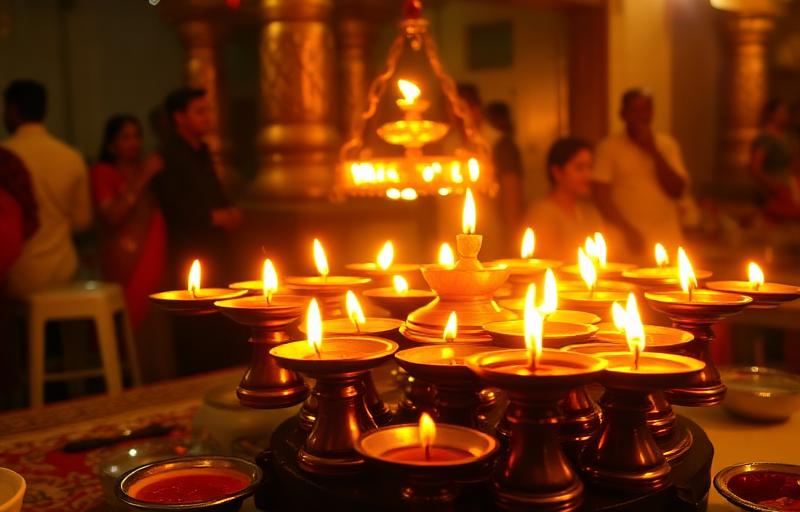
- Deepotsav on Diwali links Chandkhuri to Ayodhya's celebration of Ram's return
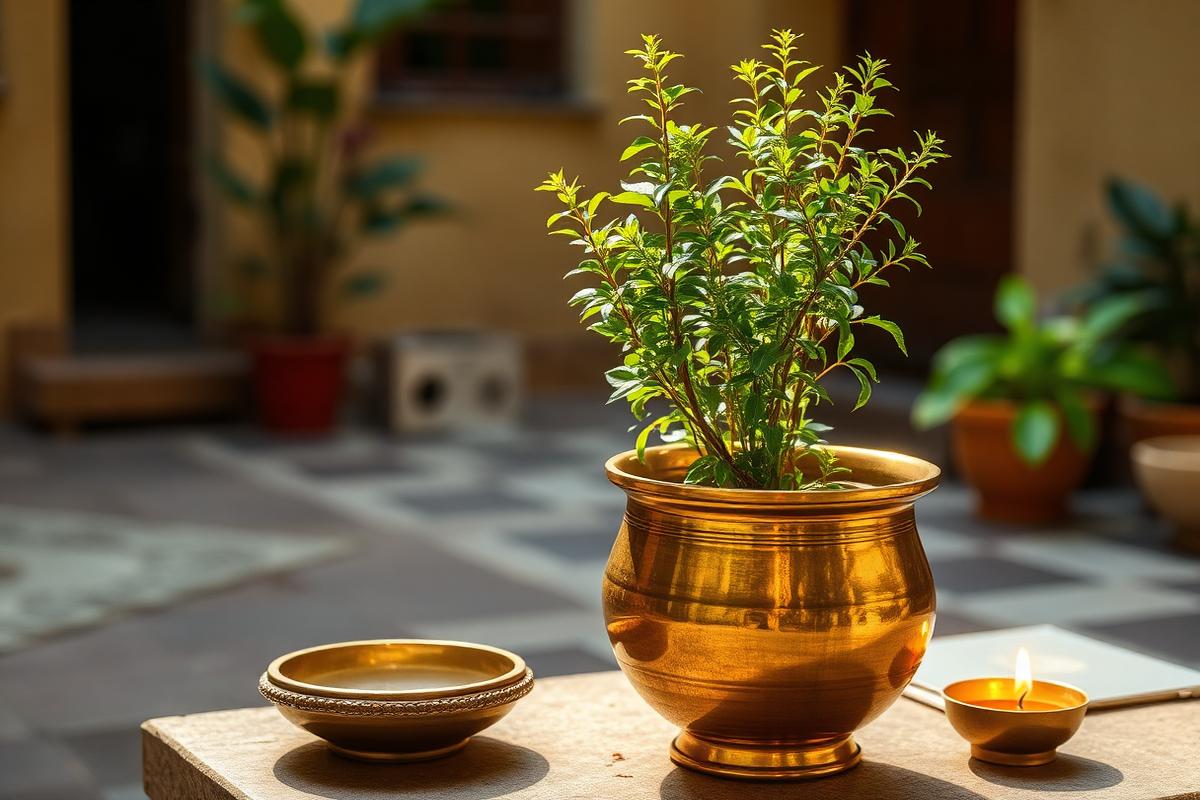
Offerings are simple and household in nature: kheer, laddoo, seasonal fruit, tulsi, a red chunri and flowers. Many families bring newborn children for their first darshan, and mothers offer here for the health of their children, which fits the deity naturally.
At home, devotees in Chhattisgarh remember Kaushalya in the Ram Navami puja and in the folk Ramayana recitations that are common across the state. The Chhattisgarhi Ramayan mandalis, groups that meet to sing the Manas through the night, are one of the strongest living devotional traditions in the region, and Kaushalya's portions are sung with particular tenderness.
Why a Temple to the Mother Matters
The Ramayana gives Kaushalya very little space, and what it does give her is mostly grief. She learns that her son will be crowned, and within a day learns that he is leaving for fourteen years. She does not curse anyone. She asks Ram to take her with him, accepts his refusal, and then waits.
Devotees at Chandkhuri speak about her in exactly those terms:
- She is the deity of waiting. Families with children living far away, in other cities or countries, come here specifically for that reason.
- She is the deity of restraint. In a story full of anger and demands, her portion contains almost none.
- She is the deity of the beginning. Every Ram katha begins with his birth, which is her moment, and Ram Navami is therefore as much hers as his.
For Chhattisgarh, the temple also carries a quieter significance. A state often described from outside through its mines and forests describes itself, through this shrine, as the place Ram's mother came from. That is a different way for a region to state its identity, and it is the first thing local devotees will tell you at the gate.
Visiting Chandkhuri
Chandkhuri is an easy half day trip from Raipur and can be combined with other Ram Van Gaman Path sites.
- Distance - about twenty five kilometres from Raipur by road, roughly forty five minutes
- Best time - October to March. Ram Navami in Chaitra is the biggest occasion, and Diwali evenings are especially beautiful with the tank lit up.
- Timings - morning and evening darshan, with aarti at both times. Evenings are pleasant because of the water surrounding the temple.
- What to carry - flowers, tulsi, sweets for offering, and modest cover for the sun on the causeway
- Nearby - Rajim with the Rajiv Lochan and Kuleshwar temples about ninety minutes away, and Shivrinarayan and Turturiya for those following the full circuit
A suggestion for families: bring the children. This is one of the few major shrines in India where the central image is a mother holding her child, and it is an easier introduction to Ram bhakti for young children than a large crowded temple.
Reader Questions Answered
Where is the Kaushalya Mata temple?+
At Chandkhuri, about twenty five kilometres from Raipur in Chhattisgarh. It is widely described as the only temple in India dedicated to Mata Kaushalya, the mother of Sri Ram.
Why is Chhattisgarh called Ram's nanihal?+
Because Kaushalya is held to be the princess of Dakshin Kosala, the region corresponding to present day Chhattisgarh. As his mother's homeland, the state treats Ram as its bhanja, the sister's son of the household.
What is the form of the murti at Chandkhuri?+
Mata Kaushalya is seated with the infant Ram on her lap. The temple stands at the centre of a large tank reached by a causeway, so the shrine appears to sit on water.
What is the Ram Van Gaman Path?+
It is the route through Chhattisgarh along which Ram, Sita and Lakshman are believed to have travelled during the exile. Chandkhuri is treated as its starting point, with Sitamarhi Harchauka, Ramgarh, Shivrinarayan, Turturiya and Rajim among the other stops.
When is the biggest festival at the temple?+
Ram Navami in Chaitra is the largest, since the birth of Ram is celebrated at his mother's shrine. Kaushalya Jayanti, Navratri and the Diwali Deepotsav are the other major occasions.
What do devotees pray for at Kaushalya Mata temple?+
Most commonly for children's health and for families separated by distance. Mothers bring newborns for their first darshan, and families whose children live far away come here because Kaushalya is remembered as the mother who waited fourteen years.
About the author
Pandit Ravindra Sharma · Vedic Rituals & Bhakti, 22+ years
Pandit Ravindra is the Vandnaa editorial team's resident specialist on aarti, chalisa, and daily devotion. He has performed home and temple pujas across Varanasi and Delhi for over two decades and contributes the bhakti-focused articles on this site.
Meet the Vandnaa editorial team →