Khandoba as Kuldevata
For countless families across Maharashtra and northern Karnataka, Khandoba is not a deity visited occasionally but a kuldevata, the guardian deity of the family lineage. Households mark important life events, weddings, the birth of a child, moving into a new home, with a visit to a Khandoba shrine or a small ritual at home in his honour.
This personal, generational bond is part of what has kept his worship so alive outside any single temple's walls.
Devotion Among Shepherd and Farming Communities
Khandoba holds a particularly cherished place among the Dhangar (shepherd) community and farming families, who trace their protector's presence through pastures and fields as much as temple courtyards. Stories of Khandoba's marriage to Banai, herself said to be from a shepherd family, are retold as proof that this is a deity who walked among ordinary working people, not one confined to grand ritual alone.
Champa Shashthi and Seasonal Worship
The six days leading up to Champa Shashthi, observed in the Marathi month of Margashirsha, are among the most important on the Khandoba devotional calendar. Households fast, tell the katha of Khandoba's victory over the demons Mani and Malla, and break the fast with a special meal that traditionally includes vangi bhaat (a spiced brinjal rice) offered first to the deity.
Homes and small shrines are freshly cleaned and decorated with turmeric for the occasion.
Jagran, Gondhal and Oral Tradition
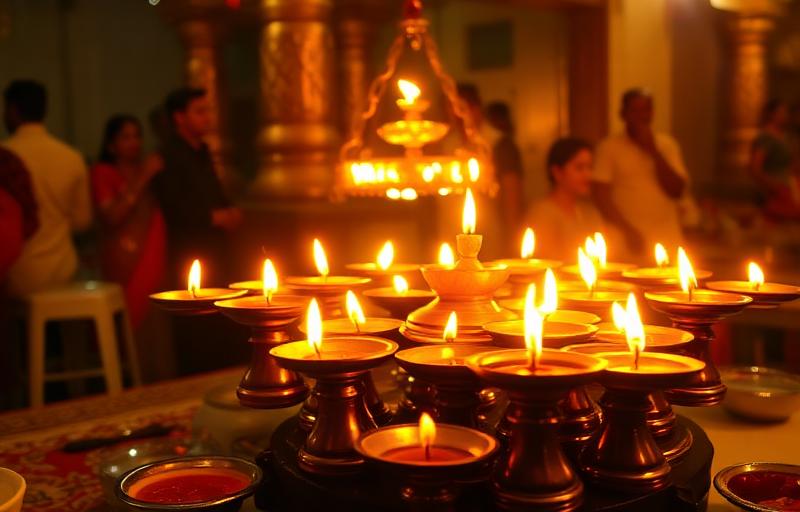
Devotion to Khandoba has long travelled through performance as much as ritual. Jagran-gondhal, an all-night devotional singing and storytelling tradition performed by hereditary folk artists, recounts episodes from the Malhari Mahatmya to keep the deity's stories alive for each new generation.
These performances, still requested by families for weddings and thanksgiving occasions, function as both entertainment and a form of oral scripture passed down without needing a single written text.
The Takeaway for Today's Devotee
Khandoba's tradition offers a gentle reminder that devotion does not need a single grand temple to remain strong; it can live equally in a home shrine, a festival kept for six days each year, or a story sung through the night.
For devotees today, however far they may live from Jejuri, keeping even a small part of this tradition, a fast, a chant, a family story retold, keeps the connection unbroken.
Quick Answers
What does kuldevata mean in the context of Khandoba worship?+
Kuldevata refers to a family's guardian deity, worshipped across generations; for many Maharashtrian and Kannadiga families, Khandoba fills this role.
What is Champa Shashthi?+
Champa Shashthi is a six-day observance in the Marathi month of Margashirsha marking Khandoba's victory over the demons Mani and Malla, marked with fasting and a special feast.
Is Khandoba worshipped only in Maharashtra?+
No, his worship extends into northern Karnataka as well, where he is often known as Mallanna or Mailar, showing how devotion here has grown beyond a single region.
About the author
Pandit Ravindra Sharma · Vedic Rituals & Bhakti, 22+ years
Pandit Ravindra is the Vandnaa editorial team's resident specialist on aarti, chalisa, and daily devotion. He has performed home and temple pujas across Varanasi and Delhi for over two decades and contributes the bhakti-focused articles on this site.
Meet the Vandnaa editorial team →