
The Temple at Khiching
Khiching lies in Mayurbhanj district in northern Odisha, and the Kichakeswari temple there is among the most distinctive stone structures in eastern India.
What makes it unusual:
- The temple is built entirely of chlorite blocks, a dark green to black stone, cut and fitted together without mortar
- The blocks are shaped to interlock, so the structure holds by the precision of the cutting
- The present temple was reconstructed in the twentieth century using the original stones, following the collapse of the earlier structure
- The surrounding area holds substantial remains and sculpture from the site's earlier periods
- A museum at Khiching displays material recovered from the site
The deity is Kichakeswari, worshipped as the presiding Devi and held to be the kuladevi of the Bhanja rulers of Mayurbhanj.
Khiching was the Bhanja capital in an earlier period, and the concentration of temple remains at the site reflects that. Today it is a small place in a largely tribal district, and the temple stands in a landscape far quieter than its stonework suggests it once was.
The Devi and Her Name
Kichakeswari is worshipped as a form of the Devi, and the local tradition connects the name in more than one way.
What is held:
- The name is connected in one account with Kichaka, the figure from the Mahabharata's Virata Parva, and the region is identified in local tradition with the Virata kingdom
- Another understanding treats the name as belonging to the site itself, with Khiching and Kichakeswari as forms of the same word
- She is worshipped as the kuladevi of the Bhanja line, which is the identification that has governed the temple's history
- She is a Devi of the standard Shakta type, receiving the usual worship of the region
The Virata connection is worth noting because it recurs. Several regions across India identify themselves with Virata, the kingdom where the Pandavas spent the year of concealment, and each maintains sites accordingly.
What matters more for how the temple functions is the kuladevi relationship. A kuladevi is the deity of a lineage, worshipped by the family across generations, and when the lineage is a ruling one the shrine becomes the state temple in effect.
That is what happened at Khiching. The Bhanjas built here because this was their goddess, and when the capital moved the temple remained.
The Stonework
The construction is what draws people who come for reasons other than worship.
What is distinctive:
- The stone is chlorite, quarried locally, dark and fine grained, which takes a very sharp carved edge
- Blocks were cut so precisely that they hold without mortar, relying on shape and weight
- The reconstruction in the twentieth century reassembled the temple from the original stones, which was possible precisely because the blocks were cut to fit
- Sculpture on and around the temple is of high quality, with figures, decorative panels and architectural elements
The wider site holds:
- Remains of several other temples in various states of survival
- Sculptural fragments across the area, some in situ and some in the museum
- Evidence of a substantial building programme over an extended period
What this tells you about Khiching is that it was a place with resources, patronage and a skilled workforce, sustained long enough to produce work of this standard.
The Khiching museum is worth the time. It holds sculpture recovered from the site, and seeing the pieces alongside the standing temple gives a much fuller sense of what the complex once was than the temple alone conveys.
Worship at the Temple
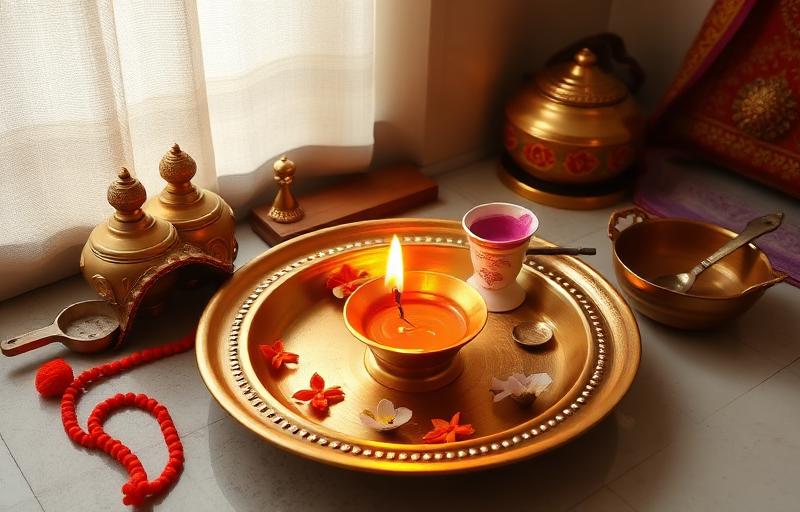
The temple is a working shrine, not only a monument.
- Daily worship at the sanctum, with the usual timings
- Offerings of flowers, sindoor, chunari, coconut and sweets
- Navratri in Chaitra and Ashwin as the fullest periods, with Durga Puja kept at scale
- Local families bringing children for mundan and coming for vow completions
- The Bhanja connection maintained in customs associated with the former ruling family
Mayurbhanj's own festival calendar is distinctive:
- Chhau, the masked dance form of Mayurbhanj, is among India's classical dance traditions and is performed particularly around Chaitra Parva in April
- Rath Yatra kept across Odisha
- Raja Parba, the Odia festival marking the earth's menstruation and rest, a distinctive regional observance
- Tribal festivals of the district's Santhal, Ho, Bhumij and other communities, which are their own traditions
For a visitor, the temple, the museum and the district's dance and craft traditions together make Mayurbhanj a rewarding place to spend several days, and it is among the least visited parts of Odisha.
Mayurbhanj and Simlipal
The district around Khiching is one of the most interesting in eastern India for reasons beyond the temple.
What is there:
- Simlipal, one of India's significant tiger reserves and biosphere reserves, with waterfalls, sal forest and considerable wildlife
- Baripada, the district headquarters, with its own Rath Yatra of long standing
- Chhau dance, the Mayurbhanj school, distinguished from the Seraikela and Purulia forms
- A large Adivasi population, principally Santhal, with Ho, Bhumij, Kolha and other communities
- The Bhanja heritage, with the former princely state's institutions and buildings
Simlipal notes for visitors:
- Entry is regulated, permits are required, and the reserve closes seasonally
- Joranda and Barehipani are the major waterfalls within it
- Accommodation inside is limited and must be booked in advance
- Forest rules apply strictly, and wildlife is genuinely present
A circuit combining Khiching, Baripada and Simlipal takes three or four days and covers a district that very few travellers reach, in a state where almost all tourism concentrates on the coastal temple triangle.
Visiting Khiching
Practical notes.
Getting there
- Khiching is in Mayurbhanj district, northern Odisha
- It is roughly 150 km from Baripada, the district headquarters, and around 200 km from Jamshedpur
- Balasore and Jamshedpur are the nearest useful railheads
- Bhubaneswar airport is a long drive; Jamshedpur and Kolkata are alternatives depending on approach
- Road access is through forest and rural country
When to go
- Navratri and Durga Puja in Ashwin, when the temple is at its fullest
- Chaitra Navratri
- Chaitra Parva in April, for Chhau at Baripada and across the district
- October to March for comfortable weather
At the site
- Allow time for both the temple and the museum
- The stonework repays close looking, particularly the joints and the carved panels
- Offerings are flowers, sindoor, coconut and sweets, available nearby
- Dress modestly and remove footwear before entering
- Facilities in the village are basic, so plan meals accordingly
Combining the visit
- Simlipal, with permits arranged in advance
- Baripada, for the Rath Yatra and Chhau
- Jamshedpur, across in Jharkhand
- Balasore and the coast, going south
A closing thought. A temple that survives by the accuracy of its own cutting, was taken apart and reassembled from its original stones, and is still receiving offerings from local families on a Tuesday morning, is doing several different kinds of work at once. Khiching is worth the detour for all of them.
Reader Questions Answered
What is special about the Kichakeswari temple's construction?+
It is built entirely of chlorite blocks, a dark fine grained stone, cut so precisely that they interlock and hold without mortar. The present temple was reconstructed in the twentieth century from the original stones, which was possible because the blocks were cut to fit.
Who is Kichakeswari?+
The presiding Devi of Khiching, held to be the kuladevi of the Bhanja rulers of Mayurbhanj. The name is connected in one account with Kichaka of the Mahabharata's Virata Parva, and in another with the site name Khiching itself.
Where is Khiching and how do you reach it?+
In Mayurbhanj district of northern Odisha, roughly 150 km from Baripada and around 200 km from Jamshedpur. Balasore and Jamshedpur are the nearest useful railheads, and road access is through forest and rural country.
Is there a museum at the site?+
Yes. The Khiching museum holds sculpture recovered from the site, and seeing those pieces alongside the standing temple gives a much fuller sense of what the complex once was than the temple alone conveys.
When is the temple busiest?+
Navratri and Durga Puja in Ashwin are the fullest periods, along with Chaitra Navratri. Local families also come through the year for mundan and vow completions.
What else is worth seeing in Mayurbhanj?+
Simlipal tiger reserve with the Joranda and Barehipani waterfalls, permits required and booked in advance, Baripada for its Rath Yatra, and the Mayurbhanj school of Chhau dance, performed particularly around Chaitra Parva in April.
About the author
Pandit Ravindra Sharma · Vedic Rituals & Bhakti, 22+ years
Pandit Ravindra is the Vandnaa editorial team's resident specialist on aarti, chalisa, and daily devotion. He has performed home and temple pujas across Varanasi and Delhi for over two decades and contributes the bhakti-focused articles on this site.
Meet the Vandnaa editorial team →Explore on Vandnaa
Related Articles

Nilamadhava of Kantilo: The Blue Deity Who Was Worshipped Before Jagannath
8 min read
Maluti: The Jharkhand Village With Seventy Temples and One Goddess
8 min read
Cuttack Chandi: The Devi of a Silver City and Her Sixteen Day Durga Puja
8 min read
Chausathi Jogini at Hirapur: A Roofless Circle of Sixty Four Goddesses
8 min read