Significance of the Krishna Ashtakam
An ashtakam is a hymn of eight verses (ashta means eight). The Shri Krishna Ashtakam is one of the most cherished of these, beginning with the line Vasudeva-sutam devam - 'the divine son of Vasudeva'. Each verse strings together Krishna's beautiful names and pastimes - the slayer of Kamsa and Chanura, the joy of mother Devaki, the guru of the whole world - like beads on a garland of praise.
A second, equally loved Krishna Ashtakam begins 'Bhaje Vrajaika Mandanam' and is attributed to Adi Shankaracharya. Both share the same purpose: to draw the mind again and again to the form, names and leelas of Krishna, so that remembrance of him becomes effortless and sweet.
The significance lies in this concentrated glorification. In just eight verses the devotee meditates on who Krishna is - protector, friend, teacher and the Supreme Lord - and the heart naturally softens into devotion.
Key Verses with Meaning
Opening verse (Vasudeva-sutam devam): वसुदेवसुतं देवं कंसचाणूरमर्दनम्। देवकीपरमानन्दं कृष्णं वन्दे जगद्गुरुम्॥
Vasudeva-sutam devam Kamsa-Chaanoora-mardanam, Devaki-paramaanandam Krishnam vande jagad-gurum.
Meaning: I bow to Krishna, the divine son of Vasudeva, the crusher of Kamsa and Chanura, the supreme joy of mother Devaki, the guru of the whole world.
Another loved verse: अतसीपुष्पसंकाशं हारनूपुरशोभितम्। रत्नकङ्कणकेयूरं कृष्णं वन्दे जगद्गुरुम्॥
Atasi-pushpa-sankaasham haara-noopura-shobhitam, Ratna-kankana-keyooram Krishnam vande jagad-gurum.
Meaning: I bow to Krishna, dark and lovely like the atasi flower, adorned with garlands and anklets, jewelled bracelets and armlets - the guru of the whole world.
Notice how each verse closes with the same loving phrase कृष्णं वन्दे जगद्गुरुम् (Krishnam vande jagad-gurum) - 'I bow to Krishna, the teacher of all the worlds'.
Benefits of Chanting the Krishna Ashtakam
- Mind absorbed in Krishna: Eight short verses fill the thoughts with Krishna's form, names and deeds.
- Peace and joy: The sweet imagery of the dark, jewel-adorned Lord brings calm and gladness to the heart.
- Devotion and surrender: Repeatedly bowing 'to Krishna, the guru of the world' deepens humility and bhakti.
- Easy daily practice: Being short, it can be recited every morning or evening without difficulty, ideal for children too.
- A sense of protection: Remembering Krishna as the slayer of Kamsa and Chanura inspires courage and trust in the Lord's care.
These are traditional spiritual benefits of devotional recitation, meant to nurture faith and remembrance of Krishna.
How to Chant - Vidhi
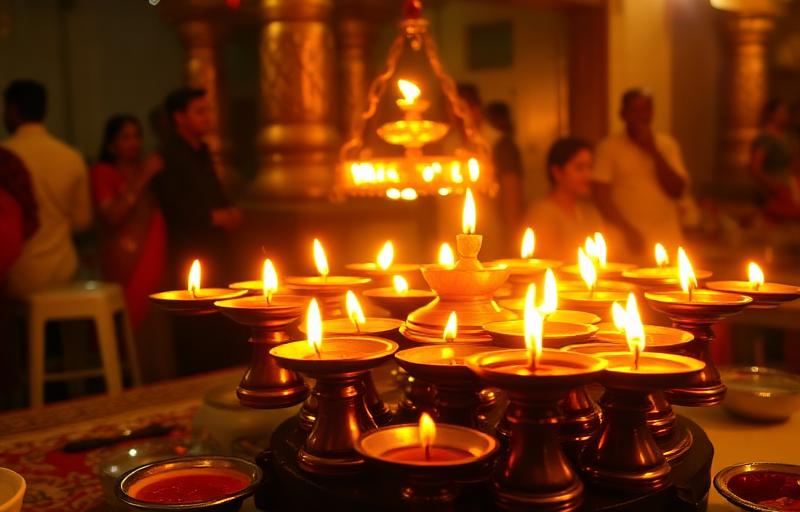
1. Best time: Morning after a bath or in the evening at the home shrine. Janmashtami and Wednesdays (sacred to Krishna) are especially good. 2. Before Krishna's image: Light a ghee lamp, offer tulsi, flowers and perhaps a little makhan-mishri or fruit as bhog. 3. Recite all eight verses: Read them aloud at a gentle, even pace, visualising the dark, beautiful Lord adorned with garlands as the verses describe. 4. Repeat if you wish: Chanting the full ashtakam thrice, or once daily as a vow, is a simple and rewarding practice. 5. Dwell on the refrain: Let 'Krishnam vande jagad-gurum' settle in the heart as a bow of surrender. 6. Close with aarti or a quiet pranam, and share the bhog as prasad.
Reader Questions Answered
What is the Krishna Ashtakam?+
An ashtakam is a hymn of eight verses. The Shri Krishna Ashtakam glorifies Lord Krishna through his names and deeds, with each verse ending 'Krishnam vande jagad-gurum' - 'I bow to Krishna, the guru of the world'. The most known one begins 'Vasudeva-sutam devam'.
What does 'Vasudeva-sutam devam' mean?+
It means 'the divine son of Vasudeva'. The opening verse hails Krishna as the son of Vasudeva, the slayer of Kamsa and Chanura, the joy of Devaki and the guru of the whole world.
Who composed the Krishna Ashtakam?+
There are a few Krishna Ashtakams. The 'Vasudeva-sutam devam' verses are traditional and widely recited. A separate Krishna Ashtakam beginning 'Bhaje Vrajaika Mandanam' is attributed to Adi Shankaracharya.
When is the best time to recite the Krishna Ashtakam?+
It can be recited any morning or evening after a bath, before Krishna's image. Janmashtami and Wednesdays, both associated with Krishna, are considered especially auspicious for it.
About the author
Acharya Vinaya Kapoor · M.A. Sanskrit, Mantra & Stotra Studies
Acharya Vinaya holds an M.A. in Sanskrit from Banaras Hindu University and writes the mantra and stotra commentary on Vandnaa. Her focus is on accurate pronunciation, traditional context, and helping modern readers connect with classical texts.
Meet the Vandnaa editorial team →