The Katha of Narakasura Vadha
Narakasura was a powerful asura king who ruled Pragjyotishpura with great might, and whose growing arrogance led him to trouble both devas and humans alike. Tradition holds that he stole the precious earrings of Aditi, mother of the devas, seized Varuna's royal umbrella, and, in his cruelty, held thousands of women captive in his palace against their will, stripping them of their freedom and honour.
When the devas approached Krishna for help, he set out for Pragjyotishpura mounted on Garuda, with his queen Satyabhama accompanying him into battle. The fight against Narakasura and his forces was fierce, and tradition holds that at a crucial moment, Satyabhama herself delivered the blow that finally ended the asura's life.
After Narakasura's defeat, Krishna freed the captive women, restored Aditi's earrings and Varuna's umbrella, and, to give the freed women social protection and dignity in that era, accepted them under his care. Because this victory took place on the day before Diwali, it came to be remembered as Naraka Chaturdashi.
Scriptural Context
This leela is recounted in the Bhagavata Purana's Dashama Skandha, and also appears in the Vishnu Purana and Harivamsha, texts that describe Krishna's life in Dwarka after he left Vrindavan and Mathura behind.
In some tellings, Narakasura is described as the son of Bhudevi, the earth goddess, which is part of why devotional retellings emphasize Satyabhama's role in his end, since certain traditions honour her connection with the earth and consider it fitting that a mother-like force restrains an unruly son.
The Symbolic and Spiritual Meaning
Devotees read Narakasura as a symbol of unchecked greed and arrogance, power that grows so large it begins to consume the freedom and dignity of others. His fall on the eve of Diwali carries deep meaning, the darkness of ego and cruelty is destroyed just before the festival of light dawns.
The freeing of the captive women is understood as a restoration of dignity, showing that divine intervention does not only defeat evil but actively repairs the harm it caused, giving back what was unjustly taken.
What It Teaches Devotees
- That unchecked power, when it tramples the dignity of others, cannot stand forever against divine justice.
- That good triumphing over evil clears the way for celebration, which is why this katha sits right before Diwali's lights.
- That protecting the vulnerable and restoring what was unjustly taken is itself a sacred duty.
- That Krishna and Satyabhama fighting together shows how divine strength and devoted courage accomplish together what neither achieves alone.
How It Is Remembered Today
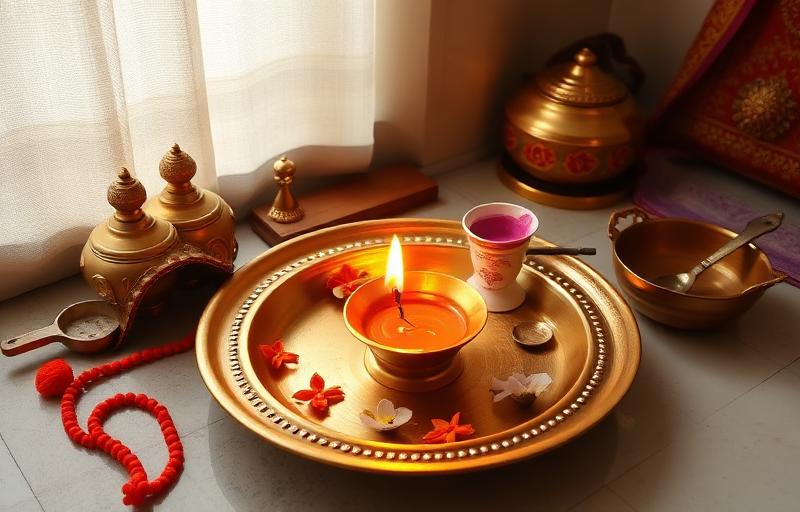
Naraka Chaturdashi is observed across India the day before Diwali, when devotees rise before dawn for an abhyanga snan (ritual oil bath), a practice believed to wash away negativity in memory of this victory. In many regions, including much of South India, this day itself is celebrated as the main Diwali observance.
Temples and homes retell the katha through kirtan and katha sessions in the days leading up to Diwali, and small lamps are lit in the early morning as a symbol of light overcoming the darkness Narakasura once represented.
The Takeaway
Narakasura Vadha reminds devotees that arrogance and cruelty, however powerful they appear, cannot withstand divine justice forever, and that true victory restores dignity as much as it defeats darkness. It is a fitting katha to carry into Diwali, a reminder that light always follows the fall of what oppresses.
Frequently Asked Questions
Who was Narakasura?+
Narakasura was a powerful asura king who oppressed devas and humans and held thousands of women captive, until Krishna and Satyabhama defeated him, an episode described in the Bhagavata Purana.
What is Naraka Chaturdashi?+
Naraka Chaturdashi is the day before Diwali that commemorates Krishna's victory over Narakasura, observed with an early morning ritual bath and, in many regions, celebrated as the main Diwali day itself.
What role did Satyabhama play in this katha?+
Tradition holds that Satyabhama, Krishna's queen, accompanied him into battle against Narakasura and delivered the decisive blow that ended the asura, showing her courage and devotion.
About the author
Pandit Mahesh Trivedi · Festival Traditions & Panchang
Pandit Mahesh leads the festival-date and Panchang content on Vandnaa. He cross-references multiple regional panchangs (Drik, Vaishnava, Bengali, Marathi) for every festival date published on the site.
Meet the Vandnaa editorial team →