A River Worshipped as a Daughter of Shiva
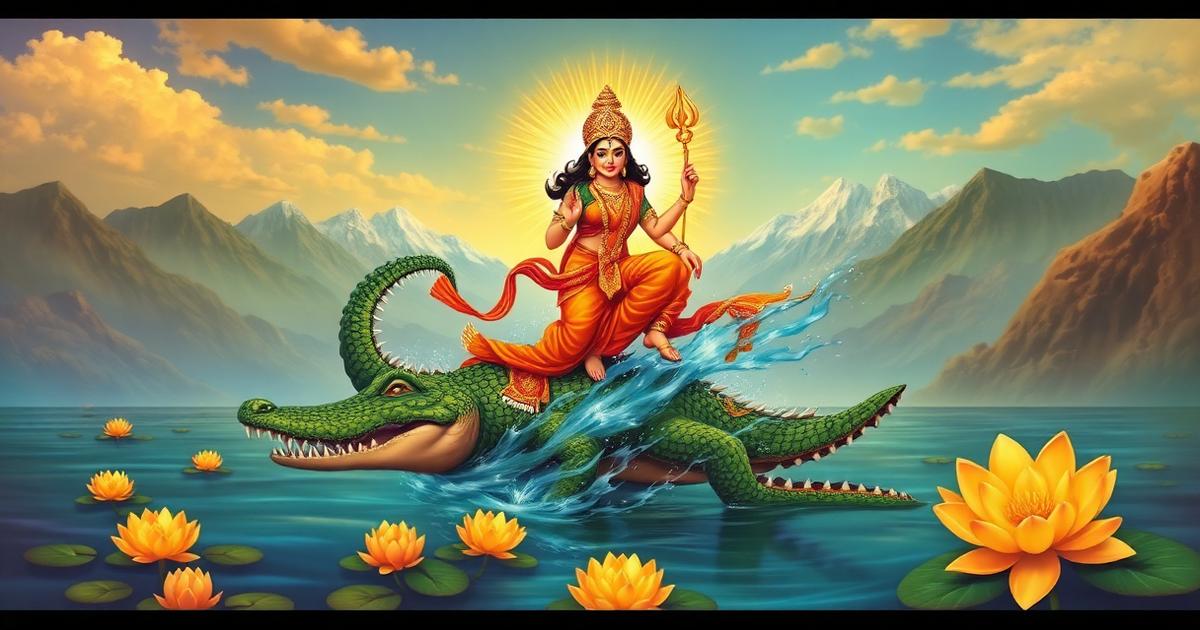
Narmada, also called Rewa, rises at Amarkantak in Madhya Pradesh and flows west across the state and Gujarat to the Arabian Sea. Along her banks she is not spoken of as a river that is sacred. She is spoken of as a goddess who happens to be flowing.
Her identity in tradition is distinct from that of Ganga:
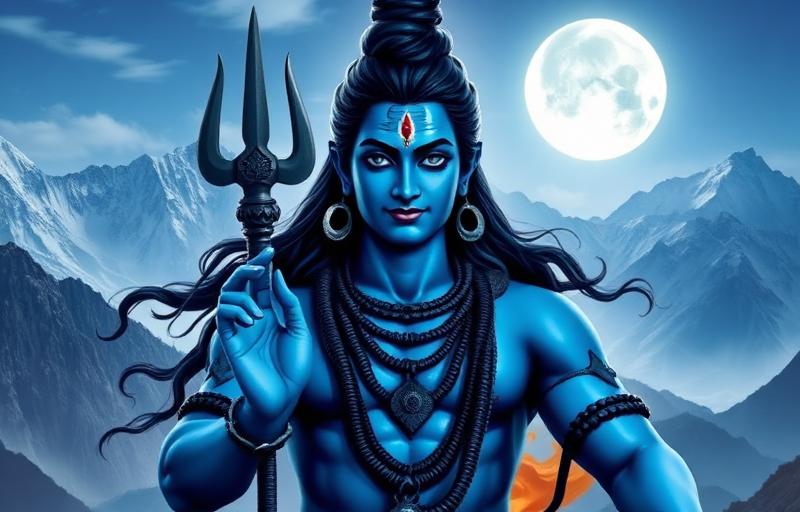
- Narmada is described as having arisen from Shiva, and is worshipped as his daughter
- She is understood to have remained unmarried, which shapes how she is addressed and why she is called Maa rather than being paired with a consort
- Her water is held to purify by sight alone, in the well known formulation that the Ganga purifies by bathing and the Narmada by darshan
- The greeting used along her entire course is Narmade Har, which people say to each other in place of a normal namaste
The scale of devotion along her banks is easy to underestimate from outside the region. Amarkantak, Omkareshwar, Maheshwar, Bhedaghat, Hoshangabad and Bharuch each have their own Narmada traditions, and the ghats fill every evening for aarti in the same way the Ganga's do.
The Katha of Narmada and Sonbhadra
The best known katha along the river explains the one thing everyone notices about her: she flows the wrong way.
Nearly every major river of northern and central India flows east. Narmada flows west. The katha given for this is a story of a broken engagement.
In the telling, Narmada was to be married to Sonbhadra, the river that rises in the same region. Her companion Juhila was sent to carry a message, and Sonbhadra was taken with Juhila instead. When Narmada learned of it, she turned away in anger, refused the marriage, and went in the opposite direction, choosing to remain kanya, unmarried, for all time.
What devotees take from the katha:
- Her westward course is her own decision, not an accident of geology
- Her unmarried state is treated as a choice made in self respect, which is why she is approached as an independent goddess rather than as a consort
- Her association with Shiva, her father in the tradition, is the relationship that defines her
Geologists explain the westward flow through the rift valley between the Vindhya and Satpura ranges. The two explanations sit side by side along the river without any difficulty, and people who can tell you about the rift valley will also tell you the story of Juhila.
Banalinga: Why Her Stones Are Worshipped
The single most distinctive belief about the Narmada is that every stone in her bed is a Shivling.
The stones are called banalinga or Narmadeshwar, and they are smooth, oval, naturally polished by the river, ranging from small enough to hold in a palm to large enough to require several people to move.
What tradition holds about them:
- They are swayambhu, self manifested, requiring no pran pratishtha to be worshipped
- A banalinga can be installed in a home and worshipped directly, which is why so many households across India keep one
- The shape is the linga's shape, produced by the river rather than by a sculptor
- They are collected mainly around Jabalpur and the river's middle course, and are traded widely
This belief has a practical consequence that few other rivers have. The Narmada is not only a river you bathe in or offer to. She is a river you take home. A family in Chennai or Kolkata with a Narmadeshwar linga on the puja shelf has a piece of the riverbed in the house.
A note for those buying one: banalingas are traditionally treated as living deities rather than objects. If you keep one, tradition expects daily abhishek with water, and the same care given to any installed murti.
The Sacred Places Along Her Course
The Narmada's banks hold a chain of tirthas that would each be significant on their own.
- Amarkantak - the source, on the Maikal hills where the Vindhya and Satpura ranges meet, with the Narmada Kund and a cluster of temples. The Sone also rises nearby, which is why the katha of Narmada and Sonbhadra belongs here.
- Bhedaghat, Jabalpur - the marble gorge and the Dhuandhar falls, with the Chausath Yogini temple on the height above
- Hoshangabad and Nemawar - old ghat towns, with Nemawar traditionally regarded as the mid point of the river
- Omkareshwar - the Jyotirlinga on the island shaped like the syllable Om, with Mamleshwar across the water
- Maheshwar - the ghats built under Rani Ahilyabai Holkar, among the most beautiful river frontages in India
- Bharuch and the estuary in Gujarat, where the river meets the sea
The Narmada Parikrama, the circumambulation of the entire river on foot along one bank and back along the other, is the most demanding pilgrimage associated with her and takes many months. Traditional parikramavasis walk the full course, and villages along the route feed and shelter them as a matter of custom.
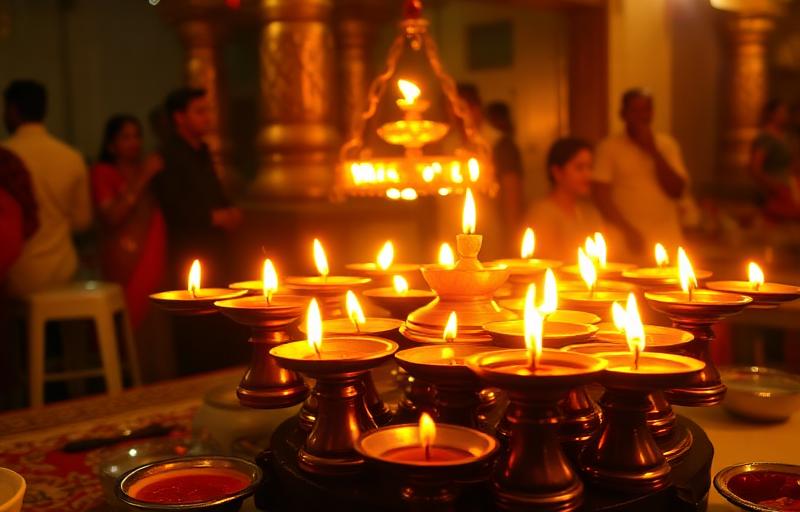
For most devotees, though, the connection is simpler. An evening at the ghats at Maheshwar or Omkareshwar, a lamp floated on the water, and the aarti as it is performed there is what people carry back.
Narmada Jayanti and Daily Worship
Narmada Jayanti, on the saptami of Magh Shukla Paksha, is the river's own festival, celebrated as the day of her appearance.
What happens on the day:
- Ghats from Amarkantak to Bharuch are decorated and lit, with deep daan at dusk
- Narmada aarti is performed at the major ghats with large gatherings
- Devotees take snan, offer flowers, coconut and lamps, and read the Narmada Ashtakam
- Towns along the river hold processions and cultural programmes, and Amarkantak, Maheshwar and Omkareshwar are especially busy
Daily worship along the river follows an established pattern. Morning snan with the words Narmade Har, an offering of water and flowers, and a lamp at the ghat in the evening. Families living along the banks include the river in household rituals in the same way Ganga is included in the north.
For devotees who live far from her, the customary practices are:
- Keeping a Narmadeshwar banalinga at home with daily abhishek
- Reciting the Narmada Ashtakam, attributed in tradition to Adi Shankaracharya
- Using Narmada jal carried home for household rituals
- Observing Narmada Jayanti with a lamp and the Ashtakam, wherever you are
The greeting itself travels. Devotees of the river say Narmade Har to each other far from Madhya Pradesh, and along her banks it functions as hello, thank you and goodbye at once.
The River Today
Any honest account of Narmada devotion has to include the river's present condition, because devotees along her banks talk about it constantly.
The Narmada has been extensively dammed, and the resulting reservoirs have changed the river's flow, submerged towns and displaced communities along her course. The debates around these projects have run for decades and are among the most documented in India. Devotional communities have been on several sides of them, and it is not this article's place to settle that argument.
What is worth saying is what devotees themselves emphasise:
- Ghat cleanliness is a live concern at every major town on the river, with local groups running cleaning drives
- Immersion practices have been modified in many places, with families using designated tanks and avoiding plaster idols and plastic
- Parikramavasis report changed routes and submerged sections, and the traditional walk has had to adapt
- Tree planting along the banks has become a devotional activity in itself for many groups in Madhya Pradesh
For a visitor, the practical form of respect is simple. Do not put plastic, cloth or non biodegradable material into the water, use the designated areas for immersion and deep daan, and follow whatever the local ghat committee asks. In a tradition where the river is not a resource but a mother, treating the water carelessly is understood as an offence against the deity herself.
Frequently Asked Questions
Why does the Narmada flow west?+
Tradition says Narmada was to marry Sonbhadra, who was instead taken with her companion Juhila. Narmada turned away in anger, refused the marriage and flowed in the opposite direction, choosing to remain unmarried. Geologically the westward course follows the rift valley between the Vindhya and Satpura ranges.
What is a banalinga or Narmadeshwar?+
It is a smooth oval stone from the Narmada riverbed, worshipped as a swayambhu Shivling that needs no pran pratishtha. Families install them at home and worship them directly with daily abhishek.
When is Narmada Jayanti?+
On the saptami of Magh Shukla Paksha, celebrated as the day of her appearance. Ghats from Amarkantak to Bharuch are lit for deep daan and aarti, with Amarkantak, Maheshwar and Omkareshwar especially busy.
What does Narmade Har mean?+
It is the greeting used along the entire course of the river, invoking the Narmada and asking her to take away what burdens the speaker. Along her banks it serves as hello, thank you and goodbye at once.
Where does the Narmada rise?+
At Amarkantak in Madhya Pradesh, on the Maikal hills where the Vindhya and Satpura ranges meet. The Narmada Kund and a cluster of temples mark the source, and the Sone rises nearby.
How can devotees worship Narmada if they live far away?+
By keeping a Narmadeshwar banalinga at home with daily abhishek, reciting the Narmada Ashtakam, using Narmada jal carried home for rituals, and observing Narmada Jayanti with a lamp and the Ashtakam.
About the author
Pandit Mahesh Trivedi · Festival Traditions & Panchang
Pandit Mahesh leads the festival-date and Panchang content on Vandnaa. He cross-references multiple regional panchangs (Drik, Vaishnava, Bengali, Marathi) for every festival date published on the site.
Meet the Vandnaa editorial team →