What Is the Mahabharata?
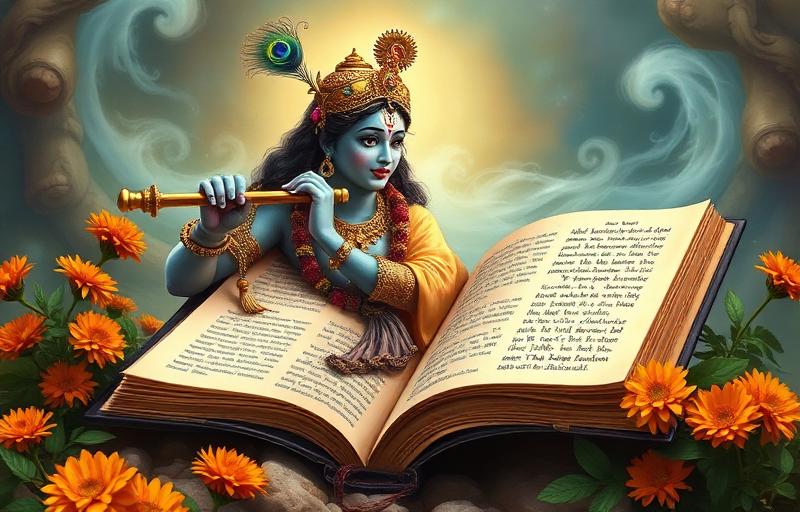
The Mahabharata is the longest epic poem in the world, composed in Sanskrit by the sage Veda Vyasa. With about one hundred thousand verses, it is so vast that it is said, 'What is here may be found elsewhere; what is not here is found nowhere.'
At its core it is the story of two branches of the Kuru dynasty - the five Pandavas and the hundred Kauravas - whose rivalry over the throne of Hastinapura leads to the great war of Kurukshetra. But the epic is far more than a war story. It holds the Bhagavad Gita, the Vishnu Sahasranama, and endless teachings on dharma, making it both a gripping tale and a complete guide to righteous living.
The Story in Brief
The main arc of the Mahabharata can be traced in a few stages:
- The two families - the blind king Dhritarashtra's hundred sons (the Kauravas, led by Duryodhana) and his brother Pandu's five sons (the Pandavas - Yudhishthira, Bhima, Arjuna, Nakula and Sahadeva), married to Draupadi.
- The dice game - Yudhishthira is tricked into a game of dice, loses the kingdom and Draupadi, who is insulted in court; the Pandavas are sent into thirteen years of exile.
- The failed peace - when they return seeking even five villages, Duryodhana refuses; even Krishna's mission for peace fails.
- The Kurukshetra war - the eighteen-day war begins, and on the battlefield Krishna gives Arjuna the Bhagavad Gita.
- The aftermath - the Pandavas win at terrible cost, Yudhishthira rules righteously, and in the end the Pandavas make their final journey toward the Himalayas.
Through it all stands Lord Krishna, Arjuna's charioteer and guide, the divine hand that turns the wheel of dharma.
The Bhagavad Gita at Its Heart
The most precious jewel of the Mahabharata is the Bhagavad Gita, spoken just before the war begins. Seeing his own elders, teachers and kinsmen ready to fight, Arjuna is overcome with grief and lays down his bow.
In seven hundred verses, Lord Krishna lifts Arjuna out of despair. He teaches the imperishable nature of the soul (atman), the path of selfless action (karma yoga), devotion (bhakti yoga) and knowledge (jnana yoga), and finally reveals his cosmic form. The Gita's central call - do your duty with devotion, without attachment to the fruits - has guided seekers for centuries. Through Arjuna's doubt, the Gita answers the questions every honest heart faces, which is why it stands as one of the world's greatest spiritual texts.
Why the Mahabharata Still Matters
The Mahabharata is honoured as the fifth Veda because it makes the deepest truths of dharma accessible through living characters. Its lessons feel astonishingly modern:
- Dharma is subtle. Even great souls struggle to know the right thing; the epic refuses easy answers and asks us to think carefully.
- Choices have consequences. A single moment of pride, anger or silence in the face of wrong sets a whole tragedy in motion.
- Adharma destroys itself. Despite their numbers and power, the Kauravas fall because they cling to injustice.
- No one is wholly good or bad. From Karna to Bhishma, every figure carries light and shadow, teaching compassion and self-examination.
For the devotee, the Mahabharata is both a mirror and a guide - it shows human nature as it truly is, and points, through Krishna and the Gita, to the path that leads beyond strife to peace.
Frequently Asked Questions
Who wrote the Mahabharata?+
The Mahabharata was composed in Sanskrit by the sage Veda Vyasa, who is himself a character in the epic. By tradition, it was dictated by Vyasa and written down by Lord Ganesha.
What is the Mahabharata mainly about?+
It tells of the rivalry between the five Pandavas and the hundred Kauravas of the Kuru dynasty, leading to the great war of Kurukshetra. Beyond the war, it is a profound exploration of dharma, and it contains the Bhagavad Gita.
Where does the Bhagavad Gita come in the Mahabharata?+
The Bhagavad Gita is spoken on the battlefield of Kurukshetra, just before the war begins, in the Bhishma Parva. Lord Krishna delivers it to Arjuna, who is overcome by grief and doubt.
Why is the Mahabharata called the fifth Veda?+
The Mahabharata is honoured as the fifth Veda because it makes the deepest truths of dharma accessible to everyone through living stories and characters, just as the Vedas hold sacred knowledge.
About the author
Anjali Mehta · Editor, M.A. Religious Studies
Anjali is the managing editor for Vandnaa and oversees the festival and vrat coverage. She holds an M.A. in Religious Studies and reviews every published article for accuracy, accessibility, and tradition-fidelity.
Meet the Vandnaa editorial team →