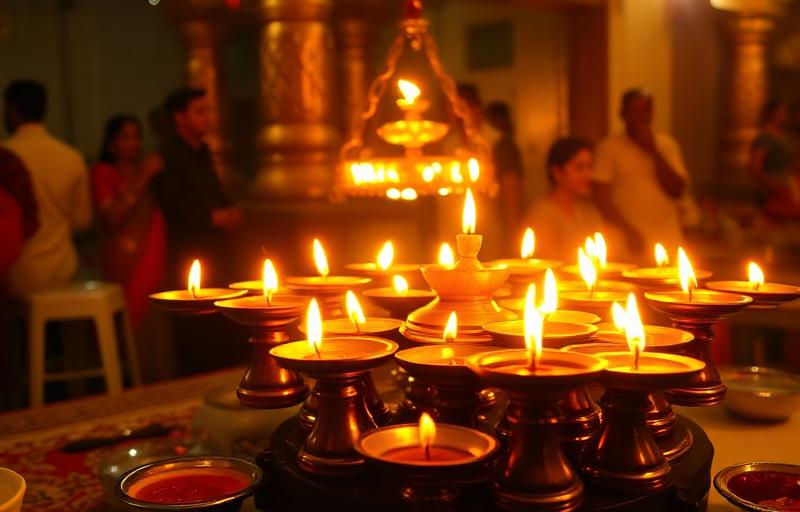
Kara on the Ganga
Malukdas, traditionally 1574 to 1682, of Kara, on the Ganga in what is now Kaushambi district, Uttar Pradesh.
Where he came from
A Kakkad Khatri family, which is to say a trading community, his father Sundardas, in a river town that was an old administrative and commercial centre.
Which matters for the third section, because the man who wrote the most famous couplet in Hindi about not working for a living came out of a family of traders.
The accounts describe him as unsuited to the business, uninterested in accounts and disinclined to the work, and there are the usual stories of a young man who gave away the stock.
What he became
A nirguna sant, in the line of Kabir, Nanak, Dadu and Ravidas, with Ram as the name and the Ram meaning the formless rather than the prince of Ayodhya.
And a considerable institution builder, which is less usually noted.
The Malukdasi panth
His seat is at Kara, where the gaddi continues and the order is still present.
And it spread unusually far. Malukdasi establishments were founded at Vrindavan, Ayodhya, Jagannath Puri, Patna, in Gujarat, in Nepal and, by tradition, as far as Multan and Kabul.
Which for a seventeenth century order founded by a Khatri trader's son in a small river town is a considerable reach, and it happened along the trading routes his community used, which is not a coincidence.
Aurangzeb
The tradition includes dealings with the Mughal court.
The accounts vary: a summons, a meeting, a grant of land, and the standard shape of a ruler being impressed. Report it as tradition. Court encounter stories attach to almost every north Indian sant of the period and the documentation is thin in nearly every case.
The age
Traditionally a hundred and eight years, 1574 to 1682.
And the Trailanga entry in an earlier batch sets out the position on this at length: extreme longevity is a genre marker in Indian hagiography rather than a claim in the ordinary sense, the numbers get rounder the further the writer is from the subject, and a hundred and eight in particular is a devotional number rather than a count.
It does not damage him and it should not be repeated as fact.
What he wrote
- Gyanbodh
- Ratankhan
- Sukhsagar
- Purushottam Nam Mala
- Dashratan
- Bhaktivachhavali
- Alakh Bani
- And a large body of dohas and pads in Hindi
And one couplet that everybody knows.
The Couplet
Ajgar kare na chakri, panchhi kare na kaam.
Das Malukka keh gaye, sabke data Ram.
The python does no job. The bird does no work. Das Maluka has said it: the giver of all is Ram.
Its position in Hindi
It is one of the most quoted couplets in the language, on the level of the best known Kabir dohas, and it is quoted by people who have no idea whose it is.
It is said in offices. It is said at weddings. It is said to a son who has not got a job. It is said by a man to his wife when she asks about the rent.
What it appears to say
That work is unnecessary and God provides.
Which is how it is used, almost universally, and which is not what it says.
Look at the images
A python and a bird.
And the argument that gets made from them assumes both are idle, and neither is.
A python is not idle. It hunts. It hunts rarely and enormously, it eats and then does not eat for weeks, and it does not forage continuously. What it does not do is a chakri, a salaried post, a job with a master, an arrangement in which you present yourself daily to somebody who pays you.
And a bird is not idle either. A bird works from before dawn. It is one of the busiest things in any Indian courtyard. What it does not do is kaam in the sense the doha means: it does not store, it does not plan a career, and it does not lie awake about next season.
So the images are not about labour.
They are about anxiety.
What the doha is actually addressed to
The person lying awake.
Not the person deciding whether to go to work in the morning. The person who has already gone to work, has already done what they can, and is now at three in the morning going through the arithmetic again.
And to that person the doha says something specific and true: the provision is not, in the end, produced by your worrying about it.
Which is a claim about the usefulness of anxiety rather than a claim about the usefulness of work, and the two get confused because the doha is compressed.
The evidence from inside the tradition
And this is what settles it, because the sant tradition's position on work is completely unambiguous and completely consistent.
Kabir wove cloth. All his life, at the loom, and the loom is in his verses.
Ravidas worked leather, which was the labour his community was assigned and which he did.
Nanak's formulation is a three word instruction that a hundred and thirty million people repeat: kirat karo, work honestly, naam japo, say the name, vand chhako, share what you have. Work is the first of the three.
Dadu was a cotton carder. Sena was a barber. Namdev was a tailor. Gora was a potter. Sadhna was a butcher. Dhanna farmed.
And Malukdas himself came out of a trading family in a market town.
There is no nirguna sant anywhere in this literature who told anybody to stop working.
So the doha means what the tradition around it means: do the work and stop carrying the outcome, which is also what the Gita says at 2.47, and which is one of the very few things almost every Indian tradition agrees on.
How It Gets Used
Two misuses, and the second one is much worse than the first.
One. As an excuse.
Somebody who does not want to work quotes it, and it is quoted at them, and everybody involved knows what is happening.
This is the harmless version. It is a joke about a brother in law, it is a line in a film, and nobody is actually deciding anything on the strength of it.
Two. As an instruction to somebody else.
And this is the one that matters.
The doha is said, in India, by people who have money, to people who do not.
It is said to a labourer asking about wages. It is said to a daughter in law asking where the household money went. It is said to a tenant. It is said by an employer. It is said by a family to the member who is asking for their share.
And in that mouth it means: your provision is God's problem and therefore not mine.
Which is the same conversion this series has recorded three times already.
Bhima Bhoi's line about accepting hell for the world's sake is a vow about yourself and becomes an instruction about somebody else's endurance. The Gita's do your duty and do not worry about the result becomes an instruction to a woman being beaten. Sahjo Bai's guru verse becomes an instruction not to question.
And the mechanism is identical every time.
A statement made by a person about their own inner life is turned around and pointed at somebody else's material conditions, and the person doing the pointing is never the one absorbing the cost.
The rule that catches all of them
Who is saying it, to whom, and who saves money if it is believed.
Malukdas said it about himself. He was the one who was going to go without if he was wrong.
What to do about real money anxiety
Because a great many people reading this have provision anxiety that is not irrational, and telling them the python does no job is not an answer.
First, the distinction.
Anxiety about money that is out of proportion to your situation is a treatable condition. Constant dread, sleep destroyed, an inability to stop calculating, physical symptoms, avoidance of anything to do with accounts. Tele MANAS 14416, free, all hours, and a government hospital psychiatry department costs little or nothing.
Anxiety about money that is proportionate to your situation needs action rather than reassurance, and the actions exist and are underused.
Things that exist and that people do not claim
- A ration card and the public distribution system. Households entitled to subsidised grain frequently do not have the card, and applying is free
- MGNREGA, which guarantees a hundred days of paid work per rural household per year on demand, and the demand has to be made, in writing, and there is a payment due if work is not provided
- Ayushman Bharat and the state health schemes, because medical expenditure is the single largest cause of households falling into poverty in India, and a family that gets the card before the illness is in a completely different position from one that does not
- Widow, old age and disability pensions, which exist in every state and are frequently unclaimed
- Scholarships and fee waivers for children's education, which are substantially unclaimed every year
And on debt
A doha is not a debt strategy.
If somebody is in unpayable debt to a moneylender, the things to know are that interest rates above the state's registered limits are unenforceable, that bonded labour is illegal under the Bonded Labour System Abolition Act 1976 and that being made to work off a debt is a crime rather than an arrangement, and that free legal aid on 15100 covers exactly this.
And the emergency version: debt distress is a major driver of suicide in India, particularly among farmers and small traders. If the arithmetic has started to look like a reason to die, that is the illness talking and it is treatable. Tele MANAS 14416. AASRA 9820466726. Vandrevala 9999666555. 112.
What the doha is genuinely good for
One specific thing, and it works.
At three in the morning, when you have already done everything you can do and the calculation is running anyway, the doha is a correct and useful instruction.
Not because provision is guaranteed. Because the calculation at three in the morning has never once produced a rupee, and it costs you the sleep you need for tomorrow, when you will actually be able to do something.
The python is not being told to stop hunting. It is being told not to lie awake between meals.
Where to go
- Kara, Kaushambi district, Uttar Pradesh, on the Ganga, where the Malukdasi gaddi is
- Vrindavan, Ayodhya and Jagannath Puri, where Malukdasi establishments were founded
- Prayagraj, which is close, for the Sangam
A daily practice from this entry
- Ram, in the nirguna sense he used, or whatever name your household uses
- The doha, kept for the hour it is actually for
- And the Malukdas test, applied to anybody who quotes it at you: are they saying it about their own provision, or about yours
The Short Version
Who: Malukdas, traditionally 1574 to 1682, of Kara on the Ganga in what is now Kaushambi district, Uttar Pradesh, born into a Kakkad Khatri trading family, his father Sundardas. The accounts describe him as unsuited to the business. He became a nirguna sant in the line of Kabir, Nanak, Dadu and Ravidas, with Ram as the name and the Ram meaning the formless rather than the prince of Ayodhya. He was also a considerable institution builder, which is less often noted: his seat is at Kara, where the gaddi continues, and Malukdasi establishments were founded at Vrindavan, Ayodhya, Jagannath Puri, Patna, in Gujarat, in Nepal and by tradition as far as Multan and Kabul, which for a seventeenth century order founded by a trader's son in a small river town is a considerable reach, and it followed the trading routes his community used. His works include the Gyanbodh, Ratankhan, Sukhsagar, Purushottam Nam Mala, Dashratan, Bhaktivachhavali and Alakh Bani, along with a large body of dohas and pads. The traditional dealings with Aurangzeb's court should be reported as tradition, since court encounter stories attach to almost every north Indian sant of the period, and the traditional age of a hundred and eight is a genre marker rather than a count.
The couplet: ajgar kare na chakri, panchhi kare na kaam, das Malukka keh gaye, sabke data Ram. The python does no job, the bird does no work, Das Maluka has said it, the giver of all is Ram. It is one of the most quoted couplets in Hindi, on the level of the best known Kabir dohas, and it is quoted by people who have no idea whose it is: in offices, at weddings, to a son who has not got a job, and by a man to his wife when she asks about the rent.
What it actually says: not that work is unnecessary. Look at the images, since the argument made from them assumes both animals are idle and neither is. A python is not idle: it hunts, rarely and enormously, eats and then does not eat for weeks, and does not forage continuously, and what it does not do is a chakri, a salaried post with a master to whom you present yourself daily. A bird is not idle either, since it works from before dawn and is one of the busiest things in any Indian courtyard, and what it does not do is store, plan a career, or lie awake about next season. So the images are about anxiety rather than labour, and the doha is addressed to the person lying awake at three in the morning going through the arithmetic again, having already done what they can, and it says something true to that person: the provision is not, in the end, produced by your worrying about it.
The evidence from inside: the sant tradition's position on work is completely unambiguous. Kabir wove cloth all his life and the loom is in his verses. Ravidas worked leather. Nanak's three word instruction, repeated by a hundred and thirty million people, is kirat karo, naam japo, vand chhako, work honestly, say the name, share what you have, and work is the first of the three. Dadu was a cotton carder, Sena a barber, Namdev a tailor, Gora a potter, Sadhna a butcher, and Dhanna farmed, and Malukdas himself came out of a trading family in a market town. There is no nirguna sant anywhere in this literature who told anybody to stop working, so the doha means what the tradition around it means: do the work and stop carrying the outcome, which is also what the Gita says at 2.47.
How it gets misused: two ways, and the second is much worse. As an excuse by somebody who does not want to work, which is the harmless version since everybody knows what is happening. And as an instruction to somebody else, which is the one that matters: the doha is said in India by people who have money to people who do not, to a labourer asking about wages, to a daughter in law asking where the household money went, to a tenant, by an employer, and by a family to the member asking for their share, and in that mouth it means your provision is God's problem and therefore not mine. That is the same conversion this series has recorded with Bhima Bhoi's line, with the Gita, and with Sahjo Bai's guru verse, and the mechanism is identical: a statement made by a person about their own inner life is turned around and pointed at somebody else's material conditions, and the person pointing is never the one absorbing the cost. The rule that catches all of them is to ask who is saying it, to whom, and who saves money if it is believed. Malukdas said it about himself and he was the one who would go without if he was wrong.
Real money anxiety: anxiety out of proportion to your situation is a treatable condition, with constant dread, destroyed sleep, an inability to stop calculating and avoidance of anything to do with accounts, and Tele MANAS 14416 is free at all hours. Anxiety proportionate to your situation needs action rather than reassurance, and things exist that people do not claim: a ration card and the public distribution system, MGNREGA which guarantees a hundred days of paid work per rural household per year on demand made in writing, Ayushman Bharat and the state health schemes since medical expenditure is the single largest cause of households falling into poverty in India, widow, old age and disability pensions, and scholarships and fee waivers. On debt, a doha is not a strategy: interest rates above the state's registered limits are unenforceable, bonded labour is illegal under the Bonded Labour System Abolition Act 1976 and being made to work off a debt is a crime, and free legal aid on 15100 covers exactly this. Debt distress is a major driver of suicide in India, particularly among farmers and small traders, and if the arithmetic has started to look like a reason to die that is the illness talking: Tele MANAS 14416, AASRA 9820466726, Vandrevala 9999666555, 112.
What it is good for: one specific thing. At three in the morning, when you have already done everything you can and the calculation is running anyway, the doha is correct and useful, not because provision is guaranteed but because the calculation at that hour has never once produced a rupee and it costs you the sleep you need for tomorrow, when you will actually be able to do something. The python is not being told to stop hunting; it is being told not to lie awake between meals.
What People Ask Most
Who was Malukdas?+
A nirguna sant of northern India, traditionally 1574 to 1682, from Kara on the Ganga in what is now Kaushambi district, Uttar Pradesh, born into a Kakkad Khatri trading family. He stood in the line of Kabir, Nanak, Dadu and Ravidas, with Ram as the name in the formless sense. He was also a considerable institution builder: his seat is at Kara where the gaddi continues, and Malukdasi establishments were founded at Vrindavan, Ayodhya, Jagannath Puri, Patna, in Gujarat, in Nepal and by tradition as far as Multan and Kabul, following the trading routes his community used. His works include the Gyanbodh, Ratankhan, Sukhsagar, Purushottam Nam Mala, Dashratan, Bhaktivachhavali and Alakh Bani, along with a large body of dohas and pads, and one couplet that everybody in north India knows.
What does ajgar kare na chakri actually mean?+
Not that work is unnecessary. Look at the images, since the argument usually made from them assumes both animals are idle and neither is. A python is not idle: it hunts, rarely and enormously, eats and then does not eat for weeks, and does not forage continuously, and what it does not do is a chakri, a salaried post with a master to whom you present yourself daily. A bird is not idle either, since it works from before dawn and is one of the busiest things in any Indian courtyard, and what it does not do is store, plan a career, or lie awake about next season. So the images are about anxiety rather than labour. The doha is addressed to the person lying awake at three in the morning going through the arithmetic again, having already done everything they can, and it says something specific and true to that person: the provision is not, in the end, produced by your worrying about it.
Do the sants tell people not to work?+
No, and the tradition's position is completely unambiguous and completely consistent. Kabir wove cloth all his life, at the loom, and the loom is in his verses. Ravidas worked leather, which was the labour his community was assigned and which he did. Nanak's formulation is a three word instruction that a hundred and thirty million people repeat: kirat karo, work honestly, naam japo, say the name, vand chhako, share what you have, and work is the first of the three. Dadu was a cotton carder, Sena was a barber, Namdev was a tailor, Gora was a potter, Sadhna was a butcher and Dhanna farmed. And Malukdas himself came out of a trading family in a market town. There is no nirguna sant anywhere in this literature who told anybody to stop working, so the doha means what the tradition around it means: do the work and stop carrying the outcome, which is also what the Gita says at 2.47 and is one of the very few things almost every Indian tradition agrees on.
How does this couplet get misused?+
In two ways, and the second is much worse. As an excuse, by somebody who does not want to work, which is the harmless version since it is a joke about a brother in law or a line in a film and nobody is actually deciding anything on the strength of it. And as an instruction to somebody else, which is the one that matters: in India the doha is said by people who have money to people who do not, to a labourer asking about wages, to a daughter in law asking where the household money went, to a tenant, by an employer, and by a family to the member asking for their share, and in that mouth it means your provision is God's problem and therefore not mine. This is the same conversion recorded elsewhere in this series with Bhima Bhoi's line about accepting hell, with the Gita's do your duty and do not worry about the result, and with Sahjo Bai's guru verse, and the mechanism is identical every time: a statement made by a person about their own inner life is turned around and pointed at somebody else's material conditions, and the person doing the pointing is never the one absorbing the cost. The rule that catches all of them is to ask who is saying it, to whom, and who saves money if it is believed. Malukdas said it about himself, and he was the one who would go without if he was wrong.
What should I do about real money anxiety?+
First, make the distinction. Anxiety about money that is out of proportion to your situation is a treatable condition, with constant dread, sleep destroyed, an inability to stop calculating, physical symptoms and avoidance of anything to do with accounts, and Tele MANAS 14416 is free at all hours while a government hospital psychiatry department costs little or nothing. Anxiety proportionate to your situation needs action rather than reassurance, and the actions exist and are underused: a ration card and the public distribution system, since households entitled to subsidised grain frequently do not have the card and applying is free; MGNREGA, which guarantees a hundred days of paid work per rural household per year on demand, with the demand made in writing and a payment due if work is not provided; Ayushman Bharat and the state health schemes, since medical expenditure is the single largest cause of households falling into poverty in India and a family that gets the card before the illness is in a completely different position; widow, old age and disability pensions, which exist in every state and are frequently unclaimed; and scholarships and fee waivers for children's education, which are substantially unclaimed every year.
What if I am in debt I cannot repay?+
A doha is not a debt strategy. If you are in unpayable debt to a moneylender, the things to know are that interest rates above the state's registered limits are unenforceable, that bonded labour is illegal under the Bonded Labour System Abolition Act 1976 and being made to work off a debt is a crime rather than an arrangement, and that free legal aid on 15100 through the National Legal Services Authority covers exactly this, with an authority in every district. And there is an emergency version of this that must be said: debt distress is a major driver of suicide in India, particularly among farmers and small traders, and if the arithmetic has started to look like a reason to die, that is the illness talking and it is treatable. Tele MANAS 14416, AASRA 9820466726, Vandrevala 9999666555, and 112 if the danger is immediate.
About the author
Pandit Ravindra Sharma · Vedic Rituals & Bhakti, 22+ years
Pandit Ravindra is the Vandnaa editorial team's resident specialist on aarti, chalisa, and daily devotion. He has performed home and temple pujas across Varanasi and Delhi for over two decades and contributes the bhakti-focused articles on this site.
Meet the Vandnaa editorial team →