What Is a Mandap
The mandap (also spelled mandapa) is the pillared hall found in front of a Hindu temple's garbhagriha, the space devotees pass through on their way to the sanctum. Unlike the small, closed sanctum, a mandap is typically open or semi-open, supported by rows of carved stone or wooden pillars, and designed to hold gathered devotees for darshan, festivals, music, dance and religious discourse.
Large temple complexes, especially in the Dravida tradition, often have more than one mandap in sequence, each serving a distinct purpose as a devotee moves from the outer world toward the inner sanctum.
The Different Types of Mandap
Temple mandaps are traditionally classified by their function and position.
- Ardha mandap (the 'half hall'): a smaller porch-like hall directly in front of the garbhagriha, often the last stop before entering the sanctum.
- Maha mandap or sabha mandap (the 'great hall' or 'assembly hall'): a large central hall used for gatherings, discourse and congregational worship.
- Natya mandap (the 'dance hall'): a hall specifically built for ritual dance and music performed as an offering to the deity, seen in temples like the Konark Sun Temple.
- Kalyana mandap (the 'wedding hall'): a hall reserved for celebrating the temple deity's own ceremonial wedding rituals, a tradition especially prominent in South Indian temples.
- Ranga mandap: a hall used for other festival and ceremonial functions, sometimes overlapping with the natya mandap's role.
How Mandaps Grew More Elaborate
Mandaps grew more elaborate over the centuries as temple worship became increasingly communal. Early temples often had only a small porch before the sanctum, but as festivals, musical offerings, classical dance performances and religious teaching became central to temple life, kings and communities added grander halls to accommodate these gatherings.
Some of India's most celebrated stone carving is found not in the sanctum itself but in these mandaps, the pillars of temples like Belur, Halebidu and Konark are carved with such intricacy that entire panels tell mythological stories in stone.
What the Mandap Symbolises
Beyond their practical use, mandaps carry symbolic meaning. The pillars supporting the hall are traditionally likened to the trees of a sacred forest or grove, evoking the idea of approaching the divine the way ancient sages approached their forest hermitages, in a space set apart from ordinary life.
Moving through a sequence of mandaps toward the garbhagriha is also understood as a gradual movement inward and upward, from the community's shared worship in the outer halls to the intimate, individual moment of darshan at the sanctum.
Where Temple Life Actually Happens
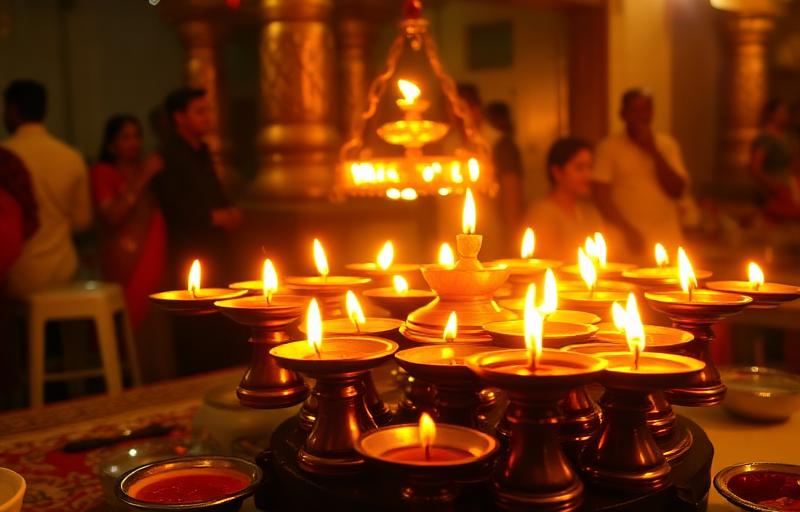
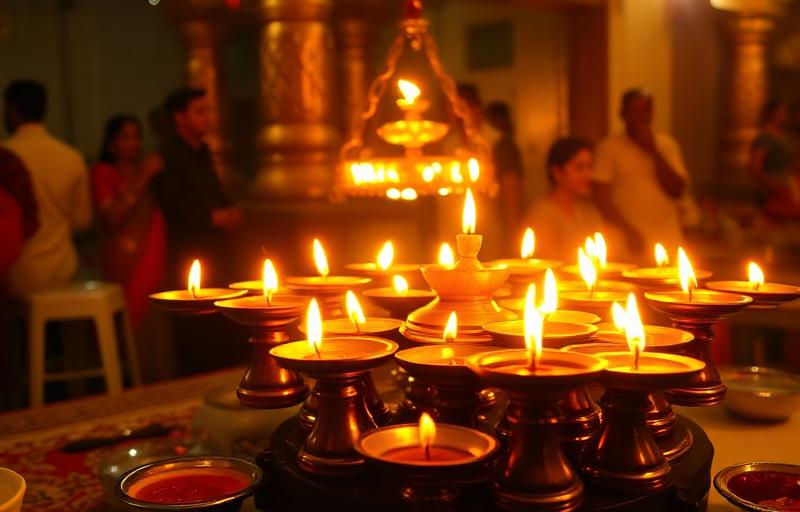
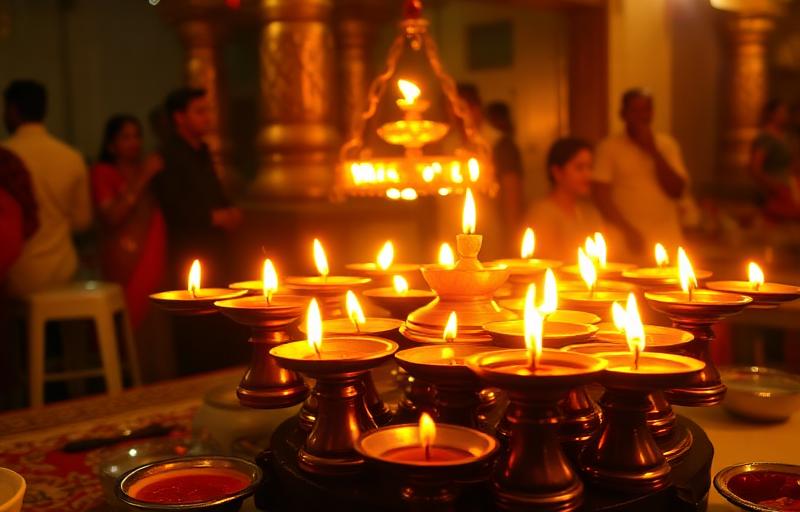
For most devotees, the mandap is where much of temple life actually happens: sitting for a discourse, listening to bhajans, waiting one's turn for darshan, or simply pausing in the shade of the carved pillars. During major festivals, mandaps come alive with music, dance and the collective energy of hundreds of devotees offering their devotion together, well before or after their individual moment before the deity.
Devotion Shared and Devotion Alone
The mandap teaches that devotion is not only a private, inward act performed alone before the deity, it is also something shared, sung, danced and discussed together in community. Both the quiet garbhagriha and the lively mandap are part of the same act of worship.
The next time you sit in a temple's pillared hall, notice how the space itself invites both stillness and togetherness. Worship is an act of faith and love, not a transaction, and the mandap has held generations of devotees in that shared faith.
Common Questions From Devotees
What is a mandap in a Hindu temple?+
A mandap is the pillared hall in front of a temple's sanctum where devotees gather for darshan, festivals, music, dance and religious discourse before approaching the deity.
What is the difference between an ardha mandap and a maha mandap?+
An ardha mandap is the smaller porch-like hall closest to the sanctum, often the last space before entering, while a maha mandap (or sabha mandap) is the larger assembly hall used for congregational gatherings.
Why are temple mandap pillars so elaborately carved?+
As temple worship grew more communal over the centuries, mandaps became spaces for festivals and performances, and their pillars were carved elaborately both as an offering of skill and devotion and to narrate mythological stories to devotees.
About the author
Dr. Suresh Iyer · Vastu Shastra & Jyotish, 18+ years
Dr. Suresh has practiced traditional Vastu and basic Vedic Jyotish for over 18 years across South India. He contributes the Vastu, direction, and home-puja layout guides on Vandnaa.
Meet the Vandnaa editorial team →