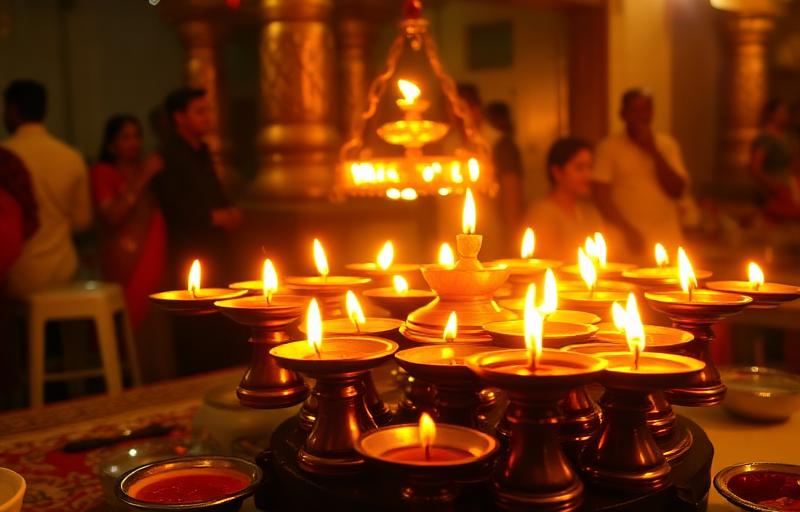
Why Chant a Prayer Before Eating?
In the Hindu way of life, food is not merely fuel - it is prasad, a gift of the divine. Before a meal, many families pause to offer the food to God and to give thanks for it. This turns an ordinary act into a small daily yajna (sacred offering).
The Bhagavad Gita teaches that the divine itself becomes the act of offering, the offering, the fire and the eater. Chanting the food prayer reminds us that the grain came from the earth, the rain, the sun and the hands of many people. Eating with this awareness brings gratitude, contentment and calm to the table, and treats the body that receives the food as a temple.
The Food Prayer - Shlokas, Transliteration & Meaning
The Brahmarpanam shloka (Bhagavad Gita 4.24):
ॐ ब्रह्मार्पणं ब्रह्म हविर्ब्रह्माग्नौ ब्रह्मणा हुतम् । ब्रह्मैव तेन गन्तव्यं ब्रह्मकर्मसमाधिना ॥
Om Brahmarpanam Brahma Havir Brahmagnau Brahmana Hutam, Brahmaiva Tena Gantavyam Brahma-karma-samadhina.
Meaning: The act of offering is Brahman (the divine), the offering is Brahman, offered by Brahman into the fire of Brahman. By one absorbed in this divine action, Brahman alone is reached.
The anna grahan prayer (from the Gita, 15.14):
अहं वैश्वानरो भूत्वा प्राणिनां देहमाश्रितः । प्राणापानसमायुक्तः पचाम्यन्नं चतुर्विधम् ॥
Aham Vaishvanaro Bhutva Praninam Dehamashritah, Pranapana-samayuktah Pachamy-annam Chaturvidham.
Meaning: Becoming the fire of digestion (Vaishvanara) dwelling in the bodies of living beings, joined with the in-breath and out-breath, I digest the four kinds of food. Chanting these together offers the meal to the divine within and gives thanks for it.
When & How to Chant Before Meals
- Sit and settle: Sit before the served plate with a calm mind. Many fold their hands or touch the plate gently in respect.
- Offer first: Some sprinkle a little water around the plate (parishechan) before chanting, treating the meal as an offering.
- Chant the shloka: Recite the Brahmarpanam, and add the anna grahan shloka if you know it. A simple option is just 'Om' with a moment of silent thanks.
- Pause, then eat: Take the first morsel mindfully and eat without haste, with gratitude.
- Short version: If time is short, simply saying Hari Om or Om and silently thanking the divine, the farmers and the cook is enough. Sincerity matters more than length.
Benefits of the Food Prayer

- Gratitude and contentment: Pausing before eating cultivates thankfulness and reduces taking food for granted.
- Mindful eating: A short prayer slows you down, helps you eat calmly and avoid waste.
- Purity of food: Offering the meal first turns it into prasad, eaten with a peaceful, respectful heart.
- A daily anchor: It becomes a small, steady spiritual practice woven into ordinary life, easy to teach children.
- Connection: It reminds the whole family that the food connects them to the earth, the divine and one another.
The true benefit is not magical but inner - a heart that never takes nourishment for granted and never wastes a grain.
What People Ask Most
What is the mantra chanted before eating food?+
The most common is the Brahmarpanam shloka from the Bhagavad Gita (4.24), often followed by the anna grahan verse 'Aham Vaishvanaro Bhutva' (15.14). Together they offer the meal to the divine and give thanks.
What does the Brahmarpanam shloka mean?+
It means the act of offering, the offering, the fire and the one offering are all Brahman (the divine). One who eats with this awareness reaches Brahman. It turns the meal into a sacred offering.
Is there a short prayer if I do not know the full shloka?+
Yes. Simply saying 'Om' or 'Hari Om' and silently thanking the divine, the earth and those who grew and cooked the food is enough. Sincerity matters far more than length.
Why is food treated as prasad in Hindu tradition?+
Because food sustains life and is seen as a gift of the divine. Offering it first turns it into prasad - sanctified food - so it is eaten with gratitude, never wasted, and shared with others.
About the author
Acharya Vinaya Kapoor · M.A. Sanskrit, Mantra & Stotra Studies
Acharya Vinaya holds an M.A. in Sanskrit from Banaras Hindu University and writes the mantra and stotra commentary on Vandnaa. Her focus is on accurate pronunciation, traditional context, and helping modern readers connect with classical texts.
Meet the Vandnaa editorial team →