
Prayer as Encouragement, Never Pressure
When a child struggles to concentrate or feels nervous before exams, the kindest thing a family can do is replace anxiety with calm faith. A study mantra is not a magic guarantee of marks and not a substitute for learning - it is a devotional habit that steadies the mind, builds confidence, and reminds the child that they are supported by something larger than the exam.
Goddess Saraswati is the deity of knowledge, speech and the arts; Lord Ganesha is the remover of obstacles and the lord of beginnings and focus; the Gayatri mantra is a universal prayer for the illumination of intellect. Approached gently, a few minutes of chanting before study becomes a daily ritual of confidence rather than pressure. The aim is a child who enjoys learning and faces papers with composure - so present these mantras as a friend and helper, never as a threat of failure if marks fall short.
Saraswati Mantra for Wisdom and Speech
Maa Saraswati, seated on a white lotus with the veena, is the source of vidya (knowledge), buddhi (intellect) and clear expression. The simplest and most beloved seed mantra is:
ॐ ऐं सरस्वत्यै नमः
Om Aim Saraswatyai Namah - "I bow to Goddess Saraswati." Here Aim is her bija (seed) sound, traditionally linked with speech and learning.
A fuller, classic prayer recited by students is:
या कुन्देन्दुतुषारहारधवला या शुभ्रवस्त्रावृता। वीणावरदण्डमण्डितकरा या श्वेतपद्मासना॥
Ya Kundendu-tushara-hara-dhavala ya shubhra-vastravrita, veena-vara-danda-mandita-kara ya shveta-padmasana.
Meaning: "She who is white as jasmine, the moon and snow, robed in pure white, holding the veena, seated on a white lotus - may that Goddess of knowledge protect and bless me." Children can chant the short bija mantra; older students or parents may add the shloka. Chanting before opening books gently invokes a learning mood.
Gayatri Mantra and the Spirit of Medha Suktam
The Gayatri mantra is among the most revered Vedic prayers, a request for the divine light to awaken and guide our intellect:
ॐ भूर्भुवः स्वः तत्सवितुर्वरेण्यं भर्गो देवस्य धीमहि धियो यो नः प्रचोदयात्॥
Om Bhur Bhuvah Svah Tat Savitur Varenyam Bhargo Devasya Dhimahi Dhiyo Yo Nah Prachodayat.
Meaning: "We meditate on the glorious light of the divine Sun; may it illumine and inspire our intellect." The line dhiyo yo nah prachodayat - "may it inspire our minds" - makes it a perfect prayer for clear thinking and memory.
The Medha Suktam is a Vedic hymn addressed to Medha Devi, the goddess of intelligence and retention, traditionally chanted to invoke a sharp, steady memory. While its full recitation is often done by elders or learned reciters, the simple idea behind it - praying for medha (retentive intelligence) - can be honoured by a child with the gentle prayer ॐ मेधायै नमः (Om Medhayai Namah), "I bow to the Goddess of intelligence." These prayers ask not for marks but for a mind that learns and remembers with ease.
Ganesh Mantra for Focus and Removing Obstacles
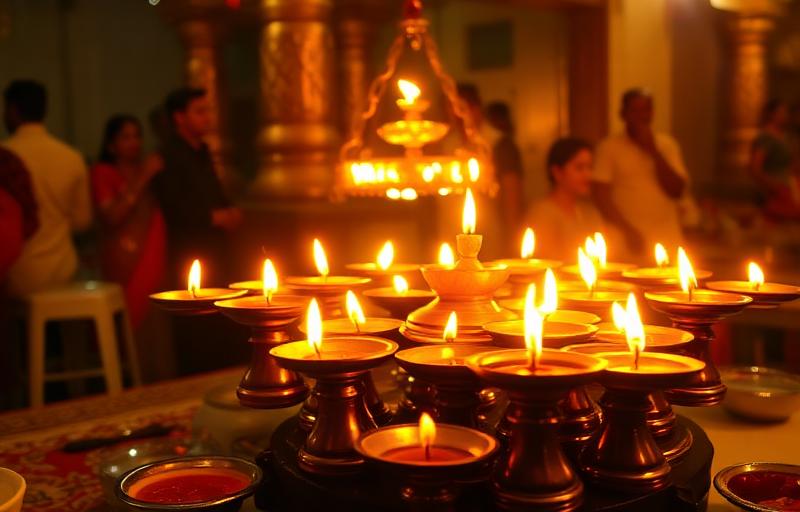
Before any learning begins, Hindus invoke Lord Ganesha, the remover of obstacles (Vighnaharta) and lord of intellect (Buddhi-pati). For a child who is restless or easily distracted, his mantras bring a settling, focusing energy.
The simplest is ॐ गं गणपतये नमः (Om Gam Ganapataye Namah) - "I bow to Lord Ganapati," where Gam is his bija sound. A beautiful prayer for sharp intellect is ॐ गणेशाय नमः along with the well-known verse:
वक्रतुण्ड महाकाय सूर्यकोटि समप्रभ। निर्विघ्नं कुरु मे देव सर्वकार्येषु सर्वदा॥
Vakratunda Mahakaya Suryakoti Samaprabha, Nirvighnam Kuru Me Deva Sarvakaryeshu Sarvada.
Meaning: "O curved-trunk, mighty Lord, radiant as a million suns, please make all my endeavours free of obstacles, always." A child can chant Om Gam Ganapataye Namah a few times when sitting down to study - it works like a gentle bell that signals the mind, "now we focus." Pairing Ganesha for focus with Saraswati for knowledge is the classic and complete combination.
Vidhi: Best Time, Mala Count and Method
Keep the practice short, joyful and consistent. A simple vidhi for a child or parent:
1. After a bath and in clean clothes, sit on a clean mat facing east near the study area or home mandir. 2. Light a diya and incense before Saraswati or Ganesha; offer a flower and fold hands. 3. Begin with one round of the Ganesh mantra for focus, then chant the Saraswati or Gayatri mantra. 4. Use a tulsi or sandalwood mala - one mala is 108 repetitions; a young child may comfortably do 11, 21 or 27, while older students can do a full mala. 5. Close with a pranam and a moment of silence before opening books.
Best time is the Brahma muhurat (about 4:30 to 6:00 AM), when the mind is freshest and the world is quiet; if that is hard for a child, an early-morning slot before school or a fixed evening study-start time works well. Vasant Panchami and Thursdays are especially auspicious for Saraswati worship. Steadiness at the same time each day builds the habit far more than occasional long sessions.
Supportive Study Habits That Make the Prayer Bloom
Mantra and effort are partners, not rivals. The prayer calms and focuses the mind; honest study fills it with knowledge. Encourage a fixed daily study time, a tidy and well-lit desk facing east or north, and short breaks so the mind stays fresh. A few minutes of deep breathing or simply sitting quietly after chanting helps a nervous child settle before exams.
Keep the home atmosphere warm: praise effort more than marks, avoid comparing siblings or classmates, and ensure enough sleep and nourishing food, since memory and mood depend on rest. On exam mornings, a quick prayer, a parent's blessing and a calm 'do your best' do more good than last-minute panic. Place a small Saraswati image or a Ganesha idol on the study desk as a gentle reminder of support. Remember that the true fruit of these mantras is a confident, curious learner - so celebrate growth, resilience and honesty, not just the report card.
Reader Questions Answered
Which mantra is best for a child's studies and concentration?+
Begin with the Ganesh mantra Om Gam Ganapataye Namah to settle and focus the mind, then chant the Saraswati mantra Om Aim Saraswatyai Namah for knowledge. Older students may add the Gayatri mantra for clarity of intellect. This Ganesha-plus-Saraswati pairing is the classic, complete combination. Keep it short and joyful so the child looks forward to it.
Should the child chant, or should the parent chant for them?+
Both are valuable. A child who can chant should do so, even just a few repetitions, because it builds their own focus and confidence. Younger children or those who cannot yet chant benefit when a parent prays on their behalf with love. Best of all is doing it together for a few minutes - it becomes a warm shared ritual that supports the child emotionally as well as spiritually.
What is the best time and how many repetitions?+
Brahma muhurat (about 4:30 to 6:00 AM) is ideal because the mind is fresh and the surroundings quiet, but a fixed slot before school or before evening study works fine. A full mala is 108 repetitions; a young child can comfortably do 11, 21 or 27, while older students manage a full mala. Consistency at the same time each day matters more than the number.
Will chanting guarantee good marks in exams?+
No, and it should never be presented to a child as a guarantee. A mantra is a devotional habit that calms the mind, builds confidence and removes the inner clutter of anxiety - it is a companion to honest study, not a replacement for it. The true fruit is a child who learns with focus and faces exams with composure. Marks follow effort; the prayer simply steadies the heart along the way.
Can we chant the Gayatri or Medha Suktam at home?+
Yes. The Gayatri mantra is a universal Vedic prayer that families chant at home for clarity of intellect. The full Medha Suktam is more elaborate and often recited by elders or learned reciters, but its spirit can be honoured simply with Om Medhayai Namah, a prayer for retentive intelligence. Chant with cleanliness, devotion and a calm heart, and let the child join in to the extent they are comfortable.
My child gets very anxious before exams - how can devotion help?+
A short prayer ritual before study and on exam mornings gives anxious children an anchor - something steady and familiar that signals 'I am supported and I can do this.' Pair the chanting with slow breathing and a parent's calm blessing rather than last-minute drilling. Keep words encouraging, praise effort over marks, and ensure good sleep and food. Faith plus calm preparation eases nerves far better than pressure ever could.
About the author
Acharya Vinaya Kapoor · M.A. Sanskrit, Mantra & Stotra Studies
Acharya Vinaya holds an M.A. in Sanskrit from Banaras Hindu University and writes the mantra and stotra commentary on Vandnaa. Her focus is on accurate pronunciation, traditional context, and helping modern readers connect with classical texts.
Meet the Vandnaa editorial team →