The Marigold in Hindu Worship
The marigold (genda phool) is perhaps the single most recognisable flower in Hindu devotional life, its bright orange and yellow petals strung into garlands, scattered at doorways and piled high at temple stalls across the country. Unlike more delicate blooms, marigold holds its colour and shape for days, which has made it the practical, ever-present choice for everyday worship.
Its sheer visibility, at weddings, festivals, temple entrances and home altars alike, means most devotees encounter marigold in devotional settings long before they learn why it holds this place.
Marigold Across Festivals
During Diwali, marigold garlands and torans are hung across doorways and used to decorate the space where Lakshmi Puja is performed, their golden-orange hue considered fitting for a festival of light and prosperity. During Navratri and Durga Puja, marigold is used generously to adorn the goddess's idol and pandal.
In South India, marigold appears alongside other flowers in daily temple worship, and during regional harvest festivals its bright colour is seen as a visual echo of the season's abundance. Its consistent presence, festival after festival, region after region, is part of why it has become shorthand for auspiciousness itself in Hindu visual tradition.
The Meaning Behind the Marigold
Beyond its practicality, marigold's bright, sun-like colour has traditionally been associated with positivity, warmth and auspicious beginnings. Its round, full form is sometimes read as a symbol of the sun and of wholeness, fitting for offerings meant to invite good fortune.
Marigold is also considered a flower of purity in a practical sense, since it is grown widely, remains largely free of impurity in most traditions of offering, and does not wilt or bruise as quickly as more delicate flowers, allowing it to be handled, strung and offered without concern.
How Marigold Is Used in Worship
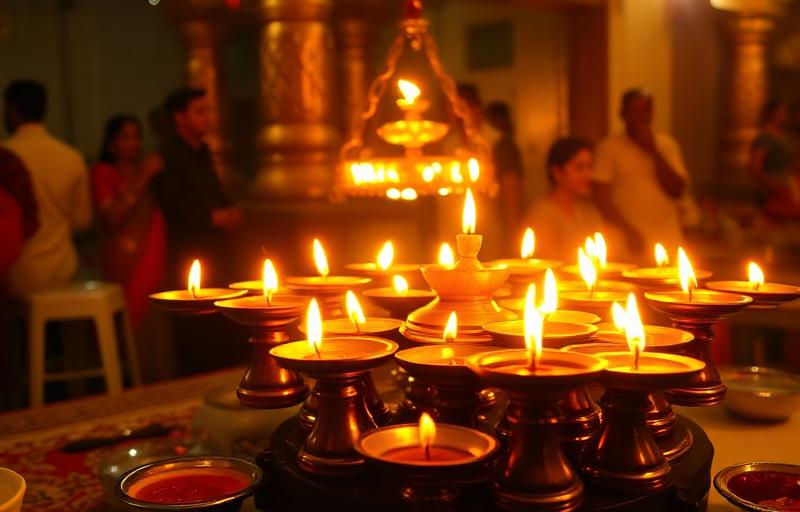
- Fresh marigold garlands are offered to deities and hung on doorframes as a mark of welcome and auspiciousness
- Petals are scattered on the ground during processions, weddings and festival rangoli designs
- Marigold is woven into torans alongside mango leaves for doorway decoration during festivals
- Temple priests use marigold generously in daily and festival decoration of the deity
- At the end of worship, offered marigold flowers are traditionally immersed in a river or returned respectfully to the earth rather than discarded carelessly
More Than Decoration
It would be easy to see marigold as simply decorative, but devotees understand each garland and each scattered petal as an offering of beauty made with intention, not just a backdrop. As per tradition, the effort of stringing flowers by hand, however small, is itself considered an act of devotion.
The flower's resilience, blooming reliably across seasons and surviving handling that would wilt more delicate blooms, is sometimes seen as a quiet lesson in steady, uncomplaining service, values Hindu tradition holds in high regard.
A Simple Takeaway for Daily Life
The marigold teaches that devotion does not always need rarity or grandeur, sometimes the most common, dependable offering carries just as much meaning as the rarest one, if given with sincerity. Its everyday presence is itself part of its beauty.
Stringing a small marigold garland, or simply appreciating the flowers already present at a doorway or altar, is an act of faith and love, not a transaction. Even the most familiar offering deserves a moment of genuine attention.
Quick Answers
Why is marigold the most common flower used in Hindu puja?+
Marigold is valued for its bright, auspicious colour, its long-lasting bloom that survives handling and stringing, and its wide availability, making it a practical and meaningful choice for daily and festival worship alike.
What does the marigold flower symbolize in Hindu tradition?+
Its round, sun-like form and golden-orange colour are traditionally associated with positivity, warmth and auspicious beginnings, making it a fitting offering for occasions meant to invite good fortune.
What is done with marigold flowers after they are offered?+
Offered marigold flowers are traditionally disposed of respectfully, often immersed in a river or returned to the earth, rather than discarded carelessly, honouring the intention behind the original offering.
About the author
Pandit Mahesh Trivedi · Festival Traditions & Panchang
Pandit Mahesh leads the festival-date and Panchang content on Vandnaa. He cross-references multiple regional panchangs (Drik, Vaishnava, Bengali, Marathi) for every festival date published on the site.
Meet the Vandnaa editorial team →