A Son Destined to Die at Sixteen - Mrikandu's Difficult Choice
The story begins with the childless sage Mrikandu and his wife Marudvati, who performed long austerities to please Lord Shiva. Moved by their tapasya, Shiva appeared and offered them a stark choice: a hundred sons who would live long but remain dull and unrighteous, or one son of extraordinary brilliance who would live only sixteen years. The couple chose quality over quantity, a single luminous life over a crowd of empty ones. The boy born to them was named Markandeya, and he was everything the boon promised: radiant, intelligent and naturally drawn to devotion. His parents hid the secret of his lifespan as long as they could, but as the sixteenth year approached, their growing sorrow betrayed them. When Markandeya finally learned why his mother wept, his response set the course of the entire katha: he turned, without panic, to Shiva.
A Childhood of Unwavering Shiva Bhakti
Markandeya's brief childhood was itself a masterclass in devotion. He received the sacred thread early, mastered the Vedas with an ease that amazed his teachers, and bowed to every guest and elder with such sweetness that sages blessed him with long life out of habit, then fell silent remembering his fate. When he learned the truth about his sixteenth year, Markandeya did not spend his remaining months in fear or in chasing pleasures. He asked his father one question: can anything overcome what is written? Mrikandu answered that only Shiva, who is beyond time, could. So the boy resolved to spend every remaining day in worship. He installed a Shivling, and tradition places his vigil at Thirukkadaiyur in Tamil Nadu. There he immersed himself in continuous puja, abhisheka and japa, filling his shrinking calendar not with dread but with the Lord's name.
The Sixteenth Year - Embracing the Shivling as Yama's Noose Falls
On the appointed day of his sixteenth year, Markandeya sat before the Shivling, absorbed in worship. The messengers of death came first and found they could not approach the boy, repelled by the sheer power of his devotion. Then Yama, the lord of death himself, arrived, mounted on his buffalo, noose in hand. He told the boy that his allotted time was over. Markandeya did not run and did not plead. He simply wrapped his arms around the Shivling, holding fast to his Lord as a child clings to a parent. Yama threw his noose, and the loop fell around both the boy and the linga together. That single throw became one of the most consequential acts in all Puranic narrative: in binding the devotee, death had dared to bind the Lord the devotee was clinging to.
Shiva Appears - Kalantaka, the Lord Who Struck Down Death

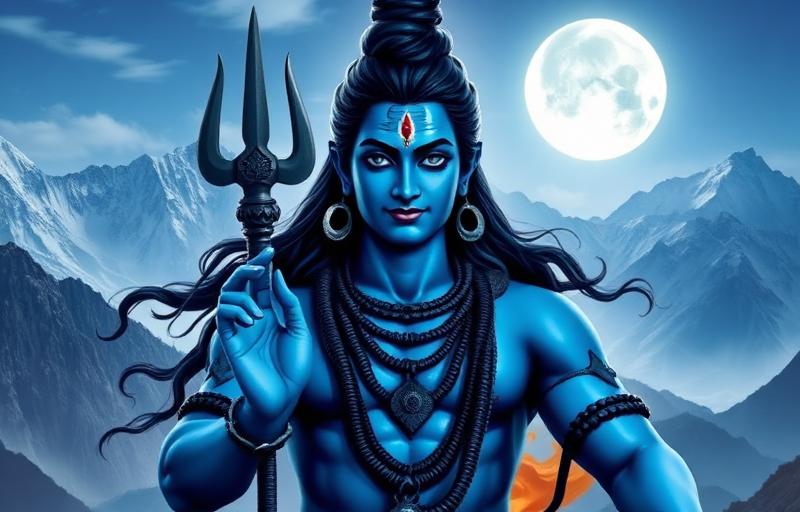
The Shivling split open with a roar of light, and Shiva burst forth in blazing wrath, in the form remembered as Kalantaka or the Kala Samhara murti, the ender of death itself. He struck Yama down, in most tellings with a single blow of his left foot, declaring that none may touch a soul sheltering at his feet. For a moment the cosmos trembled: with Yama lifeless, dying itself stopped, and the devas pleaded for the order of the worlds to be restored. Shiva revived Yama, but on one condition that stands forever: death may never seize a devotee who is absorbed in true surrender to him. The image of Shiva standing over Yama, shielding a sixteen-year-old boy, remains among the most beloved forms in South Indian temples, above all at Thirukkadaiyur, where the episode is said to have taken place.
The Boon of Eternal Youth - Sixteen Forever
Shiva then turned to the boy still clinging to the linga and blessed him in a way that turned the original boon inside out: Markandeya would remain sixteen forever, eternally young, a chiranjivi who would live beyond the dissolution of worlds. The very number that had been his death sentence became his eternal age. Markandeya went on to become one of the great rishis of Hindu tradition. The Markandeya Purana, which contains the revered Devi Mahatmya, carries his name, and the Mahabharata shows him teaching the Pandavas in the forest. One famous Puranic vision describes him witnessing the cosmic deluge, the pralaya, and beholding the infant form of Vishnu on a banyan leaf, a vision granted to him alone because his lifespan now stretched beyond the life of the universe itself. The boy who was given sixteen years outlived time.
The Story's Link to the Maha Mrityunjaya Tradition
Markandeya's katha is woven into the tradition of the Maha Mrityunjaya mantra, the great death-conquering mantra of the Rig Veda: Om Tryambakam Yajamahe. While different texts attribute the mantra's revelation to rishis such as Vasishtha and Markandeya, the devotional tradition widely remembers Markandeya as the one who proved its promise: that taking refuge in Shiva loosens the grip of untimely death, just as a ripe cucumber slips effortlessly from its vine. Many families recite the mantra during illness, before surgeries or on birthdays, consciously invoking the same protection that saved the sixteen-year-old at the Shivling. If you wish to take up the practice itself, its meaning, correct pronunciation and japa method are covered in our detailed Maha Mrityunjaya mantra guide; this katha is the story that gives that practice its heart.
Lessons for Devotees from Markandeya's Story
Markandeya's katha leaves devotees with lessons that reach beyond its drama. 1. Bhakti can rewrite what seems written. The boy's destiny was fixed by a divine boon, yet surrender to Shiva transformed it entirely. No verdict is final before grace. 2. Face fear with worship, not panic. Told he had months to live, Markandeya chose puja over despair. The practice you keep in calm days becomes your shelter on the hardest one. 3. Hold on to the Lord, literally. His embrace of the Shivling is the very picture of sharanagati: total, physical, unconditional refuge. 4. Choose depth over length. His parents preferred one luminous life to a hundred empty ones; live so that quality outweighs duration. 5. A short life lived in devotion outlasts time. The sixteen-year-old became a chiranjivi; what is given to God does not perish.
What People Ask Most
Who was Markandeya rishi?+
Markandeya was the son of sage Mrikandu and Marudvati, born through Shiva's boon with a lifespan of only sixteen years. Through unwavering Shiva bhakti he survived Yama's noose, received the blessing of eternal youth, and became a chiranjivi. The Markandeya Purana, which contains the Devi Mahatmya, carries his name.
Why was Markandeya destined to die at sixteen?+
His childless parents pleased Shiva through austerities, and Shiva offered a choice: a hundred long-lived but dull sons, or one brilliant son who would live only sixteen years. They chose the single luminous child. The short lifespan was thus part of the original boon, which Markandeya's own devotion later transformed.
What happened when Yama came for Markandeya?+
Markandeya embraced the Shivling, and Yama's noose fell around both the boy and the linga. The Shivling split open and Shiva emerged as Kalantaka, striking Yama down and declaring that death may never seize a devotee absorbed in surrender to him. Yama was later revived at the devas' request, and the boy was saved.
What is the Kala Samhara murti of Shiva?+
Kala Samhara murti, also called Kalantaka, is the form Shiva took to strike down Yama and protect Markandeya: the conqueror of time and death itself. This form is especially worshipped at the Amritaghateswarar temple in Thirukkadaiyur, Tamil Nadu, where devotees traditionally celebrate their 60th and 80th birthdays seeking protection from untimely death.
Is Markandeya rishi considered immortal?+
Yes, Markandeya is honored as a chiranjivi, an eternally living sage who remains sixteen forever by Shiva's boon. Puranic tradition describes him surviving the cosmic dissolution and beholding the infant Vishnu on a banyan leaf, and the Mahabharata depicts him teaching the Pandavas, signs of a life stretching across cosmic ages.
How is Markandeya's story connected to the Maha Mrityunjaya mantra?+
Devotional tradition remembers Markandeya as the living proof of the mantra's promise: that refuge in Shiva loosens the grip of untimely death. Many lineages credit him with popularizing the mantra's japa. Families recite Om Tryambakam Yajamahe during illness or danger, invoking the same protection that saved the boy at the Shivling.
About the author
Pandit Ravindra Sharma · Vedic Rituals & Bhakti, 22+ years
Pandit Ravindra is the Vandnaa editorial team's resident specialist on aarti, chalisa, and daily devotion. He has performed home and temple pujas across Varanasi and Delhi for over two decades and contributes the bhakti-focused articles on this site.
Meet the Vandnaa editorial team →