Sati's Marriage to Shiva - A Love Daksha Never Accepted
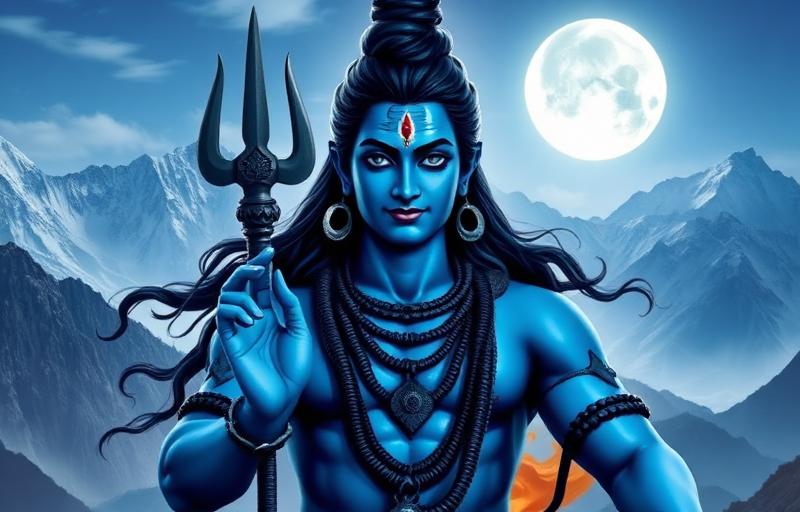
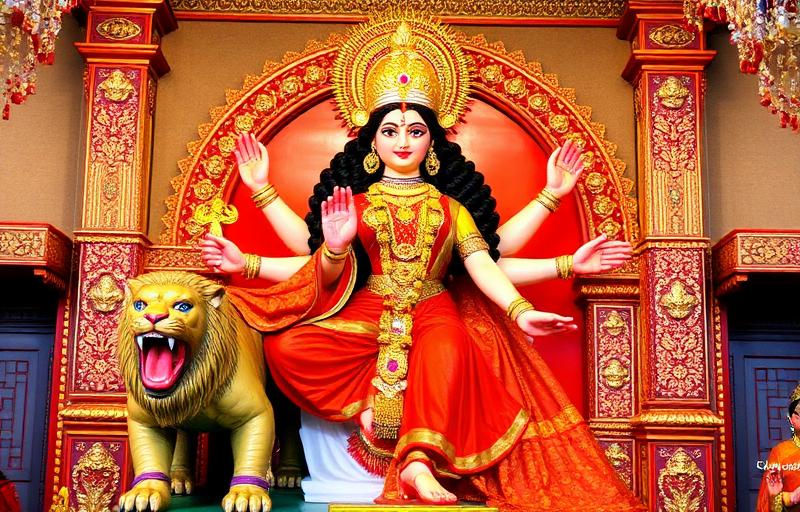
Sati, also called Dakshayani, was the daughter of Daksha Prajapati, a son of Brahma and one of the lords of creation. From childhood she loved Shiva with single-minded devotion, though her father saw the ash-smeared, matted-haired ascetic of Kailash as everything a Prajapati's son-in-law should not be: homeless, unadorned and indifferent to rank. Sati performed intense tapasya to win Shiva as her husband, and Shiva, moved by her love, accepted her. Most Puranic tellings say Daksha consented grudgingly or was effectively bypassed, and the marriage planted a deep resentment in him. The union itself was sublime: the daughter of order and ritual wedded to the lord of dissolution and silence. But Daksha's wounded pride waited for an occasion, and pride that waits for an occasion always finds one.
The Grand Yagna and the Deliberate Insult
The breaking point had come earlier, at an assembly of the gods where every being rose to honor Daksha except Shiva, who remained seated, for the lord of dissolution bows to no created being. Daksha took it as a public humiliation and nursed the wound. In time he organized a colossal sacrifice, the Brihaspati-sava yagna, at Kankhal near Haridwar, inviting every deva, rishi and ancestor, and deliberately excluding Shiva and Sati. No invitation reached Kailash. When word of the celebration reached Sati, her heart leapt; it was her father's house, and a daughter, she felt, needs no invitation. Shiva gently warned her that going uninvited to a place where one's beloved is despised brings only grief. But seeing her heart set on meeting her family, he let her go, escorted by his ganas. The yagna shimmered with wealth, but it was a ritual built upon an insult.
Sati's Self-Immolation - A Devoted Heart's Ultimate Refusal
At the yagna, Sati found no seat reserved for her husband and no share of offerings set aside for him. When she questioned her father, Daksha mocked Shiva before the entire assembly, calling him a dweller of cremation grounds, unworthy of honor. The texts describe Sati's response with awe rather than pity. She declared that a body received from a man who insulted her Lord was no longer worth keeping, and by the power of her own yogic fire she gave up that body in the middle of the assembly. The tradition is careful in how it remembers this moment: it is not despair, but the ultimate refusal of a devoted heart to live amid contempt for the divine. Her renunciation of the body was an act of sovereignty over it, which is why she is honored, never pitied, as Sati, the embodiment of truth.
Virabhadra's Wrath - The Yagna Destroyed and Daksha Humbled

When the news reached Kailash, Shiva's grief turned to cosmic fury. He tore a lock of his matted hair and dashed it upon the mountain, and from it arose Virabhadra, a towering being of storm and flame, with the fierce Bhadrakali rising alongside him in many tellings. Shiva's command was brief: destroy Daksha's yagna. Virabhadra descended on the sacrifice with the ganas like a tempest. The sacrificial fires were scattered, the proud devas who had watched Sati's humiliation in silence were humbled, and Daksha himself was beheaded. Later, when Brahma and the devas pleaded for mercy, Shiva, whose anger never outlives its cause, restored the slain and gave Daksha a goat's head, letting him live with the mark of his pride. The broken yagna was completed only when a rightful share was finally offered to Shiva, restoring what the insult had shattered.
Shiva's Grief - Carrying Sati Across the Worlds
What follows is the most haunting image in Shaiva and Shakta memory: Shiva lifting Sati's body onto his shoulder and wandering across the worlds, refusing to set her down, refusing to be consoled. The tandava of his grief shook creation; the cosmic order itself began to fray, for the lord of dissolution had dissolved into mourning. The devas turned to Vishnu, who did what grief sometimes requires of a friend: with his Sudarshana chakra he gently released the beloved's body, piece by piece, so that the burden on Shiva's shoulder would slowly dissolve and his mind could return. Wherever a part of Sati's body fell upon the earth, the ground itself became holy. Shiva eventually returned to meditation, and Sati was reborn as Parvati, daughter of the Himalaya, who won him again through tapasya, completing a circle of love that death could not end.
The 51 Shakti Peethas - Grief Transformed into Sacred Geography
Each spot where a part of Sati's body fell became a Shakti Peetha, a seat of the Goddess, and tradition counts 51 of them (some lists say 52 or 108), spread across India, Nepal, Bangladesh, Pakistan, Sri Lanka and Tibet. At Kamakhya in Assam, Kalighat in Kolkata, Jwala Devi in Himachal and Hinglaj in Balochistan, the Mother is worshipped in a distinct form, with a Bhairava, a form of Shiva, guarding each seat, for the two are never truly apart. The deeper meaning is luminous: what began as unbearable loss became a map of the Mother's living presence. Pilgrims who visit a Shakti Peetha today do not walk through a tragedy; they walk through a blessing that grief made possible. You can explore each seat, its body part and its presiding Devi in our complete 51 Shakti Peeth guide.
Lessons for Devotees from the Daksha Yagna Story
The Daksha yagna katha holds lessons that remain piercingly relevant. 1. Ritual without humility is an empty shell. Daksha performed the grandest yagna of his age, yet pride hollowed it out. The smallest puja done with reverence outweighs the largest done in ego. 2. Never use sacred occasions to settle scores. Daksha turned a yagna into an instrument of insult, and it consumed everything he had built. 3. Honor the divine in forms you do not understand. Daksha despised Shiva's appearance and missed his divinity. God often arrives unadorned. 4. Grief is sacred and must be witnessed. The tradition does not rush Shiva's mourning; even the Lord was allowed to grieve fully. 5. Loss can become holy ground. The Shakti Peethas teach that what devotion carries through grief is transformed into lasting blessing, for the mourner and for the world.
Quick Answers
Who was Sati and how was she related to Daksha?+
Sati, also called Dakshayani, was the daughter of Daksha Prajapati, a son of Brahma. She loved Shiva from childhood and won him as her husband through tapasya, against her father's wishes. She is revered as the first consort of Shiva and was later reborn as Parvati, daughter of the Himalaya.
Why did Daksha insult Shiva at the yagna?+
Daksha resented Shiva on two counts: the ascetic of Kailash did not fit his idea of a worthy son-in-law, and Shiva had once remained seated when the assembly rose to honor Daksha. Nursing this wounded pride, Daksha organized his grand yagna and deliberately excluded Shiva and Sati, then mocked Shiva openly when Sati questioned him.
Why did Sati give up her body at the yagna?+
When Daksha mocked Shiva before the full assembly, Sati declared that a body received from a man who insulted her Lord was not worth keeping, and she released it through her own yogic fire. The tradition reads this as an act of sovereignty and truth, the ultimate refusal of a devoted heart to live amid contempt for the divine, never as despair.
Who is Virabhadra and what did he do?+
Virabhadra is the mighty being who arose when the grieving Shiva tore a lock of his matted hair and dashed it on the mountain. On Shiva's command he destroyed Daksha's yagna with the ganas, humbled the devas and beheaded Daksha. Shiva later restored Daksha to life with a goat's head, a lasting mark of humbled pride.
How did the 51 Shakti Peethas come into being?+
As the grieving Shiva wandered the worlds carrying Sati's body, Vishnu gently released it piece by piece with his Sudarshana chakra. Wherever a part fell on the earth, that spot became a Shakti Peetha, a seat of the Goddess guarded by a Bhairava. Tradition counts 51 such Peethas, including Kamakhya, Kalighat, Jwala Devi and Hinglaj.
What happened to Sati after the Daksha yagna?+
Sati was reborn as Parvati, the daughter of Himavan, king of the Himalaya. Through intense tapasya she won Shiva as her husband once again, and their union gave the world Kartikeya and Ganesha. The tradition reads her rebirth as proof that true devotion and love outlast death itself.
About the author
Anjali Mehta · Editor, M.A. Religious Studies
Anjali is the managing editor for Vandnaa and oversees the festival and vrat coverage. She holds an M.A. in Religious Studies and reviews every published article for accuracy, accessibility, and tradition-fidelity.
Meet the Vandnaa editorial team →