The Fish
Matsyendranath, also Machhindranath, Minanath and a dozen regional variants, is the founder of the Nath tradition and the teacher of Gorakhnath, who has an entry in this app.
When he lived
Nobody knows.
The range given runs from the eighth century to the tenth, the texts attributed to him are hard to date, and the traditions that claim him place him differently.
And this app is going to say that plainly at the start, because the Nath material is where dates go to disappear: the tradition operates on the assumption that its founders are still alive somewhere, which does not help.
The name
Matsya is a fish. Indra is a lord.
The lord of fishes.
And the story explains it.
What the story says
Shiva was teaching Parvati.
On a seashore, or on an island, and what he was teaching her was the whole thing: the complete yoga, given privately, to her alone, because it was not for general distribution.
And she fell asleep.
Which the accounts are direct about, and which is the funniest thing in the story: the supreme teaching is being given, in person, and the recipient nods off.
And a fish in the water heard it all.
Or, in the version more often told, a man inside a fish: swallowed, alive, in the belly, in the right place at the right moment.
And Shiva noticed, and initiated him rather than punishing him.
Which is the part worth noticing. The teaching had been stolen, by accident, by somebody with no qualification whatever, and the response is not to take it back.
What the story is doing
Three things.
One. Establishing the lineage. The Naths claim their yoga comes directly from Shiva, not through a scriptural tradition, and this is how it gets from him to a human being.
Two. Making the transmission an accident. Matsyendra did not qualify, was not selected, and did not seek it. He was in the water.
Three. And the sleeper. The person who was supposed to receive it did not stay awake, and the person who was not supposed to receive it did, and this is a tradition of yogis making a point about attention.
Whether any of it happened
Obviously not as described, and the tradition is not asking anybody to think otherwise in the way a historical claim would be.
What it is doing is telling you where the Naths think their material came from and what kind of thing they think it is: not a text, not an argument, and not something that can be earned.
What he is credited with writing
The Kaulajnananirnaya, a Sanskrit text recovered from Nepal, which is one of the earliest surviving Kaula works, and the Akulaviratantra.
And they place him at the origin of a whole tradition of practice, which is the subject of the next section, and which has to be handled carefully.
Kaula, and What to Say About Tantra
This has to be handled directly, because the word is misused more than almost any other in this field.
What Kaula is
A stream within the tantric traditions, and Matsyendranath is placed at the head of one of its branches, the Yogini Kaula.
Its characteristics, stated technically:
- Initiation is required and the material is not given without it
- The body is the instrument, not an obstacle, which is the general tantric position and the great difference from renunciant systems
- The feminine is primary: the yoginis and the shaktis are not auxiliary figures, and in the Kaula texts they are the source
- Ritual is elaborate and the texts are technical manuals rather than devotional literature
- And there is transgressive material
The transgressive material, stated plainly
Some Kaula and tantric texts prescribe practices involving substances and acts that ordinary religious observance prohibits, including intoxicants, non vegetarian food and sexual ritual. The traditional shorthand is the pancha makara, the five things beginning with the letter ma.
And this app is going to say four things about it.
One. It is in the texts. Pretending otherwise is not honest, and the scholarly literature on this is extensive.
Two. It was for initiates, under conditions, in a framework. Not a licence, not a recreation, and not available on request. The texts that contain it also contain elaborate restrictions on who receives it and under what preparation.
Three. Most living traditions read it symbolically, and have for centuries. The samayachara streams treat the five substances as internal: the wine is a particular state, the union is a particular internal event, and no external act is involved. This is not a modern embarrassment, it is an old position within the traditions themselves.
Four. And none of it has anything to do with what is currently sold as tantra.
The warning, and it is the practical part of this entry
If somebody tells you that a tantric practice requires you to have sex with them, they are committing sexual assault and using religion to do it.
There is no exception to this. Not for a famous teacher, not for a lineage holder, not for somebody with a following, not for somebody who has been kind to you, and not for somebody who says you will not understand.
And the other patterns:
- Money. Tantric remedies, tantric protection, tantric removal of obstacles, priced
- Fear. You have been cursed, somebody has done something to you, only this person can undo it
- Isolation. Do not tell your family, they will not understand
- Escalating demands. Each one slightly beyond the last
All of these are the standard shape of coercive control and they are used with tantric vocabulary because the vocabulary is unfamiliar enough to be intimidating.
What to do: Police 112. Women's helpline 181. Childline 1098. Tele MANAS 14416. And tell somebody.
What the tradition itself says
That the practices are dangerous and that the danger is the reason for the restrictions, which is a position an honest reading has to include: the texts are not casual about this and they do not present it as freely available.
And that the guru is responsible. In every tantric system the teacher who transmits improperly bears the consequence, which is a structural safeguard, and its complete failure in practice in a great many modern cases is the reason this section exists.
Where the Nath tradition went
Away from the transgressive material, largely.
Gorakhnath, Matsyendranath's own disciple, is associated with a reform: the hatha yoga tradition, the emphasis on physical discipline, celibacy, and the internal work.
And the Nath orders as they exist are ascetic orders, not Kaula ritual lineages, and the Gorakhnath Math at Gorakhpur and the Nath akharas run on renunciant lines.
Which is a real historical development within one lineage, from the founder to his own student, and it is worth knowing that the tradition made that turn itself.
Kadali, and the Line Everybody Knows
The most told Nath story.
What happens
Matsyendranath went to Kadali, described in the accounts as a plantain forest, an island, or a kingdom.
And it was a kingdom of women.
And he stayed.
The accounts describe him settling there, being made king or consort, having children, and forgetting entirely what he had been doing: the practice stopped, the discipline went, and years passed.
And Gorakhnath came to get him.
How he did it
He could not get in as a man, so he went in disguised as a woman, as a dancer and drummer, and performed.
And in the middle of the performance he sang a line.
Jaag Machhindra, Gorakh aaya.
Wake up, Matsyendra. Gorakh has come.
And Matsyendranath heard it, and came back to himself, and left.
Why the line survived
Because it works outside the story.
In Marathi and in Hindi it is proverbial. You say it to somebody who has been asleep at something for a long time, and everybody knows what it means, and it is used with affection rather than as an insult.
And what makes it good is the structure.
The student has come for the teacher.
Not the other way round. The founder of the tradition is the one who got lost, and the man he taught is the one who had to come and find him, in disguise, and say his name out loud in a room full of people who did not know who either of them were.
And there is no reproach in the line. It is not what did you think you were doing. It is: wake up, I am here.
The part that has to be said about this story
Its shape is misogynistic and this app is going to name that.
A land of women as the thing that destroys a practitioner is a standard trope in renunciant literature across traditions, and it appears in Buddhist, Jain and Christian ascetic writing as well as here.
And what is wrong with it is the location of the problem.
The story places the danger in the women.
And the danger, on the tradition's own analysis, is in the practitioner. Matsyendranath's attachment is Matsyendranath's, the practice he stopped was his to keep, and the women in Kadali did not do anything to him except exist and be pleasant to be around.
Which the Nath material itself half knows, because Gorakhnath's line is addressed to his teacher and not to them.
And the general form of the problem, which this series has met in the Pattinathar entry and elsewhere: renunciant literature was written by men for men, so women appear in it as the object rather than as practitioners, and the cumulative effect across every tradition that produced it was to make women a category of hazard.
Which is not devotion, and a reader who meets it should recognise the convention and set it down.
And there is a version of the story that survives the correction.
Somebody who was doing something serious stopped, comfortably, for years, without deciding to, and did not notice.
And somebody who cared about him came and said his name.
Which happens, and does not require an island.
Nepal, and the Chariot Two Communities Pull
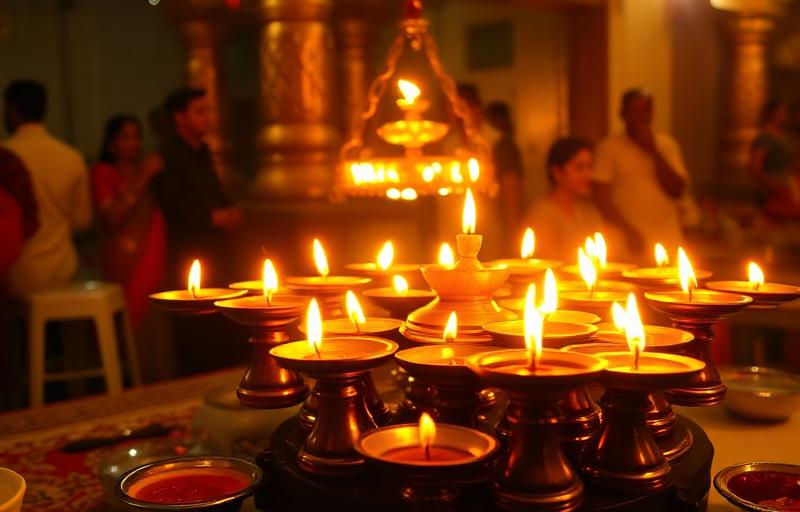
The best thing in this entry and it is a living festival.
In the Kathmandu valley, Matsyendranath is a rain god.
Two of him
Rato Machhindranath, the red one, at Bungamati and Patan, and locally Bunga Dyah.
Seto Machhindranath, the white one, at Kathmandu, at Jan Bahal.
What he does
Brings the rain.
The Kathmandu valley depends on the monsoon, and the deity's festival is timed to it: the chariot goes out before the rains and its progress is watched for what it says about the season.
And that is not decorative. In a valley agriculture that depends on the monsoon arriving, a festival that concentrates the community's attention on the rain in the weeks before it comes is doing something a community needs done.
The Jatra
The Rato Machhindranath Jatra is one of the longest chariot festivals in the world.
It runs for weeks, sometimes over a month, and it is not a procession on a fixed route in an afternoon.
The chariot is enormous, built fresh each year from wood and bamboo and vine, with a tower of greenery on top that can be over ten metres high, and it is pulled by hand through the streets of Patan in stages.
And the streets are not built for it, so the chariot hits things, gets stuck, breaks, is repaired, and moves again, and the whole thing takes as long as it takes.
The festival ends with the Bhoto Jatra, the showing of the vest: a jewelled waistcoat is displayed to the crowd from the chariot, in a ceremony connected to an old dispute about its ownership, and the head of state attends.
And now the part that matters most
Hindus and Buddhists worship the same deity, together, in the same festival.
The Newar Buddhists identify Bunga Dyah with Avalokiteshvara, the bodhisattva of compassion, called Karunamaya, the merciful one.
The Hindus identify him with Matsyendranath.
And it is not a compromise, a coexistence arrangement or a modern gesture of harmony. It is the ordinary situation, of long standing, in which the priests of both communities have roles, both sets of texts are used, and everybody pulls the same rope.
Why this app puts it here
Because this series has spent a great many entries recording exactly the opposite.
Communities excluding each other from temples, arguing about honours, litigating over administration, and producing hostile literature about each other's founders.
And in Patan, twice a year, a Buddhist community and a Hindu community pull a chariot down the same street for a deity they call by different names and describe with different doctrines and agree is the same.
They do not resolve the difference. The Buddhists do not become Hindus for the afternoon and the Hindus do not adopt the bodhisattva doctrine.
They pull the chariot.
Which is a model of something, and it is worth having available, and it has been running for well over a thousand years.
The other Nepal connection
The Kaulajnananirnaya survived in Nepal.
Which is not a coincidence. A very large proportion of the surviving early tantric manuscript material in Sanskrit is preserved in Nepal, because the valley's manuscript culture kept copying and the climate and the political history let the copies survive.
And a great deal of what is known about early Shaiva and Kaula tantra comes from Nepalese manuscripts, catalogued in the twentieth century, which is why the scholarly recovery of these traditions is recent.
Where to go
- Patan and Bungamati, Nepal, for Rato Machhindranath and the Jatra, usually April to May
- Jan Bahal, Kathmandu, for Seto Machhindranath
- Gorakhpur, Uttar Pradesh, for the Gorakhnath Math
- Kadri, Mangaluru, Karnataka, the Manjunath temple with its long Nath association
- Trimbakeshwar, Nashik, where the Nath and Varkari lines meet, which is the subject of a later entry in this batch
The Short Version
Who: Matsyendranath, also Machhindranath and Minanath, founder of the Nath tradition and teacher of Gorakhnath. His dates are genuinely unknown, with estimates running from the eighth century to the tenth, and this app says so at the start because the Nath material is where dates disappear.
The name and the story: matsya is a fish and indra a lord, so lord of fishes. Shiva was teaching Parvati the complete yoga privately, and she fell asleep, and a fish in the water, or a man inside a fish, heard all of it. Shiva noticed and initiated him rather than taking it back. The story establishes that the Naths claim their yoga directly from Shiva rather than through a scriptural tradition, that the transmission was an accident rather than something earned, and, in a tradition of yogis, that the person who was supposed to receive it did not stay awake.
Kaula: he is placed at the head of the Yogini Kaula branch of the tantric traditions and credited with the Kaulajnananirnaya, one of the earliest surviving Kaula texts, recovered from Nepal. On the transgressive material this app says four things: it is in the texts and pretending otherwise is not honest; it was for initiates under conditions in a framework, with elaborate restrictions on who received it; most living traditions read it symbolically and have for centuries, which is an old position rather than a modern embarrassment; and none of it has anything to do with what is sold as tantra now. If somebody says a tantric practice requires sex with them, that is sexual assault using religion, with no exceptions. The other patterns are money, fear of a curse only they can undo, isolation from family, and escalating demands. Police 112, women's helpline 181, Childline 1098, Tele MANAS 14416.
Kadali: he went to a kingdom of women and stayed, forgetting the practice entirely for years, and Gorakhnath came disguised as a woman performer and sang jaag Machhindra, Gorakh aaya, wake up Matsyendra, Gorakh has come. The line is proverbial in Marathi and Hindi, said with affection to somebody who has been asleep at something. What makes it good is that the student came for the teacher, and that there is no reproach in it: not what did you think you were doing, but wake up, I am here. The story's shape is misogynistic, placing the danger in the women when the tradition's own analysis places it in the practitioner, and it is a standard trope of renunciant literature written by men for men. The version that survives the correction is that somebody doing something serious stopped comfortably for years without noticing, and somebody who cared came and said his name.
Nepal: in the Kathmandu valley he is a rain god, as Rato Machhindranath at Bungamati and Patan and Seto Machhindranath at Kathmandu. The Rato Machhindranath Jatra is one of the longest chariot festivals in the world, running for weeks, with an enormous chariot built fresh each year and pulled by hand through streets not built for it, ending with the Bhoto Jatra. And Newar Buddhists identify the deity with Avalokiteshvara, called Karunamaya, while Hindus identify him with Matsyendranath, and both communities' priests have roles and everybody pulls the same rope. They do not resolve the difference; they pull the chariot.
Reader Questions Answered
Who was Matsyendranath?+
The founder of the Nath tradition and the teacher of Gorakhnath, also called Machhindranath and Minanath. His dates are genuinely unknown, with estimates running from the eighth to the tenth century. He is credited with the Kaulajnananirnaya, one of the earliest surviving Kaula texts, recovered from Nepal, and with the Akulaviratantra, and he is placed at the head of the Yogini Kaula branch of the tantric traditions. In the Kathmandu valley he is worshipped as a rain deity by Hindus and, as Avalokiteshvara or Karunamaya, by Newar Buddhists, in the same festival.
What is the story of the fish?+
Shiva was teaching Parvati the complete yoga privately, on a seashore or an island, because it was not for general distribution, and she fell asleep. A fish in the water, or in the more usual version a man inside a fish, heard all of it. Shiva noticed and initiated him rather than taking it back. The story does three things: it establishes that the Naths claim their yoga directly from Shiva rather than through a scriptural tradition; it makes the transmission an accident, since Matsyendra did not qualify, was not selected and did not seek it; and, in a tradition of yogis, it makes the point that the person who was supposed to receive the teaching did not stay awake and the person who was not supposed to receive it did.
Is tantra dangerous?+
What is currently sold as tantra is dangerous, and this app is direct about it. If somebody tells you that a tantric practice requires you to have sex with them, they are committing sexual assault and using religion to do it, with no exception for a famous teacher, a lineage holder, somebody with a following, somebody who has been kind to you, or somebody who says you will not understand. The other patterns are money for tantric remedies and protection, fear that you have been cursed and only this person can undo it, isolation from your family who will not understand, and escalating demands each slightly beyond the last, which are the standard shape of coercive control dressed in unfamiliar vocabulary. Police 112, women's helpline 181, Childline 1098, Tele MANAS 14416, and tell somebody. On the classical material: transgressive practices are in the Kaula texts, they were for initiates under elaborate restrictions, most living traditions read them symbolically and have for centuries, and the texts themselves say the practices are dangerous and make the guru responsible.
What does jaag Machhindra Gorakh aaya mean?+
Wake up, Matsyendra, Gorakh has come. In the story Matsyendranath went to Kadali, a kingdom of women, and stayed, forgetting his practice entirely for years, and Gorakhnath came disguised as a woman performer and sang the line in the middle of the performance, and Matsyendranath came back to himself and left. The line is proverbial in Marathi and Hindi, said with affection to somebody who has been asleep at something for a long time. What makes it good is the structure: the student came for the teacher rather than the other way round, the founder of the tradition is the one who got lost, and there is no reproach in the line. It is not what did you think you were doing; it is wake up, I am here.
What is wrong with the Kadali story?+
Its shape is misogynistic and this app names that. A land of women as the thing that destroys a practitioner is a standard trope in renunciant literature across traditions, appearing in Buddhist, Jain and Christian ascetic writing as well as here, and what is wrong with it is where it puts the problem. The story places the danger in the women, and the danger, on the tradition's own analysis, is in the practitioner: Matsyendranath's attachment is his, the practice he stopped was his to keep, and the women in Kadali did nothing to him except exist and be pleasant to be around. The Nath material half knows this, since Gorakhnath's line is addressed to his teacher and not to them. The general form of the problem is that renunciant literature was written by men for men, so women appear in it as the object rather than as practitioners, and the cumulative effect was to make women a category of hazard. The version of the story that survives the correction is that somebody doing something serious stopped comfortably for years without noticing, and somebody who cared came and said his name.
Why do Hindus and Buddhists worship Machhindranath together in Nepal?+
Because in the Kathmandu valley the same deity is identified differently by each community and both identifications stand. The Newar Buddhists identify Bunga Dyah with Avalokiteshvara, the bodhisattva of compassion, called Karunamaya, the merciful one, and the Hindus identify him with Matsyendranath. It is not a compromise, a coexistence arrangement or a modern gesture of harmony but the ordinary situation of long standing, in which the priests of both communities have roles, both sets of texts are used, and everybody pulls the same rope. The Rato Machhindranath Jatra at Patan and Bungamati is one of the longest chariot festivals in the world, running for weeks, with an enormous chariot built fresh each year and pulled by hand through streets not built for it. They do not resolve the difference: the Buddhists do not become Hindus for the afternoon and the Hindus do not adopt the bodhisattva doctrine. They pull the chariot.
About the author
Pandit Ravindra Sharma · Vedic Rituals & Bhakti, 22+ years
Pandit Ravindra is the Vandnaa editorial team's resident specialist on aarti, chalisa, and daily devotion. He has performed home and temple pujas across Varanasi and Delhi for over two decades and contributes the bhakti-focused articles on this site.
Meet the Vandnaa editorial team →