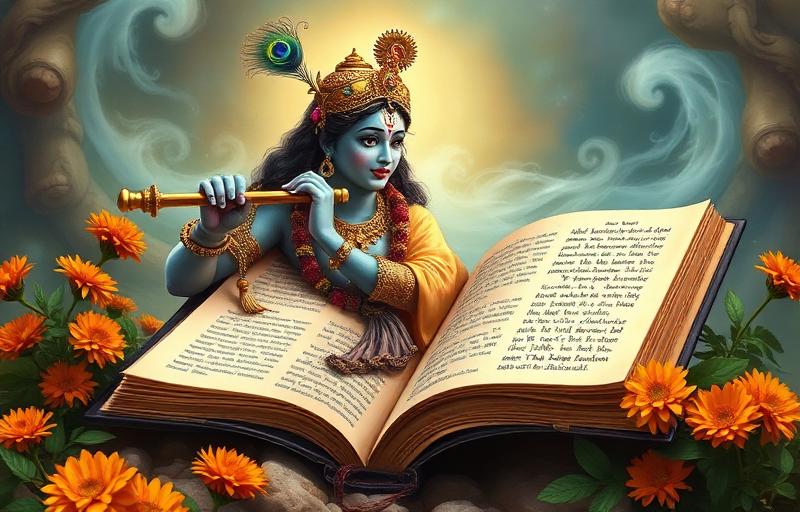
What Is Maya?
Maya is often translated as illusion, but it means something more subtle. It is the mysterious power that makes the one infinite reality (Brahman) appear as the many - the countless names, forms and changes of the world we experience.
Maya is not that the world does not exist at all. Rather, it is that we mistake the changing, temporary world for the ultimate, unchanging truth. We take the wave to be the whole ocean, the ornament to be more real than the gold it is made of.
The classic image is a rope mistaken for a snake in dim light. The snake was never truly there - only the rope. When light comes, the snake vanishes. In the same way, when knowledge dawns, the false sense of separateness dissolves and only Brahman remains.
Maya in the Scriptures
The idea of maya runs deep through Hindu scripture, developed most fully in the Advaita Vedanta tradition of Adi Shankaracharya.
In the Bhagavad Gita, Krishna says:
'Daivi hyesha gunamayi mama maya duratyaya' - 'This divine maya of mine, made of the three gunas, is hard to cross over; but those who take refuge in Me alone cross beyond it' (Gita 7.14).
The Upanishads contain the timeless prayer:
'Asato ma sad gamaya, tamaso ma jyotir gamaya, mrityor ma amritam gamaya' - 'Lead me from the unreal to the real, from darkness to light, from death to immortality' (Brihadaranyaka Upanishad).
Here maya is the unreal, the darkness, the death-bound world of appearances; and the goal is to move through it to the real, the light, the deathless Brahman.
How Maya Veils the Truth
Maya is said to work through two powers:
- Avarana (the veiling power) - it covers the truth, hiding the one Brahman from our sight, like a cloud hiding the sun.
- Vikshepa (the projecting power) - it projects the appearance of the many, throwing up the endless world of names and forms in place of the hidden reality.
Maya is also tied to the three gunas - sattva (clarity), rajas (activity) and tamas (inertia) - whose constant interplay weaves the changing world. Caught in maya, we identify with the body and mind, chase fleeting pleasures, and forget our true nature as the Atman.
Importantly, maya is neither fully real nor totally unreal - it is mithya, dependent on Brahman the way a dream depends on the dreamer. It has no independent existence of its own.
Seeing Beyond Maya in Daily Life

Understanding maya is not a call to neglect the world but to hold it lightly and see it clearly:
- Don't cling - knowing that wealth, status and even the body are passing, we enjoy them with gratitude but without desperate attachment.
- Look for the unchanging - amid changing experiences, turn the mind to the one Self that is always present and aware.
- Practise devotion - the Gita's answer is refuge in God: those who surrender to the Divine cross beyond maya (Gita 7.14).
- Cultivate discernment (viveka) - learn to distinguish the eternal (real) from the temporary (appearance), like separating gold from the ornament.
The goal is not to escape life but to live it awake - to walk through the play of maya knowing the one Reality that shines behind every form. As the wise say, the world is real as Brahman, illusory only when mistaken for the whole truth.
Frequently Asked Questions
What does maya mean in Hinduism?+
Maya is the cosmic power of illusion that makes the one infinite reality (Brahman) appear as the many changing names and forms of the world. It is the veil that makes us mistake the temporary world for the ultimate, unchanging truth.
Does maya mean the world is not real?+
Not exactly. The world is not nonexistent; it is mithya - neither fully real nor totally unreal, dependent on Brahman like a dream on the dreamer. The error of maya is mistaking the changing world for the ultimate reality, not the world appearing at all.
What is the rope and snake example of maya?+
In dim light a rope can be mistaken for a snake, causing real fear, though the snake was never there. When light comes, the snake vanishes and only the rope remains. Likewise, maya makes us see separateness where only Brahman exists; with knowledge, the illusion dissolves.
How can one go beyond maya?+
The Gita teaches that those who take refuge in God cross beyond maya (Gita 7.14). The path includes devotion, discernment (viveka) to distinguish the eternal from the temporary, non-attachment, and self-knowledge that reveals the one Reality behind every form.
About the author
Anjali Mehta · Editor, M.A. Religious Studies
Anjali is the managing editor for Vandnaa and oversees the festival and vrat coverage. She holds an M.A. in Religious Studies and reviews every published article for accuracy, accessibility, and tradition-fidelity.
Meet the Vandnaa editorial team →