Who Was Meerabai - The Princess Who Belonged to Krishna
Meerabai (around 1498 to 1547 CE) was born into the royal Rathore family of Merta in Rajasthan, a granddaughter of Rao Duda and a descendant of Rao Jodha, the founder of Jodhpur. Yet history remembers her not as a princess but as the most beloved woman saint of the bhakti movement, a soul who belonged completely to Lord Krishna. From childhood to her last breath, Meera knew only one relationship: Krishna as Giridhar Gopal, the lifter of Govardhan hill, was her husband, her master and her everything. Her bhajans are still sung in homes and temples nearly five hundred years later, and her life remains the great example of ananya bhakti - single-pointed devotion that no palace comfort, no family pressure and no royal threat could shake. To understand Meera is to understand what it means to love God without conditions.
The Giridhar Gopal Murti - How Krishna Entered Meera's Childhood
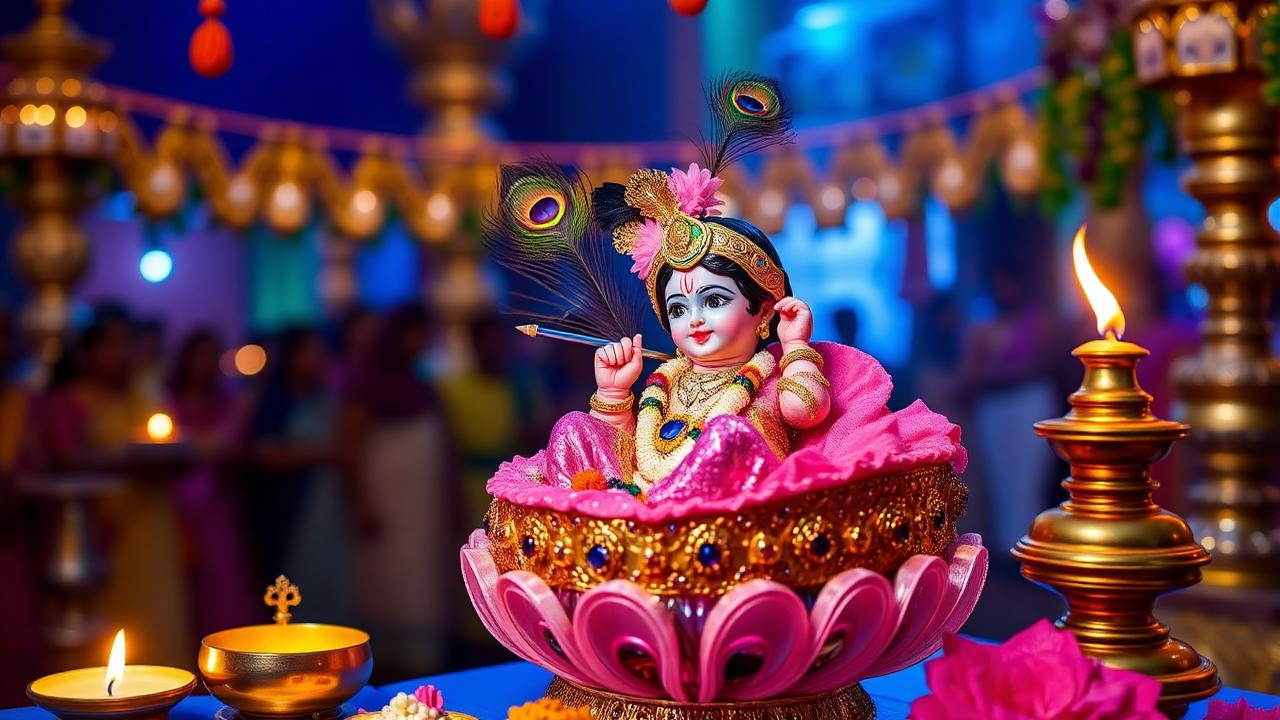
Tradition tells that when Meera was a small girl, a wandering sadhu came to Merta carrying a beautiful murti of Giridhar Gopal. Little Meera was so captivated that she could neither eat nor sleep without it. The sadhu first refused to part with his deity, but devotees believe Krishna himself appeared in the sadhu's dream and told him the murti belonged with Meera. From that day, the murti was her constant companion - she bathed it, dressed it, fed it and spoke to it as a living presence. Another cherished episode completes the picture. Watching a wedding procession pass below the palace, the child asked her mother, 'Who will be my bridegroom?' Her mother, half in play, pointed to the murti: 'Krishna is your bridegroom.' For her mother it was a passing word; for Meera it became a vow for life.
Marriage, Widowhood and the Poison Cup - Persecution in Mewar
Around 1516, Meera was married to Bhoj Raj, crown prince of Mewar and son of the great Rana Sanga. She performed her duties, but her heart was already given. When asked to bow before the family goddess, she gently refused, saying her head would bow only to Giridhar Gopal. After Bhoj Raj's early death, Meera refused the customs expected of a royal widow and spent her days singing among sadhus and devotees - behavior the court saw as scandal. Tradition tells that the new Rana sent her a cup of poison, presented as charanamrit. Meera drank it smiling, offering it first to her Lord, and devotees believe it turned to nectar in her throat. A basket of flowers concealing a venomous snake was sent next; when she opened it, she found a shaligram. Tradition holds that Giridhar absorbed every attack aimed at his devotee.
Mere To Giridhar Gopal - Meera's Bhajans and Their Meaning
Meera's bhajans, composed in a sweet blend of Rajasthani and Braj, are her real biography. Her most famous declaration:
मेरे तो गिरधर गोपाल, दूसरो न कोई। जाके सिर मोर मुकुट, मेरो पति सोई॥
Mere to Giridhar Gopal, doosro na koi; jaake sir mor mukut, mero pati soi.
'Mine is Giridhar Gopal and no one else; he whose head bears the peacock crown alone is my husband.' One couplet, and her entire renunciation is explained. Equally beloved is:
पायोजी मैंने राम रतन धन पायो।
Payoji maine Ram ratan dhan payo.
'I have found the treasure of the jewel of the divine Name.' She sings that this wealth no thief can steal and it only grows when spent - the opposite of every worldly treasure. From Gandhi ji's prayer meetings to today's devotional playlists, these lines have never stopped being sung.
Leaving the Palace - Vrindavan and Dwarka
When persecution made palace life impossible, Meera simply walked away from Mewar's riches with her murti and her ektara. The princess became a pilgrim, traveling first to Merta and then to Vrindavan, the land of Krishna's leela. A famous episode from this period: the great scholar Jiva Goswami declined to meet her, saying he did not see women. Meera sent back her reply: she had believed there was only one purusha - one true male - in Vrindavan, Krishna himself, and that before him everyone else was a gopi. Tradition tells the scholar came out barefoot to welcome her, humbled by a sentence. In her final years, Meera settled in Dwarka, spending her days in the service of Ranchhodji, singing, dancing and waiting upon the Lord who had been her bridegroom since childhood.
Merging with the Murti - How Tradition Tells Meera's Final Day
Around 1547, tradition tells, Mewar was suffering misfortunes that many attributed to the mistreatment of the saint. Emissaries were sent to Dwarka to bring Meera back with honor. She asked for one last night alone in the temple of Ranchhodji. All night her voice rose in bhajan; when the doors were opened at dawn, devotees believe, Meera was nowhere to be found - only her sari lay draped over the murti of her Lord. Tradition holds that she merged into Krishna, the bride finally home with her bridegroom. Whatever a historian may conclude, the devotional heart of India has always understood this ending perfectly: a love that complete does not die, it simply disappears into its beloved. No samadhi or grave of Meera exists; her bhajans are her living shrine.
Lessons from Meerabai for Today's Devotee

Meera's life offers lessons that feel startlingly current. 1. Single-pointedness: she chose one form, one Name, one relationship and never wavered. In an age of scattered attention, ananya bhakti is her first gift to us. 2. Devotion needs no permission: family, society and power all said no; Meera's love did not ask. Your relationship with God is yours alone. 3. Bhakti is a relationship, not a ritual: Meera did not merely worship Krishna, she lived with him - talking, complaining, celebrating. Try speaking to your ishta as naturally as she did. 4. Fearlessness flows from love: she drank the poison cup because she trusted completely. Most of our fears shrink when devotion grows. 5. Sing: Meera's path was bhajan. Even ten minutes of singing or japa daily, done with her spirit, can change the texture of an ordinary day.
Common Questions From Devotees
Who was Meerabai?+
Meerabai (around 1498 to 1547 CE) was a Rajput princess of Merta in Rajasthan who became one of the greatest woman saints of the bhakti movement. Married into the royal family of Mewar, she regarded Lord Krishna as her true husband from childhood and composed bhajans of intense devotion that are still sung across India today.
Why is Krishna called Meerabai's husband?+
Tradition tells that as a child, Meera asked her mother who her bridegroom would be, and her mother pointed to the murti of Giridhar Gopal, saying Krishna was her bridegroom. Meera took those words as a lifelong vow. Her famous line 'jaake sir mor mukut, mero pati soi' declares that he who wears the peacock crown is her only husband.
What is the meaning of 'Mere to Giridhar Gopal'?+
The bhajan means: 'Mine is only Giridhar Gopal (Krishna, lifter of Govardhan) and no one else; he whose head bears the peacock crown is my husband.' In one couplet Meera renounces every worldly relationship and claim, declaring that her entire identity rests in Krishna alone. It is the essence of her single-pointed bhakti.
Did Meerabai really drink poison?+
The poison cup is one of the most cherished episodes of Meera's story as tradition tells it. The Rana of Mewar, angered by her public devotion, sent her poison disguised as charanamrit. Meera offered it to her Lord and drank it, and devotees believe it turned to nectar. The episode is remembered as proof that Krishna protects a devotee who has surrendered completely.
Who was Meerabai's guru?+
Devotional tradition widely regards Sant Ravidas (Raidas), the cobbler saint of Varanasi, as Meerabai's guru. Verses attributed to Meera lovingly mention 'Guru Raidas' as the one who gave her the medicine of divine knowledge. The bond between the princess and the humble saint is itself a beautiful teaching that bhakti recognizes no distinctions of birth.
What happened to Meerabai at the end of her life?+
Tradition tells that around 1547, when emissaries from Mewar came to Dwarka to bring her back, Meera spent a final night singing in the temple of Ranchhodji. At dawn she was nowhere to be found; only her sari lay draped over the murti. Devotees believe she merged into Krishna himself. No samadhi of Meera exists, and her bhajans are considered her living memorial.
About the author
Acharya Vinaya Kapoor · M.A. Sanskrit, Mantra & Stotra Studies
Acharya Vinaya holds an M.A. in Sanskrit from Banaras Hindu University and writes the mantra and stotra commentary on Vandnaa. Her focus is on accurate pronunciation, traditional context, and helping modern readers connect with classical texts.
Meet the Vandnaa editorial team →