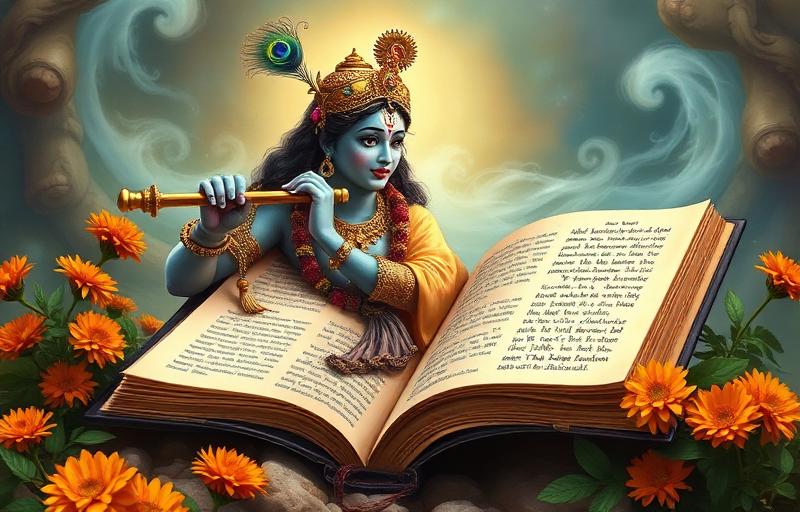
The Village on the Hill
Nandgaon stands on a low hill in Mathura district, about fifty kilometres from Mathura and a short distance from Barsana, and it is held in tradition to be the village of Nand Baba, the chief of the cowherds and Krishna's foster father.
What is there:
- Nand Bhavan, the temple on the hilltop, the principal shrine, held to be the site of Nand Baba's house
- Murtis of Nand Baba, Yashoda, Krishna and Balarama together, which is the distinctive darshan here
- Kunds around the village, including Pavan Sarovar, associated with the Krishna narrative
- A steep approach up the hill, with steps, which is part of the visit
- The village itself, small, with the ordinary life of a Braj settlement
The Braj narrative places the family here after their move from Gokul. The village of Nandgaon and the village of Barsana, held to be Radha's, sit within sight of each other across a few kilometres of Braj countryside, and the relationship between the two villages is the frame for a great deal of what happens in the region's devotional life.
What makes Nandgaon distinctive is that the darshan is of a household, not of a deity alone.
Nand Baba as a Deity
It is worth pausing on the fact that a foster father is worshipped at all.
Who Nand Baba is in the tradition:
- The chief of the cowherds of Braj, a man of standing and responsibility in his community
- Krishna's foster father, who raised him after the child was brought from Mathura on the night of his birth
- Husband of Yashoda, and the household in which the entire Krishna childhood narrative takes place
- A figure defined by vatsalya, parental affection, which is one of the recognised bhavas of devotional relationship
What his worship establishes is significant. In the theology of Braj, the relationships around Krishna are themselves objects of devotion. A devotee may approach Krishna as a servant, a friend, a parent or a beloved, and each of these is modelled by a figure in the narrative.
- Nand and Yashoda model the parental bhava
- Sudama and the cowherd boys model friendship
- Radha and the gopis model the bhava of the beloved
- Hanuman, in the Rama tradition, models the servant
So when a devotee takes darshan at Nand Bhavan, what is being honoured is not only Krishna but the household that raised him, and the particular love of a parent for a child who is not biologically theirs.
That is an unusual thing for a tradition to enshrine, and Braj enshrines it on a hilltop with its own temple.
Lathmar Holi Between Two Villages
The most famous thing that happens in Nandgaon happens partly in Barsana, and the two villages play it together.
How Lathmar Holi works:
- On the first day, the men of Nandgaon walk to Barsana
- They arrive at the Radha Rani temple and its precincts, singing and provoking with samaj gayan
- The women of Barsana meet them with lathis, long staves, and drive them back
- The men carry shields and are expected to defend themselves without striking back
- On the following day, the men of Barsana come to Nandgaon, and the women of Nandgaon return the treatment
What is being enacted is the relationship between Krishna's village and Radha's, played out as a contest between the men of one and the women of the other, with the roles reversed the next day.
The atmosphere is loud, physical and enormously crowded, with visitors now arriving from across India and abroad. Colour is thrown continuously, drums do not stop, and the play runs for hours.
It is worth understanding that this is not a performance staged for visitors. It is played by the families of two villages who have played it against each other for generations, and the visitors are simply present.
Dates fall in Falgun, in the days leading up to Holi, and the Braj sequence continues afterwards through Vrindavan, Mathura and Baldeo.
Darshan at Nand Bhavan
Worship at Nandgaon has the character of visiting a home rather than approaching a shrine.
What happens:
- Darshan of the family group, with Nand Baba and Yashoda alongside Krishna and Balarama
- Offerings of sweets, particularly peda and makhan mishri, which are the Braj offerings to Krishna
- Samaj gayan, the Braj tradition of devotional singing, performed in the temple
- Aarti at fixed times, with the temple busiest in the morning and evening
- Parikrama of the hill and the village, done by devotees as part of the Braj yatra
The Braj chaurasi kos yatra, the eighty four kos circuit of Braj, includes Nandgaon as one of its principal stations, and pilgrims doing the full circuit arrive here in the course of it.
The kunds around the village, including Pavan Sarovar, are visited and have their own associations in the Krishna narrative.
A note on the climb. Nand Bhavan sits at the top of the hill, and the approach is by steps. It is not long but it is steep in places, and in summer it should be done early in the day. Palanquins are usually available for those who need them.
The Villages of Braj
Nandgaon makes most sense as part of the set of Braj villages, each of which holds a specific piece of the narrative.
The principal ones:
- Mathura, the birthplace, and the city of Kamsa
- Gokul and Mahavan, where the infant was taken and raised first
- Nandgaon, the village of Nand Baba, where the family moved
- Barsana, held to be Radha's village
- Vrindavan, the forest of the ras and the great Vaishnava temples
- Govardhan, the hill lifted on a finger, with its parikrama
- Baldeo, the temple of Dauji, Krishna's elder brother
- Kosi, Kaman, Bhandirvan and the other stations of the chaurasi kos yatra
What makes Braj unusual among Indian sacred landscapes is that the entire region is treated as a single site. The yatra is the eighty four kos circuit, and the individual temples are stations within it rather than destinations in themselves.
This is why a Braj visit is measured in days rather than hours, and why devotees describe walking rather than visiting.
For a first trip, a workable order is Mathura, Vrindavan, Govardhan, Barsana, Nandgaon and Baldeo, spread over three days, with Holi season requiring considerably more time and patience.
Visiting Nandgaon
Practical notes.
Getting there
- Nandgaon is about 50 km from Mathura and a short distance from Barsana, in Mathura district
- Road access is straightforward, and taxis run from Mathura and Vrindavan
- The nearest large station is Mathura Junction, on the Delhi to Agra line
- The last stretch to Nand Bhavan is on foot, up the hill by steps
When to go
- Lathmar Holi in Falgun, the region's greatest occasion, when Nandgaon's men go to Barsana and Barsana's men come here the next day
- Janmashtami, kept across Braj
- Kartik, when Braj parikrama traffic is heavy and the weather is good
- Winter mornings for an unhurried visit
At the temple
- Offerings are peda, makhan mishri and flowers, sold in the village
- Remove footwear before entering and follow the aarti timings
- Photography restrictions may apply inside the sanctum, so ask
- The climb is short but steep in places, and palanquins are usually available
During Holi
- Expect enormous crowds, colour, water and very slow movement
- Wear clothes you are prepared to ruin and protect any camera
- Book accommodation in Mathura or Vrindavan far in advance, since the villages themselves have little
- Be aware that the lathi play is genuine and stay clear of the arena
One suggestion. Go to Barsana and Nandgaon on consecutive days even outside Holi, in that order. The two villages only make sense as a pair, and standing on one hill looking across at the other is the simplest way to understand Braj.
What People Ask Most
What is Nandgaon?+
A village on a low hill in Mathura district, about 50 km from Mathura, held in tradition to be the village of Nand Baba, the chief of the cowherds and Krishna's foster father. The Nand Bhavan temple stands on the hilltop at the site of his house.
Who is worshipped at Nand Bhavan?+
The family group: Nand Baba and Yashoda alongside Krishna and Balarama. This household darshan is the distinctive feature of Nandgaon, honouring not only Krishna but the parents who raised him.
How does Lathmar Holi work between Nandgaon and Barsana?+
On the first day the men of Nandgaon walk to Barsana and provoke with samaj gayan, and the women of Barsana drive them back with lathis while the men defend with shields without striking back. The next day the men of Barsana come to Nandgaon and the women there return the treatment.
Why is a foster father worshipped?+
In Braj theology the relationships around Krishna are themselves objects of devotion. Nand and Yashoda model vatsalya, the parental bhava, just as the gopis model the bhava of the beloved and the cowherd boys model friendship. Darshan at Nand Bhavan honours that relationship.
Is Nandgaon part of the Braj parikrama?+
Yes. The Braj chaurasi kos yatra, the eighty four kos circuit, includes Nandgaon as one of its principal stations, along with Mathura, Gokul, Barsana, Vrindavan, Govardhan and Baldeo.
How hard is the climb to the temple?+
Nand Bhavan is at the top of the hill and the approach is by steps. It is not long but is steep in places, and in summer it is best done early in the day. Palanquins are usually available for those who need them.
About the author
Pandit Mahesh Trivedi · Festival Traditions & Panchang
Pandit Mahesh leads the festival-date and Panchang content on Vandnaa. He cross-references multiple regional panchangs (Drik, Vaishnava, Bengali, Marathi) for every festival date published on the site.
Meet the Vandnaa editorial team →Explore on Vandnaa
Related Articles
Dauji Maharaj of Baldeo: Braj's Elder Brother and the Holi Where Women Win
8 min read
Banke Bihari Vrindavan - Significance & Darshan
9 min read
Govardhan Parikrama - 21 km Route, Rules, Significance and Best Days
10 min read
Bateshwar: A Line of Shiva Temples Along the Yamuna and a Fair for Livestock
8 min read