What Is the Narayana Suktam?
The Narayana Suktam is a short but profound Vedic hymn to Lord Vishnu as Narayana, the eternal, all-pervading Supreme Being. It is found in the Taittiriya Aranyaka of the Krishna Yajurveda and is often chanted right after the Purusha Suktam.
The hymn describes Narayana as the one who pervades everything within and beyond the universe, who dwells in the lotus of the heart the size of a thumb, radiant like a flame. It declares that the whole cosmos rests in Narayana and that meditating on him within the heart leads to peace and liberation. It is one of the most cherished descriptions of the indwelling divine in the Vedas.
Significance & Benefits
Devotees traditionally associate the Narayana Suktam with:
- Peace of mind and inner steadiness, as it turns attention to the divine within the heart.
- Devotion to Lord Vishnu and a deepening feeling of his constant presence.
- Purification and freedom from fear, since Narayana is the refuge of all beings.
- Support on the path to liberation (moksha), its ultimate promise.
It is especially chanted on Ekadashi, Saturdays, and during Vishnu pujas, Satyanarayan katha and homas. Reciting it together with the Purusha Suktam is considered a complete Vaishnava invocation. Hold these as traditional beliefs, embraced with faith.
How to Recite (Vidhi)
- Prepare: Bathe and sit in a clean place facing east or north, before an image of Lord Vishnu or Narayana.
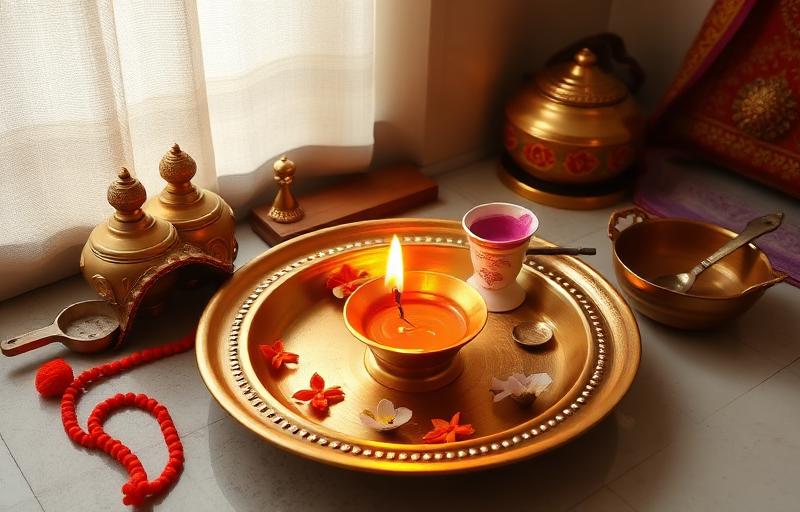
- Light a diya and offer a flower or tulsi leaf, as tulsi is dear to Vishnu.
- Begin with a sankalp - a short resolve stating your prayer with devotion.
- Recite slowly with correct pronunciation, ideally learnt from a teacher or authentic recording.
- Chant with the Purusha Suktam where possible, as the two are traditionally paired.
- Close with a moment of silent meditation on the divine light in your heart, and a bow of gratitude.
Even listening daily with attention, before chanting along, is a gentle and valid beginning.
Reader Questions Answered
Who is Narayana in the Narayana Suktam?+
Narayana is Lord Vishnu as the eternal, all-pervading Supreme Being who dwells in the lotus of the heart and holds the whole cosmos within himself. The hymn describes him as radiant like a flame, the refuge of all beings and the goal of meditation.
Why is Narayana Suktam chanted with Purusha Suktam?+
Both are Vedic hymns describing the Supreme Being - the Purusha Suktam as the cosmic Purusha and the Narayana Suktam as Narayana within the heart. They are traditionally paired to form a complete invocation, especially during Vishnu pujas and homas.
When is the best time to recite Narayana Suktam?+
It is especially recited on Ekadashi and Saturdays and during Vishnu pujas, Satyanarayan katha and homas. Early morning after a bath, before an image of Vishnu, is considered ideal, though it may be chanted with devotion at any clean, quiet time.
About the author
Acharya Vinaya Kapoor · M.A. Sanskrit, Mantra & Stotra Studies
Acharya Vinaya holds an M.A. in Sanskrit from Banaras Hindu University and writes the mantra and stotra commentary on Vandnaa. Her focus is on accurate pronunciation, traditional context, and helping modern readers connect with classical texts.
Meet the Vandnaa editorial team →