
What Is the Purusha Suktam
The Purusha Suktam is one of the most revered hymns of the Rig Veda (Mandala 10, Sukta 90), also found in the other Vedas. It is a hymn to the Purusha - the Cosmic Being or Supreme Person, identified in the Vaishnava tradition with Vishnu-Narayana. The sukta describes how the entire universe, the elements, the deities, the sun and moon, and even society itself arise from a great cosmic sacrifice (yajna) of this infinite Purusha.
Significance in Vedic Worship
The Purusha Suktam holds a central place in Vedic and temple worship. It is recited during abhishekam, homa, deity installation and Vishnu puja, and is considered a complete description of the divine as both transcendent and present in all creation. It teaches that the same Supreme Being pervades everything - the visible world is only a fraction of the Purusha, whose greater part remains beyond. It is one of the most important suktas for Narayana worship.
Opening Verses - Transliteration and Devanagari
The famous opening verse describes the infinite form of the Purusha:
Sahasrashirsha Purushah sahasrakshah sahasrapaat. Sa bhumim vishvato vritva atyatishthad dashangulam.
This means: 'The Cosmic Being has a thousand heads, a thousand eyes and a thousand feet. Pervading the earth on all sides, he extends beyond it by ten fingers' - signifying that the divine fills all creation yet transcends it.
Meaning of the Cosmic Sacrifice
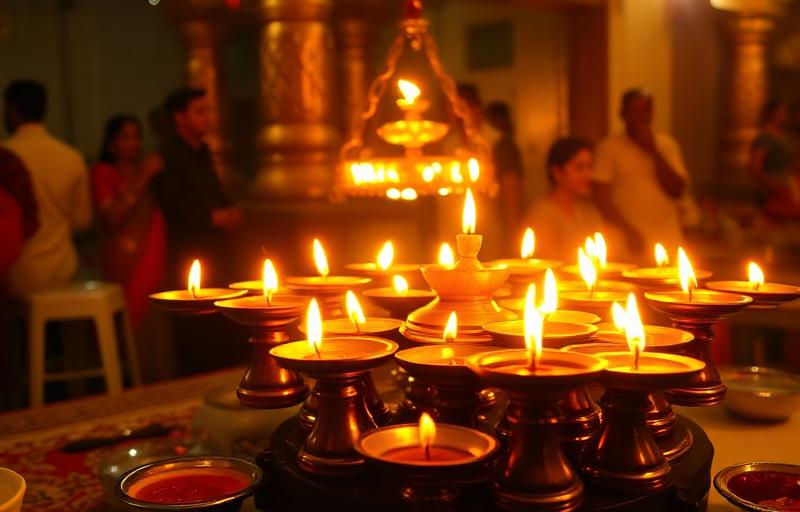
The heart of the Purusha Suktam is the cosmic yajna: from the sacrifice of the Purusha arise the Vedas, the animals, the planets, the elements and the four divisions of human society. The deeper meaning is that all of creation is sacred, born of the one divine being, and so deserves reverence. The hymn reveals unity - everything from a blade of grass to the sun shares the same divine source, the Purusha who is Narayana.
How and When to Recite
1. Bathe, wear clean clothes and sit facing east before an image of Vishnu or Narayana. 2. Light a ghee lamp and offer tulsi, yellow flowers and a little water. 3. Recite the verses with correct Vedic pronunciation and swara (intonation) if known; otherwise read slowly and reverently. 4. It is often chanted during abhishekam, with each verse accompanied by an offering. 5. Conclude with a Vishnu aarti and pranam. Ekadashi, Thursdays, and Vishnu festivals are especially auspicious for its recitation.
Benefits of the Purusha Suktam
Reciting the Purusha Suktam is believed to bring great spiritual merit, the grace of Narayana, peace and harmony in the home, and purification of the mind and surroundings. It is said to remove obstacles, attract prosperity and good health, and bless rituals and homas with completeness. Above all, it deepens the understanding that the same divine presence pervades all life, fostering reverence and inner calm.
Tips for Correct Recitation
As a Vedic hymn, the Purusha Suktam is best learned with correct swara from a teacher or an authentic recording, since intonation carries meaning in the Vedas. If you cannot manage the swaras, reciting clearly and reverently with understanding still brings benefit. Maintain cleanliness and a focused mind, and never rush; the power of the sukta lies in attentive, sincere repetition over time.
Frequently Asked Questions
What is the Purusha Suktam?+
The Purusha Suktam is a Rig Veda hymn to the Cosmic Being (Purusha), identified with Vishnu-Narayana, describing how the whole universe arises from his great cosmic sacrifice.
What does 'Sahasrashirsha Purushah' mean?+
It means the Cosmic Being has a thousand heads, eyes and feet. It signifies that the divine pervades all of creation on every side, yet extends infinitely beyond it.
Where is the Purusha Suktam found?+
It appears in the Rig Veda (Mandala 10, Sukta 90) and is also found in the other Vedas. It is one of the most important hymns used in Vedic and Vishnu temple worship.
When is the Purusha Suktam recited?+
It is recited during abhishekam, homa, deity installation and Vishnu puja, and is especially auspicious on Ekadashi, Thursdays and Vishnu festivals.
What are the benefits of reciting it?+
It is believed to bring spiritual merit, the grace of Narayana, peace and harmony at home, purification of mind and surroundings, prosperity, good health and completeness to rituals.
Do I need to know the Vedic swaras to recite it?+
Learning the correct swaras from a teacher is ideal, as intonation matters in the Vedas. But if you cannot, reciting clearly and reverently with understanding still brings benefit.
About the author
Acharya Vinaya Kapoor · M.A. Sanskrit, Mantra & Stotra Studies
Acharya Vinaya holds an M.A. in Sanskrit from Banaras Hindu University and writes the mantra and stotra commentary on Vandnaa. Her focus is on accurate pronunciation, traditional context, and helping modern readers connect with classical texts.
Meet the Vandnaa editorial team →Explore on Vandnaa
Related Articles

Vishnu Aarti Lyrics - Om Jai Jagdish Hare in Hindi & English
8 min read
Vishnu Sahasranama: The 1000 Names of Vishnu - Meaning, Benefits & Daily Recitation Vidhi
12 min read
Dashavatar - 10 Avatars of Lord Vishnu: Names, Order, Meaning, Significance
11 min read
Gayatri Mantra Meaning, Benefits & How to Chant (गायत्री मंत्र)
12 min read
Madhurashtakam - Lyrics, Meaning & Benefits
8 min read
Argala Stotram (Durga Saptashati) - Lyrics, Meaning & Benefits
9 min read