What and When
Navratri, the nine nights dedicated to the Devi, is celebrated not only across India but wherever devotees of Hindu heritage have made their homes. From the Caribbean to Europe, North America and Southeast Asia, communities gather each year to keep the devotion of Navratri alive, adapting its outward form to their surroundings while preserving its heart.
Whether it is Sharad Navratri in autumn or the smaller regional observances, the underlying devotion, fasting, prayer and celebration of the divine feminine, remains the same wherever it is kept.
A Story of Continuity
Communities of Indian origin in Trinidad, Guyana, Suriname and Mauritius, many descended from indentured labourers who carried their faith across oceans generations ago, continue to observe Navratri with Ramlila performances and Durga Puja, keeping alive the very stories and songs their ancestors brought with them.
This continuity is itself a devotional story, one of families preserving katha, mantra and ritual across generations and continents, so that the Devi continues to be worshipped exactly as she was in the villages their ancestors once called home.
Rituals and Vidhi
Across the diaspora, the rituals of Navratri are lovingly adapted to local circumstances while keeping their devotional core intact.
- In the United Kingdom and United States, temples and community halls host garba and dandiya nights alongside traditional pooja and fasting
- In Trinidad and Guyana, Ramlila performances during Navratri retell the story of Lord Rama with local artistes, some running for many nights
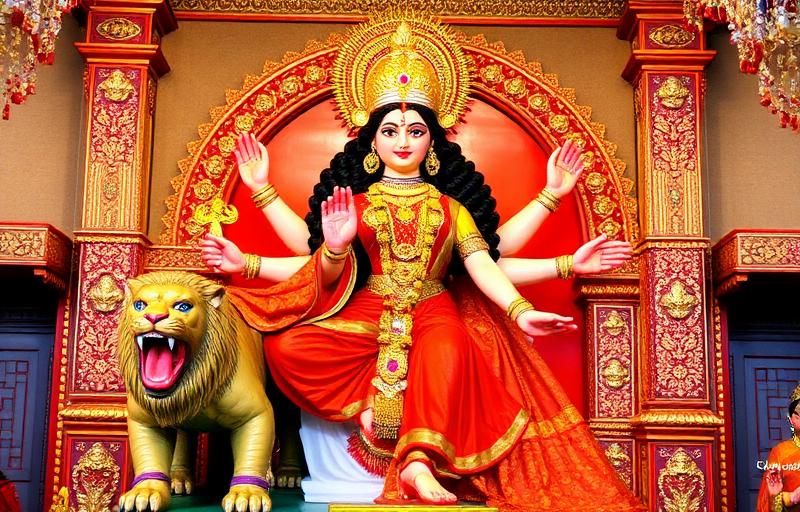
- In Mauritius, Durga Puja pandals are set up in towns with significant Hindu populations, mirroring Bengal's traditions
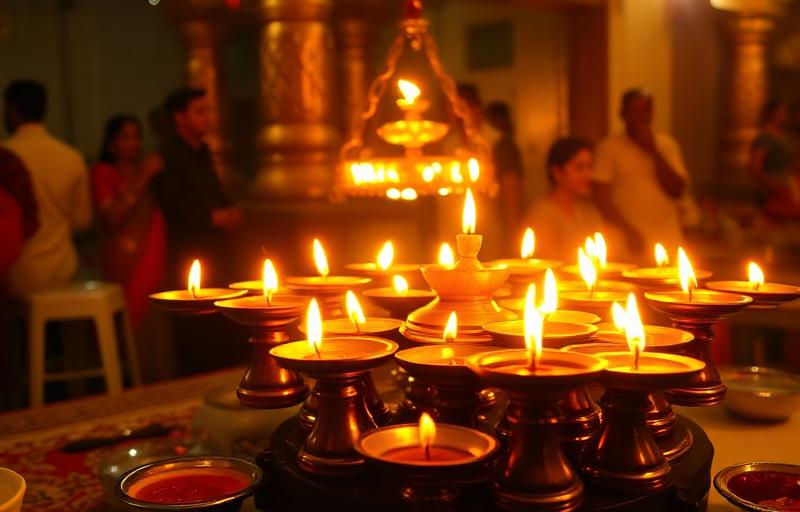
- Fasting, kalash sthapana and daily aarti remain constant practices wherever the festival is observed, connecting devotees to the same devotional roots
Regional Flavour
In Southeast Asia, particularly among Tamil and Gujarati communities in Malaysia and Singapore, Navratri is marked with temple decorations, classical dance performances and nightly aarti, often drawing devotees from across faiths who admire the devotion and colour of the celebration.
In the Gulf countries too, where large Indian communities live and work, community halls and temples organise modest but heartfelt Navratri gatherings, showing that distance from the homeland does not diminish the sincerity of devotion.
Mantra and Takeaway
Wherever Navratri is celebrated, devotees join in reciting simple invocations of the Devi, such as Jai Mata Di or verses from the Durga Chalisa, connecting them instantly to the same devotion practised across generations and continents.
Navratri around the world is a beautiful reminder that devotion to the Devi knows no geography, that faith carried across oceans by our ancestors continues to bloom in new lands, and that the mother goddess is honoured with the same love wherever a sincere heart calls out to her.
Reader Questions Answered
Is Navratri celebrated outside India?+
Yes, Navratri is celebrated by Hindu communities worldwide, including in Trinidad, Guyana, Mauritius, the UK, the US and Southeast Asia, through garba, Durga Puja and Ramlila.
How did Navratri traditions reach the Caribbean?+
Indian indentured labourers who moved to Trinidad, Guyana and Suriname generations ago carried their devotional traditions with them, and their descendants continue to observe Navratri today.
What common practices connect Navratri celebrations worldwide?+
Fasting, kalash sthapana, daily aarti and devotion to the Devi remain common across Navratri celebrations everywhere, even as local customs like garba nights or Ramlila vary.
About the author
Pandit Mahesh Trivedi · Festival Traditions & Panchang
Pandit Mahesh leads the festival-date and Panchang content on Vandnaa. He cross-references multiple regional panchangs (Drik, Vaishnava, Bengali, Marathi) for every festival date published on the site.
Meet the Vandnaa editorial team →