What Is Navadurga?
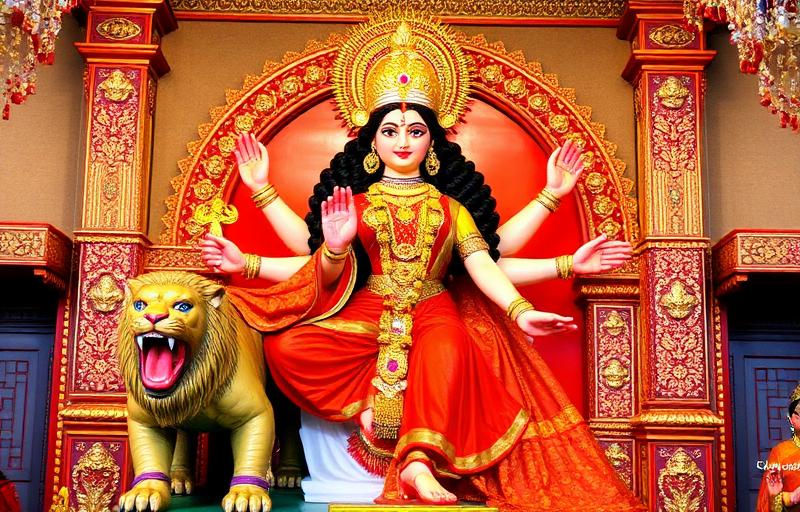
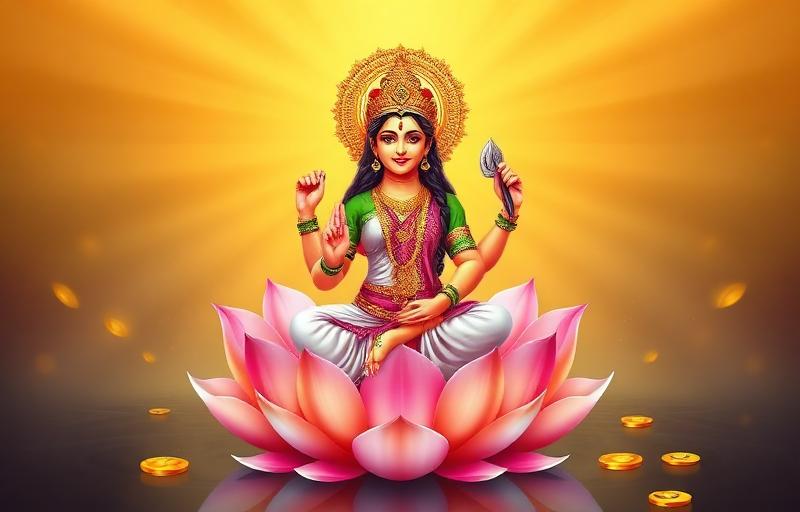
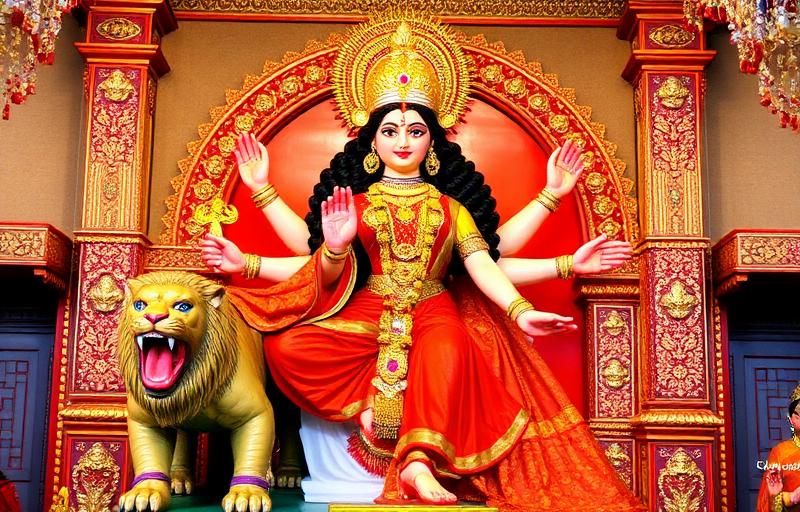
Navadurga (nava = nine, durga = Durga) are the nine forms of Goddess Durga worshipped across the nine nights of Navratri. One form is honoured on each of the nine days, in a fixed order from Shailaputri on the first day to Siddhidatri on the ninth.
Together the nine forms tell the journey of the Goddess - from her birth as the daughter of the mountain, through penance, marriage, motherhood and fierce battle, to the bestower of all perfections. Worshipping Navadurga during Navratri is one of the most beloved Devi practices in India, observed with fasting, the nine colours, kanya pujan and the Durga Saptashati.
The 9 Forms, Day by Day
1. शैलपुत्री (Shailaputri) - Day 1; daughter of the mountain (Himalaya), riding a bull, holding a trident and lotus; root of all Devi worship. 2. ब्रह्मचारिणी (Brahmacharini) - Day 2; the goddess of penance and devotion, who performed great tapas to win Shiva. 3. चन्द्रघण्टा (Chandraghanta) - Day 3; with a half-moon shaped like a bell on her brow; the warrior who grants courage and removes fear. 4. कूष्माण्डा (Kushmanda) - Day 4; the cosmic mother whose smile is said to have created the universe; giver of health and energy. 5. स्कन्दमाता (Skandamata) - Day 5; mother of Skanda (Kartikeya), holding her child; the loving, nurturing form. 6. कात्यायनी (Katyayani) - Day 6; the fierce warrior goddess born to slay the demon Mahishasura; granter of strength. 7. कालरात्रि (Kalaratri) - Day 7; the dark, fearless form that destroys evil, ignorance and negativity; protector of devotees. 8. महागौरी (Mahagauri) - Day 8 (Ashtami); the pure, radiant, fair form; granter of peace, purity and forgiveness. 9. सिद्धिदात्री (Siddhidatri) - Day 9 (Navami); the bestower of all siddhis (perfections) and spiritual attainments.
From Shailaputri to Siddhidatri, the nine forms move from origin to ultimate fulfilment.
The Significance of the Nine Forms
The Navadurga are not nine separate goddesses but nine stages of the one Mother's journey and grace. Read together, they form a path of spiritual growth:
- It begins with Shailaputri (rootedness and identity), moves through Brahmacharini (discipline and devotion), Chandraghanta (courage), Kushmanda (creative energy), Skandamata (nurturing love), Katyayani and Kalaratri (the strength to fight and destroy inner evil), Mahagauri (purity and peace), and ends in Siddhidatri (fulfilment and self-realisation).
This is the spiritual map of Navratri: from the seeker's first step to the final attainment of grace. Worshipping each form in turn is a way of walking that whole journey in nine sacred nights.
How to Worship Navadurga in Navratri
- Ghatasthapana: Begin Navratri on Pratipada by establishing the kalash and sowing barley (jwara) with a sankalp.
- Daily puja: Each day, worship the form of that day with her colour, mantra and bhog. Light a lamp and offer flowers, akshat and fruit.
- Nine colours: Many wear or offer a specific colour each day, dedicated to the day's form.
- Path: Read the Durga Saptashati, Durga Chalisa, or chant 'Om Dum Durgayai Namah' and the Navadurga stuti.
- Ashtami / Navami: Special puja of Mahagauri and Siddhidatri, with kanya pujan - worshipping and feeding young girls as the living Devi.
- Conclude with aarti, kanya bhojan and prayers for the family's protection and well-being.
Frequently Asked Questions
What are the nine forms of Navadurga in order?+
The nine forms, in Navratri order, are Shailaputri, Brahmacharini, Chandraghanta, Kushmanda, Skandamata, Katyayani, Kalaratri, Mahagauri and Siddhidatri - one for each of the nine days.
Which Navadurga form is worshipped on Ashtami and Navami?+
Mahagauri is worshipped on the eighth day (Ashtami) and Siddhidatri on the ninth day (Navami). Kanya pujan, feeding young girls as the living Devi, is commonly done on these two days.
Are the Navadurga the same as the Dashamahavidya?+
No. Navadurga are the nine forms worshipped through the nine days of Navratri, from Shailaputri to Siddhidatri. The Dashamahavidya are ten distinct wisdom goddesses of the Shakta tradition. Both are forms of the one Divine Mother.
What does the journey of Navadurga symbolise?+
It symbolises the spiritual path from rootedness (Shailaputri) through discipline, courage, energy, love and the strength to destroy inner evil, ending in purity (Mahagauri) and final attainment (Siddhidatri) - a complete journey of growth across nine nights.
About the author
Pandit Mahesh Trivedi · Festival Traditions & Panchang
Pandit Mahesh leads the festival-date and Panchang content on Vandnaa. He cross-references multiple regional panchangs (Drik, Vaishnava, Bengali, Marathi) for every festival date published on the site.
Meet the Vandnaa editorial team →