Bammera
Bammera Pothana, roughly 1450 to 1510, wrote the Andhra Maha Bhagavatamu, the Telugu Bhagavata Purana, and it is the most loved book in the Telugu language.
Where: Bammera, a village in what is now Warangal district, Telangana.
What he did for a living: he farmed. He held land and worked it, and the tradition is consistent that he was a cultivator who wrote rather than a court poet.
His family: father Kesana, mother Lakkamamba. He is said to have been a Shiva devotee by upbringing who wrote the greatest Vishnu text in the language, which the tradition notes without embarrassment.
His title: Sahaja Kavi, the natural poet. The claim is that he wrote without formal court training, and that the facility came from somewhere other than instruction.
The commission
The tradition says he was told to write it.
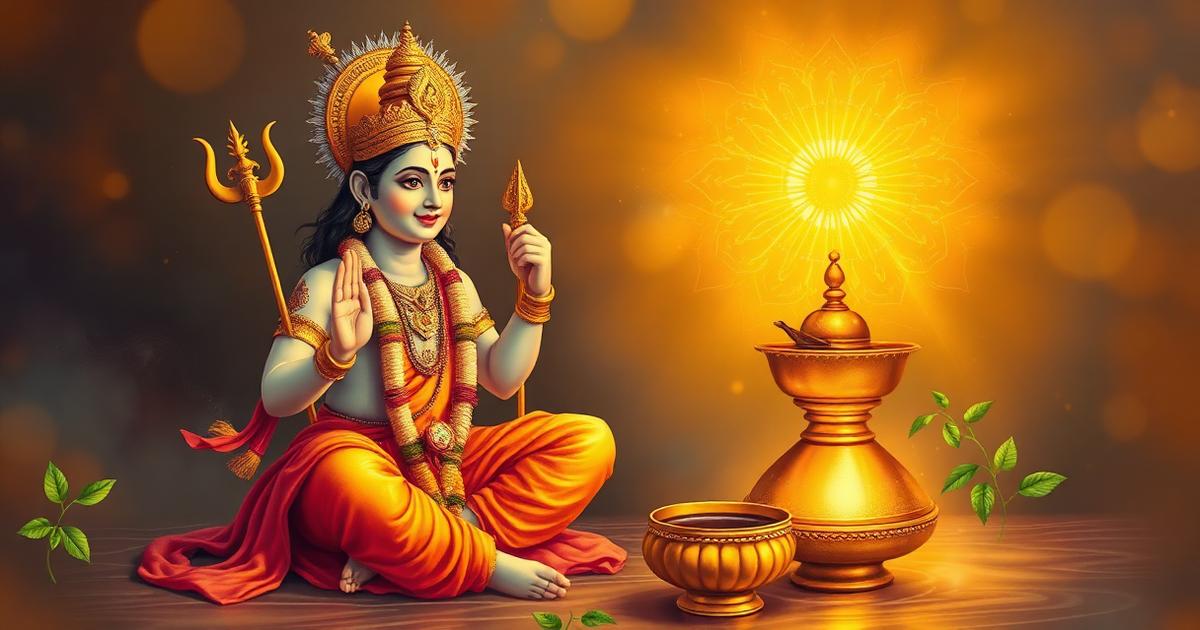
The account: Rama appeared to him at Bammera, or on the bank of a stream near it, and instructed him to render the Bhagavata into Telugu and to dedicate it to him.
Whether that is a devotional framing of an ordinary decision is not recoverable, and it does not much matter, because the important thing is that the dedication was decided before the book was written.
Which is what makes the next part possible.
His other works:
- Bhogini Dandakam, his earliest known work, a short poem
- Veerabhadra Vijayamu, on Veerabhadra and the destruction of Daksha's sacrifice
- Narayana Satakam, a hundred verses, attributed
The incomplete portions
Worth knowing because it affects what you read.
Portions of the Andhra Maha Bhagavatamu, particularly parts of the fifth, sixth, eleventh and twelfth skandhas, were not completed by Pothana, and were finished by others: Ercha Singana, Velligandala Naraya and Bopparaju Gangana.
The tradition gives various explanations, including damage to the manuscript, and the standard editions mark which portions are which.
What survives as unmistakably his is the bulk of it, including every one of the famous passages.
The Refusal
The most famous episode in Telugu literary history.
Who wanted it: Sarvagna Singa Bhupala, also Singabhupala, the Recherla ruler at Rachakonda, a substantial patron of Telugu letters and himself an author.
What he wanted: the Bhagavatam dedicated to him.
What that meant: it was completely normal. Telugu literature of the period was court literature, and the standard arrangement was that a poet composed and dedicated the work to a patron, who supported the poet and whose name went into the opening verses and lived as long as the book did.
Pothana was a farmer with land and a family and no other income. The offer was security.
What he said
The refusal is preserved as a verse, and it is one of the best known things in Telugu.
Its content, in substance:
Rather than take the goddess of learning, whose eyes are lined with kohl, and hand her over to some petty mortal lord, and watch her weep so that the blackened tears run down onto her breast, I would rather live by tilling the ground and eating what it gives. I would rather beg. I will not sell her.
The image is the point. He personifies his own poetry as Saraswati, and treats dedicating it to a king as selling a woman, and describes her crying.
And another verse of his says roughly that a poem given to a mortal king perishes with him, and that the only patron worth having is the one who does not die.
What happened
Nothing good, in the short term.
The accounts describe hardship, and some describe the king's displeasure taking practical forms. Pothana went on farming, and finished the book, and dedicated it to Rama.
And a well known verse describes him ploughing, and his own view that the work in the field and the work on the page were the same undertaking.
The pattern
This series keeps turning it up:
- Annamacharya, imprisoned in chains for refusing to praise Saluva Narasimha, fifteenth century Telugu
- Pothana, refusing to dedicate the Bhagavatam to Singa Bhupala, fifteenth century Telugu
- Tyagaraja, refusing the Raja of Thanjavur with a song asking whether wealth is happiness, nineteenth century
- Kabir, Tukaram, Mirabai and many others declining court patronage in their own languages
What they have in common is not that they hated money. It is that each of them had settled, in advance, what the work was for, so that when the offer came the answer had already been given.
And the honest note that applies here as it did with Tyagaraja: Pothana had a household. His refusal was made on their behalf as well as his own, and the accounts record hardship rather than pretending there was none.
Gajendra Moksham
The passage every Telugu speaker knows.
The story, from the eighth skandha of the Bhagavata.
- Gajendra, the king of elephants, goes into a lake to drink and bathe
- A crocodile seizes his leg
- They struggle. The accounts give it a thousand years
- The elephant's strength runs out. His herd cannot help him and eventually leaves
- He is being pulled under
- And at the end of everything he can do himself, he lifts a lotus in his trunk and calls out
- Vishnu comes
What Pothana did with it
The struggle: he gives it verses of extraordinary physical detail. The mud, the water, the exhaustion, the elephant's diminishing strength, the moment when the strength that had always been enough is not enough.
One of the most quoted verses describes precisely that: the point at which there is no strength left at all, no courage left, nothing of his own remaining, and the vision beginning to go.
And then the verse.
Sirikin cheppadu
The most famous verse in Telugu, and it is worth going through because the whole of it is a list of things Vishnu did not stop to do.
In substance:
He did not tell Lakshmi he was going. He did not take up the conch and the discus. He did not call for Garuda. He did not put on his sandals. He did not wait for anybody, did not stop, did not explain. The lord of the gods went, at that moment, hearing that his devotee was in distress.
Why the verse works
Because every clause is a domestic detail.
Not taking your weapons is one thing. Not telling your wife you are leaving the house, and not stopping to put your shoes on, is a different order of urgency, and it is the order everybody recognises.
The verse turns the arrival of god into the picture of somebody running out of a house barefoot.
And the elephant's own verse, just before, is the other half: he has tried everything, he has nothing left, and what he says is a version of: whoever you are, whatever you are, you who are the beginning of everything, come.
Why the passage matters in practice
Because of when people use it.
Gajendra Moksham is what Telugu households read and recite in a crisis. Illness, a court case, a missing person, an operation, a business collapsing. It is not a general devotional passage; it is the specific one for the situation where you have already done everything you can do and it was not enough.
And what it says about that situation:
- The elephant's own strength was real and it ran out. That is not a failure
- His herd left. The people who normally help could not
- He called at the point where there was nothing else
- And nothing was required of him except the calling
A note: praying in a crisis is not a substitute for the practical things. Call the doctor, call the police, call the lawyer, call the helpline. Emergency 112. The Gajendra passage is about the moment after you have done all of that, and the tradition is quite clear that the elephant fought for a thousand years first.
Prahlada, Vamana, Rukmini, Kuchela

The other passages Telugu keeps by heart.
Prahlada Charitra
From the seventh skandha. Hiranyakashipu's son Prahlada will not stop saying the name, and his father tries everything to make him.
Pothana's Prahlada is a child arguing, and that is what makes the section great. He is not defiant in a grand way. He answers his teachers politely, gives reasons, and cannot be moved.
The most quoted verse: the image of the bee that has tasted the nectar of the mandara flower and will not afterwards go to ordinary flowers, which is Prahlada's answer to why he cannot be interested in what his father is offering.
Another famous one has him asked where his god is, and answering that he is in the pillar and in the smallest particle, and that there is no place he is not.
And the passage has been used politically and socially in Telugu for centuries, because at bottom it is about a child refusing an authoritarian parent on a matter of conscience, and being right.
A necessary modern note: the story involves severe violence against a child by a parent. In real life, that is a crime. Childline 1098 in India, free and 24 hours, and police 112.
Vamana and Bali
From the eighth skandha. Vishnu as the dwarf Vamana asks the generous king Bali for three paces of ground, and Bali's teacher Shukracharya tells him not to give, seeing who it is.
Pothana's version is famous for Bali's answer: that a request has been made and he has said yes, that a man who takes back a promise is nothing, and that if the one asking is who Shukracharya says, then being taken by him is not a loss.
And the verse describing Vamana growing, taking the earth in one step and the sky in the next, is one of the great pieces of Telugu description.
Rukmini Kalyanam
From the tenth skandha. Rukmini writes to Krishna asking him to come and take her before her brother marries her to somebody else.
Her letter, in Pothana's Telugu, is one of the most read passages in the language, and it is read at weddings.
Kuchela
Kuchela, called Sudama elsewhere, is Krishna's poor childhood friend who comes to see him with a handful of beaten rice he is ashamed to offer.
Pothana's treatment of his poverty is specific and unsentimental: the state of his clothes, his wife's suggestion, his embarrassment, and his inability to actually ask for anything once he is there.
Why the whole book is loved
The language. Pothana wrote a Sanskrit derived text in Telugu that sounds like Telugu, with sound patterning, alliteration and rhythm that people remember without trying.
And the emotional register. He consistently chooses the human detail: the elephant's exhaustion, the child's politeness, Bali's stubbornness, Kuchela's shame.
Reading it
- The Gajendra Moksham section first. It is short and self contained
- Then Prahlada Charitra
- Then Rukmini Kalyanam and Kuchela
- Telugu editions with modern paraphrase are everywhere
- English translations exist, and the Bhagavata Purana itself is available in translation for the frame
- There are also recordings and harikatha and burrakatha performances of the great sections
What to Take From Him
One. He decided what the work was for before he was offered anything for it.
That is the whole mechanism of the refusal. When the king's offer came, there was nothing to weigh, because the dedication had been settled at the start.
Applied: decisions made under pressure are made badly. Decisions made in advance hold, and the point of settling something early is precisely so that you are not deciding it while somebody is offering you money.
Two. He kept farming.
The greatest work in Telugu was written by a man who was also ploughing his own land, and who said the two were the same undertaking.
This series has found that repeatedly: Janabai at the grinding stone, Gora at the wheel, Dasimayya at the loom, Savata in the vegetable plot, Syama Sastri at the shrine door.
Three. Gajendra, for the right situation.
The elephant had real strength and it was not enough. His herd could not help. He had done everything available before he called.
That sequence matters and it is the reason the passage is used the way it is: it is not a shortcut past effort, it is what is left when effort has been spent.
And the practical accompaniment: do the practical things too. Doctors, lawyers, police, helplines. Emergency 112, Tele MANAS 14416 if what you are drowning in is in your head.
Four. He did not stop to put his sandals on.
The most famous verse in the language is a list of ordinary things somebody skipped because they were in a hurry.
That is a picture of urgency rather than of power, and it is the tradition's own preferred image of how help arrives: not in state, not on a schedule, and not after the correct procedure has been followed.
Five. Prahlada was polite.
The child in the story does not shout at his father. He gives reasons, answers his teachers respectfully, and does not move.
Firmness and rudeness are different things and the tradition's most famous refusal by a child is conducted entirely in good manners.
A daily practice from this entry:
- Om Namo Narayanaya or Sri Rama Jaya Rama
- The Gajendra Moksham verses, kept somewhere findable, for the day you need them
- On Ekadashi or on Vaikuntha Ekadashi, the Bhagavatam passages, which is when Telugu households read them
- And Pothana's own question, when somebody offers you something for your work: what was this for, and did I decide that before or after the offer
A closing thought
A farmer in a Telangana village was told by a king that he could have security for life if he put the king's name at the front of his book.
He wrote a verse saying that his poetry was the goddess of learning, that handing her to a mortal was selling her, that he would rather watch her weep than do it, and that he would go on eating what the ground gave him.
Then he went back to the field and finished the book, and put Rama's name at the front instead.
And five hundred years later, when something goes badly wrong in a Telugu household, somebody in it reads the passage he wrote about an elephant that had fought for a thousand years, run out of strength, been abandoned by its herd, and called out, and about a god who did not stop to put his shoes on.
The Short Version
Who: Bammera Pothana, roughly 1450 to 1510, of Bammera village in what is now Warangal district, Telangana. A farmer who worked his own land, called Sahaja Kavi, the natural poet, and the author of the Andhra Maha Bhagavatamu, the Telugu Bhagavata Purana, which is the most loved book in the language.
The refusal: Sarvagna Singa Bhupala, the Recherla ruler at Rachakonda, wanted the Bhagavatam dedicated to him, which was the completely normal arrangement of the period and would have meant security for a farmer with no other income. Pothana refused in a verse saying that his poetry was the goddess of learning, that handing her to a petty mortal lord was selling her, that he would rather see her weep kohl blackened tears than do it, and that he would live by tilling the ground. He finished the book and dedicated it to Rama.
Gajendra Moksham: the passage every Telugu speaker knows. The elephant king is seized by a crocodile, struggles for a thousand years, runs out of strength, is abandoned by his herd, and finally lifts a lotus and calls. The most famous verse in Telugu lists what Vishnu did not stop to do: did not tell Lakshmi, did not take the conch and discus, did not call Garuda, did not put on his sandals. It is what Telugu households read in a crisis.
The other great passages: Prahlada Charitra, in which a polite child cannot be moved; Vamana and Bali; Rukmini Kalyanam, read at weddings; and Kuchela.
Note: parts of the fifth, sixth, eleventh and twelfth skandhas were completed by Ercha Singana, Velligandala Naraya and Bopparaju Gangana, and standard editions mark which portions are which.
What to keep: settle what your work is for before anybody offers you anything for it.
Quick Answers
Who was Pothana?+
Bammera Pothana, roughly 1450 to 1510, of Bammera village in what is now Warangal district, Telangana. He was a farmer who worked his own land and who wrote the Andhra Maha Bhagavatamu, the Telugu rendering of the Bhagavata Purana, which is the most loved book in the Telugu language. He is called Sahaja Kavi, the natural poet, on the claim that he wrote without formal court training.
Why did Pothana refuse to dedicate the Bhagavatam to the king?+
Sarvagna Singa Bhupala, the Recherla ruler at Rachakonda, wanted it dedicated to him, which was the standard arrangement of the period and would have meant lifelong security for a farmer with no other income. Pothana refused in a verse saying that his poetry was the goddess of learning with kohl lined eyes, that handing her to a petty mortal lord amounted to selling her, that he would rather watch her weep so the blackened tears ran down than do it, and that he would live by tilling the ground and eating what it gave. He had already decided at the start to dedicate the work to Rama.
What is Gajendra Moksham?+
The episode from the eighth skandha of the Bhagavata in which Gajendra, the king of elephants, goes into a lake, is seized by a crocodile, and struggles for a thousand years until his strength runs out and his herd leaves him. At the end of everything he can do himself he lifts a lotus in his trunk and calls out, and Vishnu comes. Pothana's rendering of it, particularly the verse listing what Vishnu did not stop to do, is the most famous passage in Telugu, and it is what Telugu households read in a crisis.
What does the verse Sirikin cheppadu say?+
It is a list of things Vishnu did not stop to do when he heard Gajendra call. He did not tell Lakshmi he was going. He did not take up the conch and the discus. He did not call for Garuda. He did not put on his sandals. He did not wait, did not stop and did not explain. The verse works because every clause is a domestic detail: not telling your wife you are leaving the house and not stopping to put your shoes on is a different order of urgency from not taking your weapons, and it turns the arrival of god into the picture of somebody running out of a house barefoot.
Did Pothana write the whole Andhra Maha Bhagavatamu?+
Not quite. Portions, particularly parts of the fifth, sixth, eleventh and twelfth skandhas, were not completed by him and were finished by Ercha Singana, Velligandala Naraya and Bopparaju Gangana. The tradition gives various explanations including damage to the manuscript, and standard editions mark which portions are which. What survives as unmistakably his is the bulk of it, including every one of the famous passages: Gajendra Moksham, Prahlada Charitra, Vamana and Bali, Rukmini Kalyanam and Kuchela.
How should I start reading Pothana?+
With the Gajendra Moksham section, which is short and self contained, then Prahlada Charitra, then Rukmini Kalyanam and Kuchela. Telugu editions with modern paraphrase are widely available, English translations exist, and the Bhagavata Purana itself is available in translation if you want the frame. There are also recordings and harikatha and burrakatha performances of the great sections, which is how most Telugu speakers first encounter them.
About the author
Pandit Ravindra Sharma · Vedic Rituals & Bhakti, 22+ years
Pandit Ravindra is the Vandnaa editorial team's resident specialist on aarti, chalisa, and daily devotion. He has performed home and temple pujas across Varanasi and Delhi for over two decades and contributes the bhakti-focused articles on this site.
Meet the Vandnaa editorial team →