What Is a Puja Thali
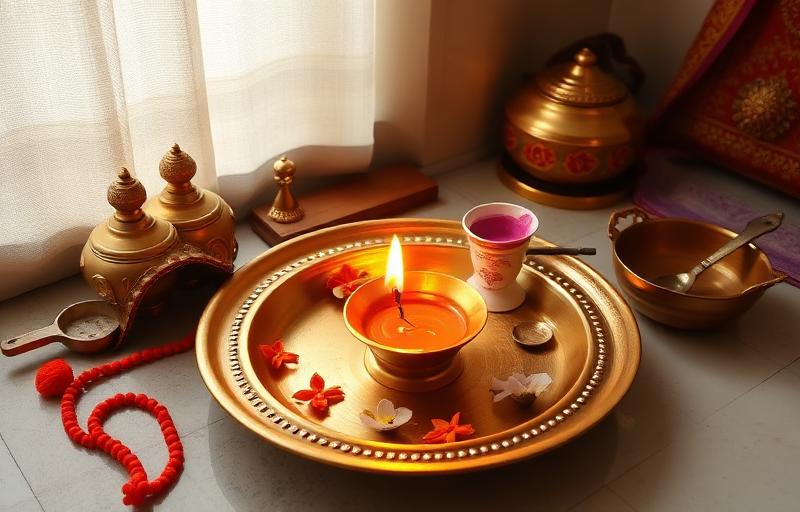
A puja thali is a plate on which the various items needed for worship are gathered together before puja begins, from a lit diya and incense to flowers, kumkum and a small bell. Almost every Hindu household keeps one, whether a simple steel plate or an ornate silver one reserved for festivals.
Having everything arranged on a single thali allows a devotee to move smoothly through the puja and, importantly, to carry the lit lamp and items together during aarti.
Roots in Traditional Worship
The items on a puja thali are not random; they trace back to traditional methods of worship described in Hindu ritual texts, such as panchopachara puja (worship with five offerings) or the more elaborate shodashopachara puja (worship with sixteen offerings), which lay out a sequence of respectful gestures made toward the deity.
Over time, households have adapted these into a simple, practical set of items kept ready on a single thali, so that even a short daily puja can still follow the same spirit as the fuller traditional method.
The Main Items and What They Represent
- Diya (lamp) - offering of light, representing knowledge and the divine
- Dhoop or agarbatti (incense) - offering of fragrance, pleasing to the senses and purifying to the space
- Kumkum, haldi and chandan - offered to the deity and applied as tilak, representing auspiciousness
- Akshat (rice grains) - representing wholeness and prosperity
- Flowers - offering of beauty and freshness
- Bell - marks the rhythm of worship and aarti
- Naivedya (sweets or fruit) - offering of food, later shared as prasad
Each item corresponds, in tradition, to pleasing one of the senses through the deity, sight through light, smell through fragrance, sound through the bell, and taste through the offered food.
Arranging and Using the Thali
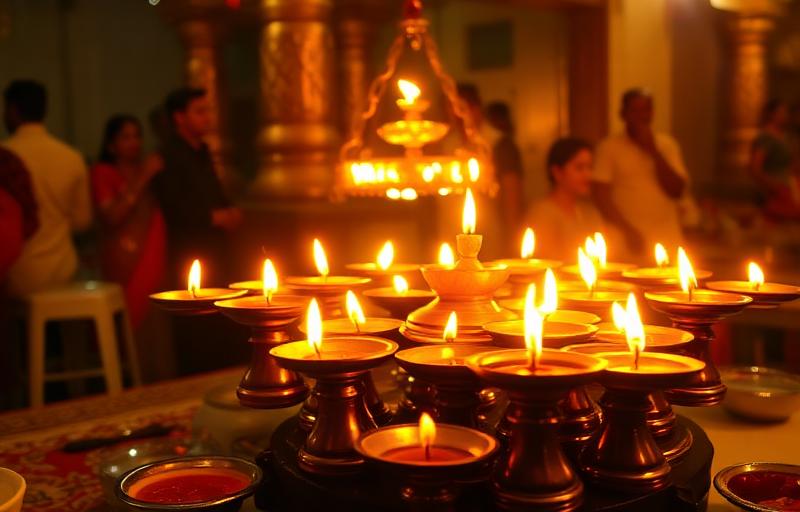
Before puja, the thali is arranged with each item in its own small space or container, often with the diya and incense placed toward the centre or one side so they can be lifted easily during aarti. Many families keep a slightly different arrangement for a simple daily puja compared to festival days, when more elaborate items are added.
After the puja, the thali is often carried around to family members during aarti so each person can offer a small gesture, such as passing their hands over the flame, before receiving prasad.
A Simple Takeaway
A puja thali, however simple, brings together offerings for every sense, a reminder that worship in Hindu tradition is meant to be a complete, heartfelt experience rather than a single gesture.
Worship is an act of faith and love, not a transaction.
Quick Answers
What items are typically kept on a puja thali?+
A typical puja thali includes a diya, incense, kumkum, haldi, akshat, flowers, a small bell and naivedya such as sweets or fruit, though the exact items can vary by family and occasion.
What is panchopachara puja?+
Panchopachara puja is a traditional method of worship using five offerings, and it is one of the roots behind the items commonly gathered on a puja thali today.
Why is naivedya included on the thali?+
Naivedya, usually sweets or fruit, is offered to the deity as a gesture of devotion and is later distributed among family and devotees as prasad, considered a blessed offering.
About the author
Acharya Vinaya Kapoor · M.A. Sanskrit, Mantra & Stotra Studies
Acharya Vinaya holds an M.A. in Sanskrit from Banaras Hindu University and writes the mantra and stotra commentary on Vandnaa. Her focus is on accurate pronunciation, traditional context, and helping modern readers connect with classical texts.
Meet the Vandnaa editorial team →